




Digestive enzyme supplements bridge the gap between general wellness and targeted therapeutic support, making them a versatile addition to any supplement brand's portfolio. Unlike broad-spectrum supplements, enzyme products require specialized manufacturing knowledge to maintain activity through production, storage, and shelf life, making OEM partner expertise a critical factor in product success.
Why Digestive Enzymes Are a Growing Category for Brands
Consumer awareness of digestive health has expanded significantly, with 72% of supplement users now considering gut health a priority. The digestive enzyme market has benefited from this trend, growing at 7.8% CAGR. The category serves multiple use cases: general digestive support for occasional bloating and discomfort, targeted formulas for lactose intolerance (lactase), fat digestion (lipase), and plant-based diet support with alpha-galactosidase for bean and vegetable digestion. A 2025 industry analysis showed that multi-enzyme blends outsold single-enzyme products by a 4:1 ratio, indicating consumer preference for comprehensive digestive support.
Key Factors When Choosing Digestive Enzyme OEM Manufacturing
What enzymes are commonly used and how are they sourced?
Core digestive enzymes include protease (protein digestion, 10,000-100,000 HUT units), amylase (carbohydrate digestion, 5,000-25,000 DU units), lipase (fat digestion, 1,000-5,000 FIP units), cellulase (fiber digestion, 500-2,000 CU units), lactase (dairy digestion, 1,000-5,000 ALU units), and alpha-galactosidase (bean/vegetable digestion, 100-600 GALU units). Enzymes are typically sourced through microbial fermentation using Aspergillus niger or Bacillus subtilis strains. Plant-based and animal-derived enzymes are also available. Each source requires specific handling temperatures — most enzymes degrade above 45-50°C. SREKE sources enzymes from GMP-certified fermentation facilities and verifies activity units by USP methods before use.
What stability considerations are unique to enzyme supplements?
Enzymes are proteins and lose activity over time through denaturation, proteolysis, and oxidation. Key stability factors include: moisture content below 5% for capsules and powders, protection from direct light (amber bottles or opaque packaging), storage temperature below 25°C, and enteric coating for enzymes intended to survive stomach acid. Accelerated stability testing for enzyme products measures activity retention at 40°C/75% RH over 3 and 6 months. Industry standard is minimum 80% activity retention through the labeled shelf life.
What is the typical MOQ for digestive enzyme products?
Capsules: 30,000-60,000 units per SKU. Tablets: 50,000-100,000 units. Powder blends: 200-500 kg. Chewable tablets: 30,000-60,000 units. Lead times average 25-40 business days due to enzyme raw material procurement lead times.
The Digestive Enzyme OEM Manufacturing Process
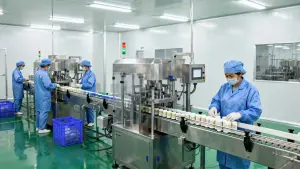
Enzyme supplement manufacturing requires stricter environmental controls than standard supplements. Incoming enzyme raw materials are tested for activity units by enzyme-specific assay methods (USP or FCC methods). Blending is performed in a temperature-controlled room below 25°C with humidity below 40% RH. Enzymes are blended with excipients like microcrystalline cellulose or maltodextrin in a geometric dilution to ensure uniform distribution. For capsules, the blend is filled on dosator-type machines at lower speeds to minimize heat generation. For tablets, enzyme formulations typically use direct compression rather than wet granulation to avoid moisture exposure. Finished products are immediately packaged in moisture-barrier containers with desiccant and induction seals. Each batch is tested for enzyme activity at t=0 and compared against accelerated stability data to project shelf life activity.
Digestive Enzyme Capsules vs Chewable Tablets vs Powder — Comparison
| Factor | Capsules | Chewable Tablets | Powder |
|---|---|---|---|
| Enzyme activity retention | Best (protected from moisture) | Moderate (exposed during chewing) | Varies (depends on packaging) |
| Dosage flexibility | Fixed per capsule | Fixed per tablet | Adjustable serving size |
| Consumer convenience | Easy to swallow | No water needed | Requires mixing |
| Shelf life | 24 months | 18-24 months | 12-24 months |
| Production cost | Moderate | Higher (flavoring, compression) | Lowest |
Frequently Asked Questions
Can enzymes be combined with probiotics in one formula?
Yes, but careful formulation is required. Digestive enzymes can degrade probiotic bacteria if combined in the same capsule. Time-release technology or separate capsules within the same package are common solutions. SREKE offers dual-chamber packaging for enzyme-probiotic combinations.
Are digestive enzymes safe for long-term use?
Digestive enzyme supplements are generally recognized as safe for long-term use when taken as directed. They are categorized as dietary supplements and do not require a prescription. These statements have not been evaluated by the Food and Drug Administration.
What certifications should an enzyme manufacturer have?
GMP certification is essential. Halal and Kosher certifications are important for specific markets, especially for enzyme products used by religious consumers. Non-GMO and vegan certifications add market value for clean-label brands.
What packaging best preserves enzyme activity?
Amber or opaque HDPE bottles with induction seals and desiccant packets provide the best protection. Oxygen barrier packaging (foil pouches) is recommended for powder enzymes. Vacuum-sealed blister packs are an option for single-serve tablet doses.
Can enzymes be formulated for specific dietary needs?
Yes. Gluten-digesting enzymes (DPP-IV), lactose-digesting enzymes (lactase), and FODMAP-digesting enzymes (alpha-galactosidase) are popular targeted formulations. Custom blends can be developed for your brand's specific positioning.
How to Get Started with SREKE
SREKE offers OEM/ODM/CDMO services for digestive enzyme supplements in capsules, tablets, chewables, and powder formats. Our temperature and humidity-controlled production environment ensures enzyme activity is preserved from raw material through finished product. Our formulation team can help you develop a custom enzyme blend targeting your brand's specific digestive health positioning.
If you are looking for OEM/ODM/CDMO contract manufacturing services, please visit https://www.sreke.com/contact.php to submit your inquiry.