






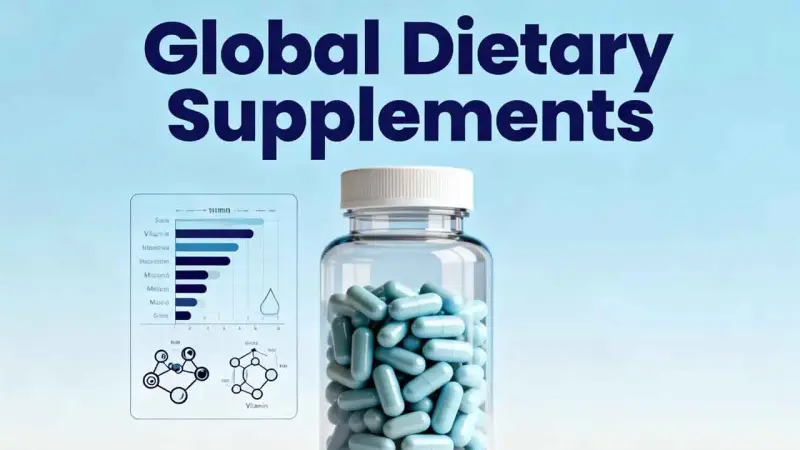
Expanding your dietary supplement brand into international markets presents significant opportunities—and equally significant regulatory challenges. Each country and region maintains its own distinct framework for supplement regulation, and non-compliance can result in costly product holds, shipment seizures, or permanent market bans. This guide provides a market-by-market overview of the key regulatory requirements for the United States, European Union, China, and Southeast Asia.
United States: FDA and DSHEA Framework
The U.S. market is one of the largest and most profitable for dietary supplements. However, it is also one of the most strictly regulated. The Dietary Supplement Health and Education Act (DSHEA) provides the primary regulatory framework.
1. FDA Registration
Any facility involved in the manufacturing, packaging, or labeling of dietary supplements for the U.S. market must register with the Food and Drug Administration (FDA). This registration must be renewed annually, and the facility is subject to inspection at any time.
2. Current Good Manufacturing Practice (cGMP) Compliance
The FDA enforces strict cGMP regulations specifically for dietary supplements. These regulations cover all aspects of production, from raw material handling to finished product testing. Compliance is non-negotiable for any brand seeking to operate in the U.S. market.
3. Labeling Requirements
FDA labeling requirements are detailed and specific. Key labeling elements include:
Statement of Identity: The product name must clearly identify it as a dietary supplement.
Net Quantity of Contents: The amount of product in the package must be clearly stated.
Supplement Facts Panel: This panel must list all ingredients, serving size, and daily value percentages in a standardized format.
Other Ingredients: Any ingredients not declared in the Supplement Facts panel must be listed here.
Manufacturer/Distributor Information: Name, address, and contact information must be provided.
4. Structure/Function Claims
Supplements can make claims that describe the role of a nutrient or ingredient in maintaining normal body structure or function. These claims must be truthful, non-misleading, and supported by scientific evidence. The following disclaimer must be included with every structure/function claim:
"This statement has not been evaluated by the Food and Drug Administration. This product is not intended to diagnose, treat, cure, or prevent any disease."
5. New Dietary Ingredient (NDI) Notification
If a supplement contains a dietary ingredient that was not marketed in the U.S. before October 15, 1994, the manufacturer must submit an NDI notification to the FDA at least 75 days before marketing the product.
European Union: EFSA and Novel Food Regulation
The European Union maintains a rigorous regulatory framework that emphasizes safety substantiation and pre-market approval. The European Food Safety Authority (EFSA) plays a central role in evaluating ingredient safety and health claims.
1. Food Supplements Directive (2002/46/EC)
This directive provides the harmonized framework for food supplements across the EU. It establishes maximum and minimum vitamin and mineral levels, though member states may set their own specific limits.
2. Novel Food Regulation (EU) 2015/2283
Any food or ingredient that was not consumed to a significant degree in the EU before May 15, 1997, is considered a "Novel Food" and requires pre-market authorization. This includes many botanical extracts and new synthetic ingredients commonly found in supplements.
3. Health Claims Regulation (EC) No 1924/2006
Health claims on supplements are strictly regulated. The two primary categories are:
Article 13.1 Claims: General function claims based on generally accepted scientific evidence (e.g., "calcium contributes to normal bone health").
Article 14 Claims: Claims relating to disease risk reduction or child development.
All health claims must be authorized by EFSA and included in the EU Register of nutrition and health claims. Making an unauthorized health claim is a violation and can result in product withdrawal.
4. Labeling Language and Formatting
EU labeling requirements are also highly specific. Information must be provided in the official language(s) of the member state where the product is sold. This includes a mandatory nutrition declaration and specific allergen warnings. The label must provide the name and address of the manufacturer or importer.
5. Traditional Use and Botanical Regulations
Botanical ingredients present a unique challenge in the EU. The Traditional Herbal Medicinal Products Directive may classify certain botanicals as medicinal, requiring more stringent authorization. For botanicals falling under the Novel Food Regulation, a robust safety dossier is necessary.
Southeast Asia: A Diverse Regulatory Landscape
Southeast Asia is a dynamic and growing market for supplements, but it is far from a single regulatory environment. Key markets like Singapore, Malaysia, Thailand, and Indonesia each have their own distinct requirements.
1. Singapore: Health Sciences Authority (HSA) Guidelines
Singapore classifies supplements under the Health Products Act as health supplements. Pre-market notification is required for all products, with a focus on safety and label accuracy. Claims must be substantiated and cannot include medicinal or therapeutic promises.
2. Malaysia: National Pharmaceutical Regulatory Agency (NPRA)
Supplements are regulated as health supplements under the National Pharmaceutical Regulatory Agency. Products require product registration before they can be sold. This involves a thorough review of safety, quality, and efficacy data. Labels must be in both Bahasa Malaysia and English and must comply with specific format and content requirements.
3. Thailand: Food and Drug Administration (Thai FDA)
Thailand requires product registration for dietary supplements. The Thai FDA enforces strict labeling requirements, including specific regulations for nutrition claims and prohibited disease claims. All supplements must be manufactured in a GMP-certified facility.
4. Indonesia: Badan Pengawas Obat dan Makanan (BPOM)
Indonesia's BPOM requires a rigorous product registration process that can take several months. Supplement composition is strictly regulated, and only specific forms and amounts of vitamins and minerals are permitted. Labeling must be in Bahasa Indonesia and meet detailed regulatory specifications.
5. Halal Certification
For many Southeast Asian markets, Halal certification is a critical factor for consumer trust and market access. This certification, provided by recognized bodies like MUI in Indonesia or JAKIM in Malaysia, verifies that the product meets Islamic dietary requirements.
China: A Highly Regulated and Complex Market
China represents a significant opportunity, but its regulatory landscape is one of the most challenging globally. Supplements are classified and regulated under the Food Safety Law.
1. Health Food Registration (Blue Hat Certification)
Dietary supplements intended for the Chinese market must obtain the "Blue Hat" certification from the State Administration for Market Regulation (SAMR). This is a rigorous process that requires extensive scientific evidence to support any health claims. This process can take 2-3 years and is a significant investment.
2. Cross-Border E-Commerce Channels
An alternative pathway to the Chinese market is through Cross-Border E-Commerce (CBEC). Products sold via CBEC are not required to have Blue Hat certification, provided they are manufactured in a compliant facility and are not subject to specific import bans. However, these products can only be sold online through designated CBEC platforms.
3. Labeling and Language Requirements
All products sold in China, including those via CBEC, must have labels in Chinese. These labels must include the product name, ingredients, net weight, country of origin, shelf life, and storage instructions. CBEC products are often labeled with a sticker affixed to the product or packaging.
4. Ingredient Restrictions and Permitted Lists
The Chinese government maintains a specific list of permitted ingredients for health food use, divided into ingredients for health foods (List A) and ingredients for dietary supplements (List B). Ingredients not on these lists are prohibited.
Key Considerations for Global Market Access
Regardless of the target market, several universal principles apply to supplement regulation.
1. The Claim is the Constraint
The most important rule is that the product must not claim to treat, cure, or prevent disease. All claims must be truthful, not misleading, and appropriately substantiated. This principle applies across all global jurisdictions.
2. Proactive Compliance is Essential
Compliance cannot be an afterthought. It must be integrated into the product development process. The earlier you consider regulatory requirements, the more efficient and cost-effective your market entry will be.
3. Partner with Regulatory Experts
Navigating global regulations is a complex and evolving task. A CDMO that understands international compliance can guide you through this process, helping you avoid costly mistakes and ensuring your product reaches its market safely and efficiently.
SREKE: Your Partner in Global Regulatory Compliance
At SREKE, we understand that regulatory compliance is one of the biggest challenges facing global supplement brands. We have extensive experience in developing and manufacturing products that meet the regulatory requirements of the U.S., EU, Southeast Asia, and beyond.
Our regulatory support services include:
Formula Review: We review your proposed formula for compliance with your target market's regulations.
Labeling Assistance: We ensure your labels meet the specific formatting and content requirements for your market.
Documentation Support: We help you compile the necessary documentation for product registration and notification.
Ready to Expand Your Brand Globally?
Navigating global supplement regulations can be complex, but you don't have to do it alone. Let SREKE help you bring your product to markets around the world with confidence and compliance.
Contact us today to start your global compliance consultation:
Click here to get in touch with our team or email us directly at [email protected]. Your global success starts with a conversation.