







Why 3D Printing Supplements Technology Matters for Supplement Brands
At SREKE, we recognize that 3D printing supplements technology is reshaping how brands approach formulation, quality control, and time-to-market. This additive manufacturing method allows for precise dosage accuracy, complex geometries, and rapid prototyping—critical advantages in a competitive dietary supplement landscape. According to industry analyses, the global 3D printing in pharmaceuticals market is projected to grow significantly, driven by demand for personalized nutrition and on-demand production. For brand owners, this means the ability to iterate formulas quickly, reduce waste, and maintain strict compliance with FDA and EFSA standards.
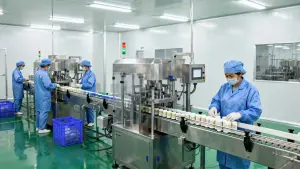
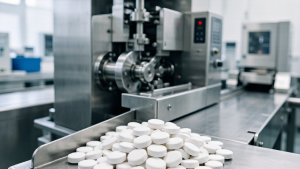
Our facility integrates 3D printing into our GMP-certified workflow, ensuring every printed supplement meets rigorous quality benchmarks. We use this technology to support brands seeking innovation in softgels, capsules, tablets, powders, gummies, and liquids—without compromising on safety or consistency.
Key Manufacturing Considerations at SREKE
When adopting 3D printing supplements technology, several manufacturing factors require careful attention. At SREKE, we address these through a structured quality control framework aligned with ISO 22000, HACCP, and cGMP guidelines.
- Raw Material Verification: All excipients and active ingredients undergo identity, purity, and potency testing before production begins.
- Precision Dosing: 3D printing enables micro-gram accuracy, reducing variability and supporting label compliance.
- Real-Time Monitoring: Our in-process checks track print parameters, ensuring batch-to-batch consistency.
- Scalability: We bridge prototyping and full-scale production, with flexible MOQs starting from 5,000 units for most formats.
- Packaging & Labeling: Integrated services include child-resistant closures, tamper-evident seals, and FDA-compliant labeling.
We recommend brands collaborate with experienced ODM partners who can navigate regulatory requirements while leveraging advanced manufacturing techniques.
How SREKE Helps You Get to Market Faster
Time-to-market is critical for supplement brands. Our 3D printing capabilities accelerate development cycles by reducing physical prototyping from weeks to days. At SREKE, we offer:
- Rapid Formulation Iteration: Test multiple ingredient combinations and dosages with minimal waste.
- Streamlined Compliance: Our team provides documentation support for FDA facility registration and dietary supplement GMP compliance (21 CFR Part 111).
- Flexible Lead Times: Pilot batches ship within 2–3 weeks; full production runs are scheduled based on volume and complexity.
- End-to-End Solutions: From concept to shelf-ready packaging, we manage every step under one roof in Guangzhou.
Contact our team to discuss how 3D printing can streamline your next product launch.
Industry Trends and Market Opportunities
The supplement industry is evolving toward personalization and on-demand manufacturing. 3D printing supplements technology aligns with these trends by enabling:
- Customized Nutrition: Brands can offer tailored dosages based on consumer profiles, supporting the growing personalized wellness market.
- Sustainability: Additive manufacturing reduces material waste compared to traditional compression or encapsulation methods.
- Innovation in Delivery: Complex shapes and multi-layer prints can enhance bioavailability and user experience.
Market research from Grand View Research indicates that the personalized nutrition sector is expanding rapidly, creating opportunities for brands that adopt agile manufacturing. At SREKE, we stay ahead of these shifts by investing in advanced equipment and continuous training for our quality control staff.
Frequently Asked Questions
How does 3D printing affect supplement quality?
3D printing enhances quality through precise ingredient distribution and consistent dosing. At SREKE, every printed product undergoes final testing for potency, dissolution, and microbiological safety to ensure it meets label claims and regulatory standards.
What are the MOQ requirements for 3D printed supplements?
Our MOQs vary by format but typically start at 5,000 units for softgels, capsules, and tablets. We offer flexible scaling for brand owners testing new concepts or launching limited editions.
Can you assist with regulatory submissions?
Yes. We provide documentation support for FDA dietary supplement GMP compliance, including facility registration, product specifications, and stability testing records. Our team guides you through the process to ensure your product is market-ready.
What types of supplements can be 3D printed?
We print a wide range of formats, including hard and soft capsules, tablets, gummies, and powders. Our technology supports both single-ingredient and complex multi-component formulations.
How does lead time compare to traditional manufacturing?
3D printing reduces prototyping time by up to 70%. For full production, lead times depend on order volume and complexity, but we prioritize efficient scheduling to meet your launch deadlines.
Ready to launch your supplement brand? SREKE provides GMP-certified OEM/ODM manufacturing for softgels, capsules, tablets, powders, gummies, and liquids. Contact us for a free quote or email [email protected] — we respond within 24 hours.