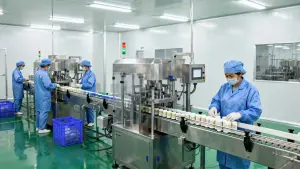




The global tablet supplement market was valued at approximately $38 billion in 2025 and is projected to grow at a CAGR of 6.2% through 2030, fueled by rising consumer demand for convenient, precisely dosed nutrition. For supplement brands entering or expanding in this category, understanding every stage of the tablet OEM manufacturing process is critical — not only to control costs but also to deliver a product that meets regulatory standards and consumer expectations. At SREKE, we have manufactured hundreds of tablet SKUs for brands across North America, Europe, and Asia, and this guide distills that experience into a clear, actionable overview.
Why Tablet Supplements Dominate the Global Market
Tablets remain the most widely consumed supplement dosage form worldwide, accounting for roughly 45% of all dietary supplement unit sales. Three factors drive this dominance: dose precision — each tablet delivers an exact, validated amount of active ingredient; stability — properly formulated tablets can achieve 24–36 month shelf life with minimal degradation; and cost efficiency — high-speed rotary presses can produce 200,000–500,000 tablets per hour, making per-unit costs among the lowest of any dosage form.
For brand owners, tablets also offer unmatched versatility in product positioning. A single formulation can be produced as a swallowable tablet, a chewable with natural sweeteners, an effervescent for on-the-go use, or a sustained-release format that delivers ingredients over 8–12 hours. Each variant opens a different retail channel and target demographic without requiring a new active ingredient formulation.
Key Factors to Consider for Tablet OEM Manufacturing
What Tablet Type Best Serves Your Target Market?
Selecting the right tablet type is the most consequential early decision in OEM development. Immediate-release tablets disintegrate within 30 minutes in the stomach and suit most vitamin and mineral formulations. Chewable tablets require organoleptic optimization — particle size distribution of the active ingredient must be controlled to avoid grittiness, and sweetener systems (typically xylitol, mannitol, or monk fruit extract) must mask bitterness without adding excessive bulk. Effervescent tablets demand specialized manufacturing conditions: relative humidity must stay below 20% during production, and dedicated packaging with desiccant-lined closures is non-negotiable. Film-coated tablets add a thin polymer layer for brand differentiation and easier swallowing but increase production lead time by 3–5 days.
Your contract manufacturer should guide this decision based on your active ingredient profile, target retail price point, and distribution channel. A product destined for mass-market retail shelves has fundamentally different requirements than one sold through practitioner channels.
What Is the MOQ for Tablet OEM Orders?
Minimum order quantities for tablet OEM manufacturing vary by tablet type and packaging complexity. Standard immediate-release tablets typically start at 50,000–100,000 units per SKU. Chewable tablets, due to additional flavor development and organoleptic testing, often require 100,000 units minimum. Effervescent tablets carry the highest MOQ — typically 150,000–200,000 units — because the specialized production environment and packaging make small batches economically unviable. These figures represent industry norms; some manufacturers, including SREKE, offer flexible MOQ arrangements for brands in the launch or test-market phase.
How Long Does Tablet OEM Production Take?
A typical tablet OEM project timeline breaks down as follows: formulation confirmation and raw material sourcing — 2–4 weeks; pilot batch production and stability testing — 4–6 weeks; commercial production and quality release — 3–5 weeks; packaging and logistics — 2–3 weeks. The total end-to-end lead time ranges from 11 to 18 weeks, with the largest variable being raw material availability. Brands should plan for 16 weeks as a realistic baseline when launching a new tablet SKU.
The Tablet OEM Manufacturing Process: Step by Step
Understanding the production workflow helps brand owners communicate effectively with their manufacturing partner and anticipate potential bottlenecks. Here is how a standard tablet OEM project moves from concept to finished product:
Step 1 — Formulation Review and Raw Material Qualification. Your manufacturer reviews your formula for feasibility: Are the active ingredients compatible? Do excipient ratios support proper compression? Each raw material supplier must provide a Certificate of Analysis (CoA), and the manufacturer performs identity testing on incoming materials before they enter production.
Step 2 — Blending and Granulation. Active ingredients and excipients are blended in large-capacity V-blenders or ribbon blenders to achieve content uniformity. If the powder blend lacks adequate flow properties for high-speed compression, it undergoes wet granulation (adding a liquid binder and drying) or dry granulation (slugging or roller compaction). Granulation is often the step that separates experienced manufacturers from novices — improper granulation leads to weight variation, capping, or lamination during compression.
Step 3 — Tablet Compression. The granulated blend is fed into a rotary tablet press, where upper and lower punches compress the material into tablets at pressures typically ranging from 5 to 25 kilonewtons. Critical in-process controls at this stage include tablet weight (target ±3%), hardness (typically 5–12 kp for standard tablets), thickness, and friability (less than 1% weight loss after tumbling). These parameters are checked every 15–30 minutes throughout the production run.
Step 4 — Coating (If Applicable). Film coating is performed in a perforated coating pan where a polymer solution is sprayed onto the tablet bed while warm air flows through. Coating weight gain typically ranges from 2–4% of the tablet core weight. The coating serves functional purposes — moisture barrier, taste masking, enteric delivery — and aesthetic ones like brand color matching.
Step 5 — Quality Control and Release. Finished tablets undergo a full panel of tests: assay for active ingredient potency, dissolution testing to verify release profile, microbial limits testing, and heavy metal analysis. A batch record review ensures every production parameter fell within specification. Only after QC approval is the batch released for packaging.
Tablets vs. Other Dosage Forms: Which Is Right for Your Brand?
| Factor | Tablets | Softgels | Gummies | Powders |
|---|---|---|---|---|
| Per-unit cost | Lowest | Moderate | Higher | Lowest (bulk) |
| Shelf stability | 24–36 months | 18–24 months | 12–18 months | 18–24 months |
| Dose precision | Excellent (±3%) | Excellent (±3%) | Good (±10%) | User-dependent |
| Active ingredient capacity | Up to 1,000 mg | Up to 1,500 mg | Up to 200 mg | Up to 5,000 mg/serving |
| Consumer appeal | Pharmaceutical, clinical | Smooth, easy swallow | Candy-like, enjoyable | Versatile, mixable |
| Flavor masking difficulty | Moderate (coating helps) | Excellent (sealed) | Built-in | Challenging |
| Typical MOQ | 50,000–100,000 | 100,000–200,000 | 100,000–200,000 | 100–500 kg |
Tablets excel when your brand priorities are cost control, long shelf life, and clinical positioning. They are the natural choice for high-potency single-nutrient products, multivitamins, and any formulation where precise dosing is non-negotiable. If your brand competes on taste experience or targets consumers who struggle with swallowing pills, gummies or liquids may be a better fit.
Frequently Asked Questions
What certifications should a tablet OEM manufacturer hold?
At minimum, look for GMP (Good Manufacturing Practice) certification from a recognized authority such as NSF International or UL. For export markets, additional certifications matter: ISO 22000 for food safety management, HACCP for hazard control, and market-specific credentials like FDA registration for the U.S. market or EU Organic certification for European distribution. Halal and Kosher certifications also expand addressable markets in the Middle East and Southeast Asia.
How are tablet ingredients tested for quality?
Every incoming raw material batch undergoes identity testing (HPLC, FTIR, or pharmacopoeial methods), potency assay, heavy metal screening (lead, arsenic, cadmium, mercury), and microbial limits testing. During production, in-process samples are pulled at defined intervals for weight, hardness, thickness, and disintegration testing. Finished product testing includes full assay, dissolution profile, stability-indicating analysis, and microbiological examination per USP or EP standards.
Can I use my own custom tablet shape or engraving?
Yes. Custom tablet tooling — including shaped punches (oval, caplet, triangular) and engraved logos or product codes — is a standard OEM service. Tooling costs typically range from $500 to $2,000 per punch set depending on complexity, and lead time for custom tooling is 4–6 weeks. Once fabricated, the tooling belongs to the brand and can be reused for future production runs.
What is the difference between direct compression and wet granulation?
Direct compression blends active ingredients with excipients and compresses them immediately — it is faster and cheaper but requires ingredients with good flow and compressibility. Wet granulation adds a liquid binder to form granules that are dried and milled before compression — it adds 2–4 days to production but produces tablets with superior content uniformity, especially for low-dose or poorly flowing formulations. Your manufacturer selects the method based on your specific formula characteristics.
How are tablet supplements packaged for retail?
Standard options include HDPE bottles (with induction seal and child-resistant caps available), PET jars for premium positioning, blister packs for dose-verification markets like the EU, and bulk pouches for e-commerce. Labeling and packaging design can be handled by the brand or through the manufacturer's network of packaging partners. Desiccant canisters or packets are added for moisture-sensitive formulations.
What regulatory documentation does the manufacturer provide?
A full documentation package typically includes: Certificate of Analysis for the finished batch, Master Manufacturing Record, stability study data (accelerated and real-time), allergen statement, GMO statement, BSE/TSE statement, and country-of-origin certificate. For brands selling on Amazon or in regulated retail channels, this documentation is essential for compliance verification and vendor onboarding.
How to Get Started with SREKE
Launching a tablet supplement line requires a manufacturing partner that combines technical expertise with transparent communication. Whether you need a standard multivitamin tablet, a high-potency single-nutrient formulation, or a complex sustained-release product, the right OEM partner should walk you through formulation feasibility, provide realistic timelines, and deliver consistent quality batch after batch.
At SREKE, our tablet manufacturing lines operate under full GMP compliance with in-house QC laboratory capabilities covering HPLC, dissolution, and microbiological testing. We offer flexible MOQ structures for emerging brands and comprehensive documentation support for global market entry.
These statements have not been evaluated by the Food and Drug Administration. These products are not intended to diagnose, treat, cure, or prevent any disease.
If you are looking for OEM/ODM/CDMO contract manufacturing services, please visit https://www.sreke.com/contact.php to submit your inquiry.