




Why HPMC Capsule Filling Machine Types Matter for Supplement Brands
At SREKE, we understand that selecting the right capsule filling technology is one of the most consequential decisions a supplement brand can make. HPMC (hydroxypropyl methylcellulose) capsules have emerged as the leading vegetarian and vegan alternative to traditional gelatin capsules, and the filling equipment you choose directly impacts your product quality, compliance, speed to market, and bottom line.
HPMC capsules are made from plant-based cellulose and are naturally free from animal-derived ingredients, making them suitable for vegan, halal, and kosher formulations. They also offer superior stability for moisture-sensitive ingredients compared to gelatin capsules, according to industry data from the Capsugel (now BASF) technical library and EFSA evaluations of HPMC as a food additive (E464).
The type of HPMC capsule filling machine you partner with your OEM matters because different machines serve different production scales, capsule sizes, and formulation requirements. At SREKE, our Guangzhou manufacturing facility operates multiple filling lines to serve brands at every stage — from emerging DTC startups to established global supplement companies.
Key Manufacturing Considerations at SREKE
1. Fully Automatic HPMC Capsule Filling Machines
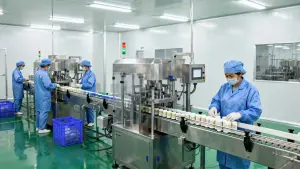
Fully automatic machines represent the highest tier of production capability. At SREKE, our fully automatic lines handle capsule separation, filling, and ejection in a continuous automated cycle with minimal manual intervention. These machines typically achieve output rates of 30,000 to 80,000 capsules per hour, depending on capsule size and formulation density.
Key advantages include consistent fill weight accuracy (typically within ±2% to ±3%), reduced labor costs, and integrated vision inspection systems that detect empty, overfilled, or damaged capsules. These machines are ideal for high-volume brands with established SKUs and predictable demand forecasting.
Our fully automatic equipment is compliant with GMP (Good Manufacturing Practice) standards as defined by the FDA's 21 CFR Part 111 and meets ISO 9001 quality management requirements. All product-contact surfaces are constructed from 316L stainless steel, and the machines feature CIP (Clean-in-Place) compatibility for efficient changeovers between formulations.
2. Semi-Automatic HPMC Capsule Filling Machines
Semi-automatic filling machines require more operator involvement but offer exceptional flexibility for brands with lower volumes or frequent SKU rotations. At SREKE, our semi-automatic lines typically produce between 3,000 and 15,000 capsules per hour, making them ideal for pilot batches, clinical trial supplies, and emerging brands testing market demand.
The operator manually loads capsule bodies onto the feeding track and removes filled capsules after the ejection phase. This hands-on approach allows for real-time quality adjustments and is particularly valuable for formulations that require custom fill weights or specialized ingredient blends.
Semi-automatic machines at our facility are also GMP-compliant and feature the same 316L stainless steel construction. For brands that need to validate a formulation before committing to large-scale production, our semi-automatic lines provide a practical bridge between R&D and full commercial manufacturing.
3. Rotary vs. Linear Filling Machine Architecture
At SREKE, we work with both rotary and linear capsule filling systems, each with distinct operational characteristics:
- Rotary filling machines use a rotating disc with multiple stations to simultaneously separate, fill, and close capsules. They are the industry standard for high-speed production and are commonly used for volumes exceeding 50,000 capsules per shift. Rotary machines excel in consistency and throughput but require longer changeover times when switching between capsule sizes.
- Linear filling machines operate on a straight-line conveyor principle, moving capsules through sequential stations. They are generally more compact, require less floor space, and allow faster changeovers between different capsule sizes. Linear machines are particularly well-suited for smaller brands and facilities with space constraints.
Our facility in Guangzhou maintains both architectures to accommodate the diverse needs of our partners, from boutique brands to multinational supplement companies.
4. Capsule Size Compatibility
HPMC capsules are available in standard sizes ranging from 000 (largest) to 5 (smallest). At SREKE, our filling machines are configurable for all standard HPMC capsule sizes, and we recommend selecting your capsule size based on your formulation's active ingredient load and target serving size. Our technical team assists every brand in determining the optimal capsule size during the formulation development phase.
5. Moisture and Stability Considerations
HPMC capsules are inherently more resistant to moisture absorption than gelatin capsules, which makes them the preferred choice for hygroscopic ingredients such as probiotics, botanical extracts, and certain vitamin complexes. According to EFSA scientific opinions on food additives, HPMC (E464) is approved for use across the European Union and is generally recognized as safe (GRAS) by the FDA for use in food and dietary supplement applications.
At SREKE, we control humidity levels within our filling environment to maintain capsule integrity during production. Our facility maintains relative humidity between 35% and 45% in the filling zone, which is critical for preventing capsule brittleness or softness that could affect filling accuracy and final product appearance.
How SREKE Helps You Get to Market Faster
At SREKE, we streamline the path from formulation to finished product through our integrated OEM/ODM services. Here is how our approach works for HPMC capsule products:
- Formulation Development: Our in-house R&D team works with you to optimize your formula for capsule filling, considering ingredient density, flowability, and compatibility with HPMC capsule shells. We conduct fill-weight studies and stability testing before production begins.
- MOQ Flexibility: We understand that brand sizes vary. Our minimum order quantities for HPMC capsule products start at 10,000 units for established SKUs and 5,000 units for new product trials. We work with you to find the right balance between cost efficiency and inventory management.
- Lead Time: For standard HPMC capsule products, our typical lead time is 25 to 35 days from formula approval to shipment. Expedited timelines are available for urgent launches, and we provide real-time production updates throughout the manufacturing process.
- Compliance Documentation: Every batch produced at our GMP-certified facility comes with full documentation, including certificates of analysis (COA), batch records, and compliance statements. We support FDA facility registration and can provide documentation for EU market entry, including EFSA-compliant ingredient declarations.
- Packaging Options: We offer a range of packaging solutions including blister packs, PET bottles, HDPE bottles, and child-resistant closures. Our packaging team ensures that your product meets labeling requirements for both the US and international markets.
We also provide private labeling and custom packaging design support, so your brand stands out on the shelf — whether you are selling through Amazon, retail pharmacies, or direct-to-consumer channels.
Industry Trends and Market Opportunities
The global HPMC capsule market is experiencing significant growth, driven by increasing consumer demand for plant-based, allergen-free, and ethically sourced supplement products. According to industry reports from Grand View Research and MarketsandMarkets, the global vegetarian capsule market is projected to grow at a compound annual growth rate (CAGR) of approximately 6% to 8% through 2030.
Key trends shaping the market include:
- Vegan and plant-based demand: Consumers are increasingly seeking supplements that align with vegan lifestyles. HPMC capsules, being entirely plant-derived, are positioned to capture this growing segment.
- Clean label movement: HPMC is perceived as a clean-label ingredient compared to synthetic alternatives, and it does not require the artificial coloring that some gelatin capsules use.
- Regulatory alignment: HPMC is approved under FDA 21 CFR and EU Regulation (EC) No 1333/2008 as a food additive, giving brands confidence in regulatory compliance across major markets.
- Shelf-stability advantage: HPMC capsules demonstrate superior moisture barrier properties, extending product shelf life and reducing the need for desiccants in packaging — a significant advantage for brands shipping internationally.
At SREKE, we monitor these trends closely and advise our partners on formulation and packaging strategies that align with evolving consumer preferences and regulatory developments.
Frequently Asked Questions
What is an HPMC capsule?
HPMC (hydroxypropyl methylcellulose) capsules are vegetarian capsule shells made from plant-based cellulose. They are a popular alternative to gelatin capsules and are suitable for vegan, halal, and kosher formulations. HPMC capsules are approved by the FDA and EFSA for use in dietary supplements.
What is the difference between a fully automatic and semi-automatic capsule filling machine?
Fully automatic machines handle the entire filling process with minimal human intervention and achieve higher output rates (30,000–80,000 capsules per hour). Semi-automatic machines require more operator involvement but offer greater flexibility for lower volumes and frequent SKU changes, producing between 3,000 and 15,000 capsules per hour.
What MOQ do you require for HPMC capsule production?
At SREKE, our MOQ starts at 5,000 units for new product trials and 10,000 units for standard production runs. We work with brands of all sizes and can adjust MOQs based on your specific requirements and timeline.
How long does it take to produce HPMC capsule orders?
Our standard lead time is 25 to 35 days from formula and packaging approval. Expedited production is available for time-sensitive launches. We provide weekly production updates so you can track your order in real time.
Are HPMC capsules compliant with FDA and EU regulations?
Yes. HPMC is recognized as GRAS by the FDA and is approved as food additive E464 under EU Regulation (EC) No 1333/2008. All products manufactured at our GMP-certified facility comply with FDA 21 CFR Part 111 (Dietary Supplement Current Good Manufacturing Practices) and EU GMP guidelines.
Can you help with packaging and labeling for international markets?
Absolutely. Our team provides full packaging design support, including label compliance review for US FDA requirements and EU labeling regulations. We offer blister packs, bottles, and custom packaging solutions tailored to your market.
What types of formulations work best in HPMC capsules?
HPMC capsules are suitable for a wide range of formulations including powdered botanicals, vitamin and mineral blends, probiotics, amino acids, and specialty ingredients. Our R&D team will assess your formulation's flow properties and recommend the optimal filling approach during the development phase.
Ready to launch your supplement brand? SREKE provides GMP-certified OEM/ODM manufacturing for softgels, capsules, tablets, powders, gummies, and liquids. Contact us for a free quote or email [email protected] — we respond within 24 hours.