







Why 3D Printing Supplements Matters for Supplement Brands
At SREKE, we see 3D printing supplements as one of the most transformative shifts in the dietary supplement industry. Also known as additive manufacturing, 3D printing allows brands to produce highly customized, precision-dosed products at scale — something conventional tablet compression and capsule filling cannot easily achieve.
According to market research by Grand View Research, the global 3D printing in healthcare market was valued at approximately USD 1.2 billion in 2023 and is projected to grow at a compound annual growth rate (CAGR) of over 20% through 2030. While this figure encompasses medical devices and pharmaceuticals broadly, the supplement sector is capturing an increasing share of this growth as consumer demand for personalization accelerates.
For supplement brand owners, 3D printing offers several strategic advantages:
- Personalized dosing: Each unit can be printed with a unique dosage, enabling brands to offer tailored nutrition programs without maintaining multiple SKUs.
- Complex geometries: Traditional manufacturing is limited by die and tooling constraints. 3D printing enables multi-layered, multi-compound tablets that separate incompatible ingredients until ingestion.
- Rapid prototyping: Formulation changes that previously required weeks of tooling adjustments can now be tested in days.
- Reduced waste: Additive processes use only the material required, minimizing overproduction and raw material waste — a significant factor at scale.
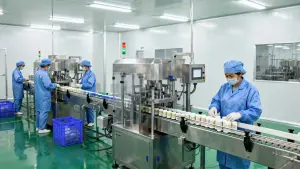
At SREKE, we are actively evaluating and integrating 3D printing capabilities into our GMP-certified manufacturing workflows. Our facility in Guangzhou is designed to meet the rigorous quality standards required for next-generation supplement production.
Key Manufacturing Considerations at SREKE
Implementing 3D printing in supplement manufacturing requires careful attention to quality, compliance, and scalability. Here is how we approach these considerations at SREKE.
Regulatory Compliance and GMP Standards
At SREKE, our manufacturing facility operates under GMP (Good Manufacturing Practice) certification, aligned with both FDA 21 CFR Part 111 and EU GMP guidelines. Any 3D printing process we adopt must meet the same rigorous standards as our conventional tablet, capsule, softgel, gummy, and liquid production lines.
Key compliance areas we address include:
- Ingredient verification: Every raw material used in 3D printing — whether powder, ink, or binder — must pass identity, purity, and potency testing before entering production.
- Environmental controls: 3D printing chambers require the same cleanroom-grade environmental monitoring as our existing production areas, including particulate and microbial testing.
- Documentation and traceability: Batch records, equipment logs, and quality control data must be maintained in full compliance with FDA and EFSA documentation requirements.
- Labeling compliance: Products produced via 3D printing must meet all FDA structure/function claim guidelines and EU EFSA health claim regulations. We ensure every label is reviewed for compliance before market release.
Material Science and Formulation Compatibility
Not all supplement ingredients are compatible with 3D printing. At SREKE, our R&D team evaluates each formulation for printability, considering factors such as:
- Particle size distribution: Powders used in extrusion-based or powder-bed 3D printing typically require a consistent particle size range (often 50–200 microns) for reliable flow and layer adhesion.
- Binder compatibility: Binding agents must be food-grade and GRAS (Generally Recognized as Safe) compliant for use in dietary supplements.
- Thermal sensitivity: Some active ingredients degrade under the heat applied during certain 3D printing processes. We prioritize room-temperature and low-heat printing methods for heat-sensitive compounds such as probiotics, vitamins, and botanical extracts.
- Stability and shelf life: Printed products must undergo the same stability testing as conventionally manufactured supplements, including accelerated and real-time stability studies per ICH guidelines.
Scalability and Production Capacity
While 3D printing is often associated with small-batch or one-off production, industrial-grade supplement 3D printers are now capable of producing thousands of units per hour. At SREKE, we evaluate each technology for its ability to scale alongside your brand — whether you need 500 units for a launch batch or 500,000 units for nationwide distribution.
MOQ and Lead Time
One of the most significant advantages of 3D printing is the potential to reduce minimum order quantities (MOQs) compared to traditional tooling-dependent processes. At SREKE, we offer flexible MOQs across all our manufacturing lines, and 3D printing further lowers the barrier for brands testing new formulations or limited-edition products.
Typical lead times at our facility range from 4–8 weeks for new product development, including formulation, prototyping, stability testing, and full-scale production. 3D printing can compress the prototyping phase significantly, allowing brands to iterate faster.
How SREKE Helps You Get to Market Faster
At SREKE, we understand that speed to market is a competitive advantage. Our end-to-end OEM/ODM services are designed to take your product from concept to shelf with minimal friction.
Our Integrated Manufacturing Approach
Whether you choose 3D printing or conventional manufacturing, SREKE provides a seamless transition between development and production. Our capabilities include:
- Formulation development: Our in-house R&D team works with your specifications or develops custom formulas tailored to your brand identity and target market.
- Prototyping and sampling: We produce lab-scale and pilot batches for your evaluation before committing to full production.
- Quality assurance: Every batch undergoes in-process and finished-product testing, including assay, disintegration, hardness, dissolution, heavy metals, microbial limits, and pesticide screening.
- Packaging and labeling: We offer private-label packaging solutions, including blister packs, bottles, pouches, and retail-ready boxes, with full compliance support for FDA and international labeling requirements.
- Regulatory support: Our team assists with FDA facility registration, DSHEA compliance documentation, New Dietary Ingredient (NDI) notifications, and EU market entry requirements.
Technology-Forward, Quality-First
At SREKE, we embrace emerging technologies like 3D printing without compromising the quality standards our clients expect. Our facility combines advanced automation with manual quality checkpoints, ensuring that every product — whether printed, compressed, or filled — meets the highest specifications.
We recommend that brand owners evaluate 3D printing on a case-by-case basis. For products requiring complex layering, personalized dosing, or novel delivery formats, 3D printing may be the optimal choice. For high-volume standard formulations, conventional manufacturing may offer greater cost efficiency. Our team will help you determine the best path forward.
Industry Trends and Market Opportunities
The supplement industry is evolving rapidly, and 3D printing is at the forefront of that transformation. At SREKE, we track several key trends that are shaping the future of supplement manufacturing.
Trend 1: Personalized Nutrition Goes Mainstream
Consumers increasingly expect products tailored to their individual health needs. 3D printing enables mass customization — producing unique formulations for individual customers without the cost penalty traditionally associated with custom manufacturing. Brands that embrace this trend early will have a significant competitive advantage.
Trend 2: Clean-Label and Natural Ingredient Demand
According to data from the Natural Products Industry Trade Association and Euromonitor, clean-label products continue to drive purchasing decisions. 3D printing allows formulators to use simpler, more recognizable ingredient lists, as the printing process itself can replace certain excipients and fillers traditionally required in tablet compression.
Trend 3: Functional and Synergistic Formulations
Multi-layered 3D-printed tablets can separate ingredients that would otherwise be incompatible in a single matrix — for example, pairing probiotics with prebiotics or vitamin C with iron. This enables brands to create synergistic formulas that deliver superior bioavailability and consumer results.
Trend 4: Sustainability in Manufacturing
3D printing generates less waste than subtractive manufacturing processes. At SREKE, we are committed to sustainable operations, and the additive nature of 3D printing aligns with our environmental goals. Reduced material waste, lower energy consumption per unit, and on-demand production all contribute to a smaller carbon footprint.
Trend 5: Fast-Moving Consumer Goods (FMCG) Crossover
Major FMCG companies are entering the supplement space, bringing with them expectations for rapid product development and agile manufacturing. 3D printing meets these expectations by enabling quick formulation changes and short production runs without the cost of tooling reconfiguration.
Frequently Asked Questions
What is 3D printing in supplement manufacturing?
3D printing in supplements, also called additive manufacturing, uses layer-by-layer deposition of food-grade materials to create tablets, capsules, or other dosage forms. Unlike traditional compression or encapsulation, 3D printing allows for precise dosing, complex shapes, and multi-ingredient layering in a single unit.
Is 3D-printed supplement manufacturing compliant with FDA and EFSA regulations?
Yes. At SREKE, any 3D printing process we implement must comply with FDA 21 CFR Part 111 (dietary supplement GMPs) and EU EFSA requirements. This includes ingredient verification, environmental controls, batch traceability, and labeling compliance. We treat 3D printing as a validated manufacturing process subject to the same quality standards as our conventional production lines.
What types of supplements can be 3D printed?
3D printing is suitable for a wide range of supplement formats, including tablets with complex geometries, multi-layered formulations, personalized dosage units, and novel delivery systems. Heat-sensitive ingredients require low-temperature printing methods. Our R&D team evaluates each formulation for printability and regulatory compliance.
How does 3D printing affect MOQ and lead time?
3D printing typically reduces MOQs because it eliminates the need for custom tooling and dies. At SREKE, we offer flexible MOQs across all our manufacturing lines. Lead times for 3D-printed products can be shorter for prototyping and small batches, while full-scale production timelines depend on formulation complexity, testing requirements, and packaging needs.
Can 3D printing handle sensitive ingredients like probiotics and vitamins?
Yes, with the right process selection. At SREKE, we prioritize printing methods that operate at low or room temperature to protect heat-sensitive actives such as probiotics, vitamin C, and certain botanical extracts. Each formulation undergoes stability testing to confirm potency retention throughout the product shelf life.
What is the cost difference between 3D printing and conventional supplement manufacturing?
For high-volume standard products, conventional manufacturing (tablet compression, capsule filling) remains more cost-efficient per unit. However, 3D printing can be more economical for low-volume, high-customization, or multi-ingredient complex formulations where tooling costs would otherwise be prohibitive. At SREKE, we provide detailed cost analysis for each project so you can make an informed decision.
Does SREKE offer 3D printing as a manufacturing option?
At SREKE, we are actively evaluating and integrating 3D printing technology into our GMP-certified manufacturing capabilities. We offer it as an option for eligible formulations and recommend discussing your specific product requirements with our team to determine the best manufacturing approach.
How does SREKE ensure quality control for 3D-printed supplements?
Every 3D-printed batch at SREKE undergoes the same rigorous quality control protocols as our conventional products, including raw material testing, in-process checks, and finished-product analysis for assay, disintegration, hardness, dissolution, heavy metals, microbial limits, and pesticide residues. Our QC lab is equipped to validate 3D-printed products against all applicable regulatory standards.
Ready to launch your supplement brand? SREKE provides GMP-certified OEM/ODM manufacturing for softgels, capsules, tablets, powders, gummies, and liquids. Contact us for a free quote or email [email protected] — we respond within 24 hours.