

Why Cold Press vs Traditional Softgel Manufacturing Matters for Supplement Brands
At SREKE, we understand that the manufacturing method you choose directly impacts your product's quality, shelf life, cost structure, and time to market. Cold press and traditional softgel production represent two fundamentally different approaches to encapsulating your active ingredients, and selecting the right method is a strategic decision that affects your brand positioning and profit margins.
The global softgel market, valued at approximately USD 4.2 billion in 2024, continues to grow at a compound annual rate of 5.8 percent, according to industry analysis from Grand View Research. Brand owners who understand the technical distinctions between cold press and traditional rotary die encapsulation are better positioned to make formulation choices that align with their quality standards and business objectives.
Traditional softgel manufacturing, also known as rotary die encapsulation, has been the industry standard for decades. This process involves feeding liquid or semi-solid fill material between two rotating dies that form and seal the softgel shell. The process operates at controlled temperatures and has been validated across thousands of formulations.
Cold press encapsulation, sometimes referred to as single-punch or semi-automatic encapsulation, is a newer approach gaining traction among brands seeking smaller batch flexibility and cleaner-label positioning. This method uses precision tooling to form softgels without the high shear and thermal stress of continuous rotary processes, making it particularly suitable for thermolabile ingredients and complex oil-based formulations.
Key Differences That Affect Your Bottom Line
- Thermal exposure: Traditional rotary die processes operate at temperatures ranging from 40 to 60 degrees Celsius. Cold press methods typically maintain lower processing temperatures, preserving heat-sensitive compounds such as certain omega-3 fatty acids and botanical extracts.
- Batch flexibility: Cold press manufacturing supports lower minimum order quantities, making it ideal for product launches and seasonal formulations. Traditional rotary production is optimized for high-volume runs.
- Formulation range: Traditional softgels accommodate a wide viscosity range. Cold press excels with high-viscosity and semi-solid fills that may present challenges in continuous rotary systems.
- Tooling costs: Traditional rotary dies require significant upfront investment in custom tooling. Cold press tooling is more modular and cost-effective for short runs.
Key Manufacturing Considerations at SREKE
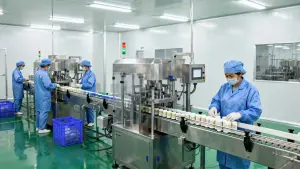
Our manufacturing facility in Guangzhou operates under GMP certification, ISO 22000, and HACCP standards. We offer both cold press and traditional softgel production lines, and our technical team evaluates each formulation to recommend the optimal manufacturing approach.
Quality Standards and Compliance
At SREKE, every softgel we produce meets the requirements of China's GB 14880 standard for food nutrition fortification and the dietary supplement regulations applicable to your target market. For U.S. market products, we ensure compliance with FDA 21 CFR Part 111 current Good Manufacturing Practices. Our European clients receive products manufactured in facilities that support EFSA compliance requirements for food supplements.
- GMP certification: Our facility holds China GMP certification for dietary supplements, issued by the National Medical Products Administration.
- ISO 22000: Our food safety management system is certified to ISO 22000:2018 standards.
- HACCP: Hazard Analysis and Critical Control Points protocols are implemented across all production lines.
- Third-party testing: We conduct incoming raw material testing, in-process quality checks, and finished product analysis at every production stage.
MOQ and Lead Time Specifications
We structure our MOQ and lead time policies to support brands at every growth stage. For traditional rotary die softgel production, our standard MOQ is 50,000 units per SKU, with typical lead times of 30 to 45 days from formula approval to shipment. Cold press production supports MOQs starting at 10,000 units per SKU, with lead times of 20 to 30 days.
Our ODM program offers a library of pre-validated formulations that can reduce development time significantly. When you select a formulation from our ODM catalog, lead times can be as short as 15 to 20 days, depending on packaging customization requirements.
Formulation Support and Packaging Options
Our R&D team works with you to develop or adapt formulations for your chosen manufacturing method. We support softgel fills including oil-based formulations, water-dispersible technologies, and semi-solid pastes. Our packaging options include PVC/PVDC blister packs, PET containers, and custom bottle designs. We also offer private label packaging services with artwork support.
We recommend that brand owners share their target ingredient profile, fill weight, and shell composition preferences during the initial consultation. Our technical directors will then provide a detailed manufacturing recommendation, including a formulation feasibility assessment and a production timeline.
How SREKE Helps You Get to Market Faster
At SREKE, we have streamlined our OEM and ODM processes to reduce the time between your initial inquiry and product delivery. Our integrated approach combines in-house formulation development, shell production, encapsulation, and packaging under one roof, eliminating supply chain delays that commonly affect brands working with multiple vendors.
Our Proven Production Workflow
- Phase 1 — Consultation and feasibility (Days 1 to 5): We review your formulation requirements, target market regulations, and volume expectations. Our team provides a preliminary manufacturing assessment and cost estimate.
- Phase 2 — Formula development and shell sourcing (Days 6 to 20): Our R&D chemists develop or refine your formula. We source shell materials from certified suppliers and conduct compatibility testing.
- Phase 3 — Pilot production and quality testing (Days 21 to 30): We produce pilot batches for your review. Completed samples undergo stability testing, dissolution testing, and microbial analysis.
- Phase 4 — Full production and shipment (Days 31 to 45): Upon your approval, we commence full-scale manufacturing, quality control inspection, and logistics arrangement.
ODM Fast-Track Program
For brands seeking the fastest route to market, our ODM program provides access to over 200 pre-developed softgel formulations covering popular categories including omega-3, coenzyme Q10, vitamin D3, turmeric curcumin, and probiotic blends. These formulations are already registered and compliant, allowing us to skip the development phase entirely and move directly to packaging and production.
We also offer white-label solutions where you can select from our existing product line and apply your branding. This option can deliver products in as few as 15 days for standard SKUs.
Industry Trends and Market Opportunities
The dietary supplement industry continues to evolve rapidly, and manufacturing technology is a key driver of innovation. At SREKE, we monitor market trends closely and invest in production capabilities that align with where brand owners need to go.
Clean-Label and Transparency Demand
Consumers increasingly demand transparent ingredient lists and minimal processing. Cold press manufacturing supports this trend by reducing thermal degradation of ingredients and enabling cleaner shell formulations. Brands that can communicate the cold press advantage in their marketing materials differentiate themselves in a crowded marketplace.
Sustainability in Manufacturing
Environmental responsibility is shaping procurement decisions. Our facility has implemented energy-efficient encapsulation equipment and waste reduction protocols. We source shell materials from suppliers who adhere to sustainable gelatin and pectin sourcing practices. Brands that prioritize sustainability in their manufacturing partner selection are well-positioned for the growing eco-conscious consumer segment.
Personalized Nutrition and Small Batches
The personalized nutrition trend is driving demand for smaller, more frequent production runs. Cold press manufacturing is uniquely suited to this model, offering the flexibility that high-volume rotary lines cannot match. As the personalized supplement market expands, manufacturers who can support agile production will capture increasing market share.
Water-Dispersible and Fast-Dissolving Technologies
Consumer preference for convenience is accelerating adoption of water-dispersible softgel technologies. These formulations dissolve rapidly in water, creating a beverage-ready supplement. Our facility has dedicated lines for water-dispersible softgel production, and we actively support brand owners developing products in this growing category.
Frequently Asked Questions
What is the main difference between cold press and traditional softgel manufacturing?
Traditional rotary die softgel manufacturing uses rotating dies to continuously form and seal softgels at controlled temperatures, typically between 40 and 60 degrees Celsius. Cold press encapsulation uses precision tooling with minimal thermal and mechanical stress, making it better suited for heat-sensitive ingredients and smaller batch production. The choice depends on your formulation, volume requirements, and quality priorities.
What MOQ can I expect for cold press softgel production?
At SREKE, our cold press softgel MOQ starts at 10,000 units per SKU. This is significantly lower than the 50,000-unit MOQ for traditional rotary die production. Cold press is ideal for product launches, seasonal items, and test marketing before scaling to larger volumes.
Is cold press softgel manufacturing more expensive than traditional methods?
Cold press manufacturing has a higher per-unit cost at equivalent volumes due to lower throughput. However, for smaller batches, the total cost can be more favorable because of reduced MOQ commitments, lower tooling costs, and less material waste during setup. We provide detailed cost analysis for each project during the consultation phase.
Can SREKE handle FDA and EFSA compliance for my target market?
Yes. Our facility is GMP-certified and operates under ISO 22000 and HACCP standards. We have extensive experience producing softgels for brands targeting the U.S. market under FDA 21 CFR Part 111 requirements and the European market under EFSA food supplement regulations. We provide documentation including Certificates of Analysis, GMP certificates, and compliance statements as part of our standard service.
How long does it take to develop a custom softgel formulation?
Custom formulation development typically takes 15 to 25 days, depending on complexity. If you select a formulation from our ODM catalog, development time is eliminated and you move directly to packaging and production. Our team provides a detailed timeline during the initial consultation.
What types of fill materials can be encapsulated in softgels?
Softgels can accommodate a wide range of fill materials including oils, oleaginous liquids, suspensions, semi-solids, and water-dispersible formulations. The specific fill type influences the manufacturing method selection. Our technical team evaluates your formulation during the feasibility assessment to recommend the optimal production approach.
Does SREKE offer private label and custom packaging services?
Yes. We provide comprehensive private label services including custom bottle design, blister packaging, label printing, and carton packaging. Our in-house design team can assist with artwork creation and regulatory label compliance for your target market. We also support your existing packaging suppliers when you prefer to manage packaging separately.
Ready to launch your supplement brand? SREKE provides GMP-certified OEM/ODM manufacturing for softgels, capsules, tablets, powders, gummies, and liquids. Contact us for a free quote or email [email protected] — we respond within 24 hours.