







Why 3D Printing Supplements Matters for Supplement Brands
At SREKE, we have been closely tracking how additive manufacturing is reshaping the dietary supplement industry. 3D printing — also called additive manufacturing — allows supplement brands to produce personalized dosages, complex formulations, and on-demand product runs that were previously impossible with traditional compression or encapsulation methods.
The global 3D printing in pharmaceuticals market alone was valued at approximately $1.2 billion USD in 2024 and is projected to grow at a compound annual growth rate (CAGR) of over 20% through 2030, according to industry reports from Grand View Research and MarketsandMarkets. While supplements represent a smaller segment than prescription pharmaceuticals, the same technological momentum is driving innovation in the nutraceutical space.
For supplement brand owners, 3D printing offers several strategic advantages:
- Personalized nutrition: Brands can create custom-dosed products tailored to individual consumer needs, a growing segment in the $160 billion global dietary supplement market.
- Rapid prototyping: New formulations can be tested and refined in days rather than months, accelerating your go-to-market timeline.
- Complex dosage forms: Multi-layer tablets, combination products, and unique shapes become feasible, helping your brand stand out on retail shelves.
- Reduced waste: Additive manufacturing uses only the material required, significantly lowering raw material waste compared to traditional tablet compression.
- On-demand production: Lower MOQs and shorter lead times become possible, reducing inventory carrying costs for your brand.
Key Manufacturing Considerations at SREKE
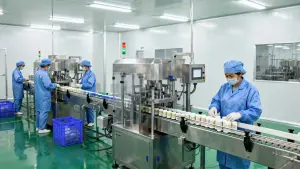
At SREKE, our GMP-certified manufacturing facility in Guangzhou evaluates every emerging technology for its practical applicability to supplement production. Here are the critical factors we consider when assessing 3D printing for your supplement program:
1. Regulatory Compliance and FDA/EFSA Standards
Any 3D printed supplement must meet the same regulatory standards as conventionally manufactured products. In the United States, dietary supplements are regulated under the Dietary Supplement Health and Education Act (DSHEA) of 1994 and must comply with Current Good Manufacturing Practices (cGMPs) as outlined in 21 CFR Part 111. In the European Union, products must comply with EFSA (European Food Safety Authority) regulations and EU Directive 2002/46/EC on food supplements.
We ensure that all materials and processes used in 3D printing — including binders, excipients, and printing substrates — are recognized as safe and compliant with applicable food-grade and pharmaceutical-grade standards.
2. Ingredient Compatibility and Printability
Not every active ingredient or excipient is suitable for 3D printing. Key factors include:
- Particle size and flowability: Powder-based extrusion and powder-bed fusion require consistent particle size distribution for reliable printing.
- Thermal sensitivity: Some bioactive compounds degrade at elevated temperatures used in fused deposition modeling (FDM) or selective laser sintering (SLS).
- Binder compatibility: Liquid binding agents must not compromise the stability or bioavailability of the active ingredient.
- Humidity and moisture content: Many powdered ingredients are hygroscopic and require environmental controls during printing.
At SREKE, our R&D team conducts thorough printability screening for every formulation we evaluate, ensuring your product performs consistently at scale.
3. Quality Control and Validation
3D printed supplements must undergo the same rigorous quality control protocols as any other dosage form. At our facility, we implement:
- Raw material testing per USP/NF or EP monographs
- In-process testing for weight variation, hardness, disintegration, and content uniformity
- Finished product testing for potency, purity, microbial limits, and heavy metals
- Stability testing per ICH guidelines (Q1A(R2)) to establish shelf life and storage conditions
- Documentation and batch record compliance with 21 CFR Part 11 requirements for electronic records
4. Scalability and Production Volume
While 3D printing excels at low-volume and personalized production, scaling to high-volume manufacturing presents challenges. Current industrial 3D printers for pharmaceutical and supplement applications typically produce hundreds to low thousands of units per day, compared to traditional tablet presses that can produce 500,000+ tablets per hour.
We recommend a hybrid approach: using 3D printing for premium, personalized, or limited-edition product lines while maintaining traditional manufacturing for high-volume SKUs. This strategy optimizes both cost efficiency and product differentiation.
5. Packaging and Labeling Compliance
3D printed supplements may require specialized packaging considerations, particularly for moisture-sensitive products. We offer child-resistant, tamper-evident, and unit-dose packaging solutions that meet FDA and EU packaging regulations, including proper supplement facts labeling and ingredient declaration requirements.
How SREKE Helps You Get to Market Faster
At SREKE, we combine decades of OEM/ODM manufacturing experience with cutting-edge technology evaluation to help supplement brands bring innovative products to market efficiently.
Our 3D Printing Evaluation Process
- Formulation assessment: We evaluate your formula for printability, stability, and regulatory compliance.
- Prototyping: Our team produces sample prints for your review and testing within 1–2 weeks.
- Scale-up planning: We develop a production roadmap that balances 3D printing with traditional manufacturing as needed.
- Regulatory support: We provide documentation support including COA, GMP certificates, and ingredient compliance dossiers.
- Production launch: We manage full-scale production with batch traceability and quality assurance.
MOQ and Lead Time Advantages
3D printing can significantly reduce your minimum order quantities. While traditional tablet manufacturing typically requires MOQs of 50,000–100,000 units per SKU, 3D printed production can accommodate runs as low as 1,000–5,000 units, making it ideal for:
- Startup supplement brands testing the market
- Limited-edition or seasonal product launches
- Personalized nutrition programs with variable dosing
- Clinical or research-grade supplement samples
Our standard lead time for OEM/ODM supplement production is 4–8 weeks depending on product type and complexity. For 3D printed products, prototyping can begin within days of formulation approval.
Industry Trends and Market Opportunities
At SREKE, we monitor global market trends to help our partners identify the most promising opportunities. Here are key trends shaping the future of 3D printed supplements:
Personalized Nutrition Growth
The personalized nutrition market is projected to reach $20 billion USD by 2027, driven by consumer demand for products tailored to individual health goals, genetics, and lifestyle. 3D printing is uniquely positioned to serve this segment by enabling variable dosing and combination products in a single manufacturing workflow.
Combination Products and Multi-Ingredient Formulations
3D printing allows for the creation of multi-compound tablets with layered or gradient distributions of active ingredients. This capability supports the development of synergistic formulations — for example, combining adaptogens with vitamins in a single dosage form with controlled-release properties.
Smart and Responsive Dosage Forms
Emerging research explores 3D printed supplements with responsive release profiles — formulations that dissolve or release actives at different rates or under specific conditions. While still largely in the research phase, these innovations could differentiate your brand in the competitive supplement marketplace.
Sustainability and Waste Reduction
With increasing consumer and regulatory focus on sustainability, 3D printing's material-efficient process aligns with ESG (Environmental, Social, and Governance) goals. Reduced overproduction and lower material waste contribute to a smaller environmental footprint for your brand.
Regulatory Evolution
Regulatory agencies worldwide are developing frameworks for additive-manufactured products. The FDA's 3D Printing Medical Devices pathway, established in 2017, provides a model that supplement manufacturers can reference. Staying informed about regulatory developments ensures your products remain compliant as standards evolve.
Frequently Asked Questions
What is 3D printing in supplement manufacturing?
3D printing in supplement manufacturing uses additive manufacturing technologies — such as powder bed fusion, extrusion-based printing, and binder jetting — to build dosage forms layer by layer from powdered or pasted ingredients. It enables personalized dosing, complex geometries, and rapid prototyping that traditional compression or encapsulation cannot easily achieve.
Is 3D printed supplement manufacturing FDA compliant?
Yes. 3D printed supplements must comply with the same FDA cGMP regulations (21 CFR Part 111) as conventionally manufactured dietary supplements. At SREKE, our Guangzhou facility operates under GMP certification and follows HACCP principles to ensure all products — regardless of manufacturing method — meet regulatory requirements for safety, identity, strength, and quality.
What types of supplements can be 3D printed?
Tablets, chewable forms, and multi-layer dosage forms are the most common 3D printed supplement formats. Suitable ingredients include vitamins, minerals, botanical extracts, amino acids, and probiotics — provided they are compatible with the printing process and maintain stability throughout the manufacturing cycle. Our R&D team evaluates each formulation for printability and stability.
How does 3D printing affect MOQ and lead time?
3D printing significantly lowers MOQ requirements compared to traditional tablet pressing, making it accessible for emerging brands and small-batch product lines. Lead times for prototyping are typically 1–2 weeks, with full production scaling dependent on printer capacity and formulation complexity. Contact our team for a detailed timeline based on your specific product requirements.
How does 3D printing compare to traditional supplement manufacturing in cost?
For high-volume production, traditional tablet compression remains more cost-effective per unit. However, 3D printing reduces costs associated with tooling, mold creation, and inventory holding. For low-to-moderate volume runs, personalized products, and rapid iteration, 3D printing can offer a lower total cost of ownership. We help you evaluate the most economical approach for your product strategy.
Can SREKE help me transition from traditional to 3D printed supplements?
Absolutely. At SREKE, we offer both traditional and additive manufacturing capabilities. Whether you want to fully transition to 3D printing or adopt a hybrid model, our team will guide you through formulation screening, prototyping, regulatory documentation, and scale-up — ensuring a smooth and compliant manufacturing pathway.
What quality standards does SREKE maintain?
SREKE's manufacturing facility is GMP-certified and operates under ISO 22000 and HACCP food safety management systems. All products are manufactured in compliance with FDA 21 CFR Part 111, EU Directive 2002/46/EC, and applicable national regulations. We provide full batch traceability, certificates of analysis (COA), and supporting documentation for regulatory submissions.
Ready to launch your supplement brand? SREKE provides GMP-certified OEM/ODM manufacturing for softgels, capsules, tablets, powders, gummies, and liquids. Contact us for a free quote or email [email protected] — we respond within 24 hours.