









Why 3D Printing Supplements Matters for Supplement Brands
At SREKE, we recognize that 3D printing is reshaping how supplement brands approach formulation, personalization, and speed to market. While still an emerging technology in the dietary supplement space, 3D printing — also called additive manufacturing — offers capabilities that traditional compression, encapsulation, and softgel processes cannot match. For brand owners, this means new opportunities for differentiated products, precision dosing, and faster product development cycles.
The pharmaceutical industry has already demonstrated the viability of 3D printed dosage forms. The U.S. FDA approved the first 3D printed drug, Spritam (levetiracetam), in 2015, and the technology has since been used for personalized medicine applications. As this technology matures and regulatory frameworks evolve, the dietary supplement sector is beginning to explore its potential for creating customized nutrition products at scale.
For supplement brand owners, understanding where 3D printing fits within your manufacturing strategy is essential. At SREKE, we stay current with emerging manufacturing technologies so we can advise you on the right approach for your product — whether that means traditional GMP-certified processes or exploring innovative 3D printing solutions when they align with your goals.
Key Manufacturing Considerations at SREKE
When evaluating 3D printing for supplement manufacturing, several critical factors come into play. At SREKE, we assess each technology against the same rigorous standards we apply to all our manufacturing processes: quality, compliance, scalability, and cost-effectiveness.
Dosage Precision and Personalization
3D printing enables layer-by-layer deposition of materials, allowing for highly precise dosing that traditional manufacturing methods struggle to achieve. For brands seeking personalized or micro-dosed formulations, this technology offers a distinct advantage. Each unit can be printed with unique compositional parameters, making it possible to create products tailored to individual consumer needs within a single production run.
Formulation Flexibility
Traditional supplement manufacturing often requires reformulation adjustments when changing dosage strength or ingredient profiles. 3D printing technology allows for greater formulation flexibility, as the printing parameters can be adjusted without completely retooling the production line. At SREKE, we evaluate whether this flexibility adds meaningful value for your specific product requirements.
Quality Control and Compliance
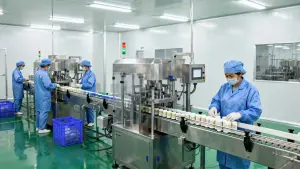
Regardless of manufacturing method, all products must meet GMP (Good Manufacturing Practice) standards. At SREKE, our Guangzhou facility operates under strict GMP certification, ISO 22000, HACCP, and Kosher/Halal compliance. Any 3D printing technology we adopt or recommend must meet the same quality assurance standards as our traditional manufacturing processes. This includes:
- Raw material verification and incoming quality testing
- In-process monitoring and documentation
- Finished product testing for identity, potency, purity, and stability
- Batch traceability and record-keeping
- Environmental monitoring and sanitation protocols
Material Compatibility
Not all supplement ingredients are compatible with 3D printing processes. The material must be formable into printable inks, filaments, or powders that maintain stability through the printing and post-processing stages. At SREKE, our technical team evaluates ingredient compatibility and can advise on formulation adjustments needed for 3D printing applications.
Scalability and Lead Time
While 3D printing excels at rapid prototyping and small-batch production, scaling to full commercial volumes requires careful consideration. At SREKE, we help brand owners understand the production capacity of 3D printing versus traditional manufacturing for their specific volume requirements. For high-volume SKUs, traditional manufacturing may remain the more efficient option, while 3D printing may be ideal for limited editions, clinical trial supplies, or personalized product lines.
How SREKE Helps You Get to Market Faster
At SREKE, our commitment to speed-to-market is embedded in every aspect of our OEM and ODM service. Whether you are developing a traditional supplement product or exploring 3D printing technology, we streamline the process from concept to shelf.
Formulation Development
Our in-house R&D team works with you to develop formulations that meet your product specifications while ensuring manufacturability. We consider ingredient sourcing, stability, bioavailability, and regulatory compliance at every stage. For 3D printing applications, we evaluate formulation adaptability and can guide you through the technical requirements for printable supplement materials.
Regulatory Compliance Support
Navigating FDA, EFSA, and other regulatory requirements can be complex. At SREKE, we provide comprehensive compliance support including:
- Ingredient review against FDA GRAS lists and EFSA approved ingredient databases
- Labeling compliance for structure/function claims
- Facility certifications (GMP, ISO 22000, HACCP, Kosher, Halal)
- Documentation for New Dietary Ingredient (NDI) notifications when applicable
- Third-party testing and Certificates of Analysis
MOQ and Production Flexibility
We understand that supplement brands operate at different scales. At SREKE, we offer flexible minimum order quantities to accommodate startups and established brands alike. Our production lines can be configured to match your volume needs, and we provide realistic lead time estimates based on your specific product requirements and order size.
Packaging and Branding
From bottle and blister packaging to pouches and custom containers, our packaging solutions are designed to protect product integrity while supporting your brand identity. We offer private label and custom packaging options that meet your branding specifications and comply with all labeling regulations.
Industry Trends and Market Opportunities
The global 3D printing market in healthcare and pharmaceuticals is projected to grow significantly through 2030, according to industry analysis from MarketsandMarkets and Grand View Research. While the dietary supplement segment is earlier in its adoption curve, several trends are shaping the future landscape.
Personalized Nutrition
Consumers increasingly demand products tailored to their individual health needs. 3D printing technology aligns with this trend by enabling personalized dosing and formulation. At SREKE, we see personalized nutrition as a major growth opportunity and are monitoring 3D printing developments closely to advise our partners on the best approach for their brands.
Complex Delivery Systems
3D printing enables the creation of multi-layered and complex geometric dosage forms that can control release profiles and improve bioavailability. These advanced delivery systems represent a significant differentiator for brands seeking to stand out in a competitive market.
Sustainability and Waste Reduction
Additive manufacturing inherently reduces material waste compared to subtractive manufacturing processes. As sustainability becomes a growing priority for consumers and regulators, 3D printing offers an environmentally responsible manufacturing option that aligns with brand values.
Regulatory Evolution
Regulatory bodies including the FDA and EFSA continue to develop frameworks for additive manufacturing in healthcare. Staying informed about these developments is critical for brand owners planning long-term product strategies. At SREKE, we monitor regulatory changes and ensure our manufacturing processes remain compliant with current standards.
Frequently Asked Questions
Is 3D printing supplements currently available at SREKE?
At SREKE, we are actively evaluating 3D printing technology for supplement manufacturing. While our core capabilities remain focused on GMP-certified traditional manufacturing processes — including softgels, capsules, tablets, powders, gummies, and liquids — we are monitoring the technology's progress and will offer 3D printed supplement manufacturing when it meets our quality and compliance standards. Contact our team to discuss your specific needs and how we can support your product development.
What are the quality standards for 3D printed supplements?
Any 3D printed supplement product must meet the same GMP, ISO 22000, and HACCP standards as our traditional manufacturing outputs. This includes raw material testing, in-process controls, finished product testing, and full batch traceability. At SREKE, we ensure that every product — regardless of manufacturing method — meets our rigorous quality specifications.
How does 3D printing affect MOQ and lead times?
3D printing can potentially reduce MOQs for certain applications, particularly for personalized or small-batch products. However, lead times depend on multiple factors including formulation complexity, printing parameters, post-processing requirements, and quality testing. At SREKE, we provide realistic timelines during the quoting process so you can plan your product launches with confidence.
Can 3D printed supplements carry structure/function claims?
Yes, provided the ingredients and claims comply with FDA and EFSA regulations. At SREKE, our compliance team reviews all formulations and labeling to ensure structure/function claims are appropriate and properly worded. We do not make disease treatment claims, as this would require drug approval.
What ingredients are compatible with 3D printing?
Compatibility depends on the specific 3D printing technology used. Common printable materials include powders, hydrogels, and thermoplastic polymers. Our technical team at SREKE can evaluate your formulation for printability and recommend adjustments if needed. We work with a wide range of active ingredients and excipients across all our manufacturing categories.
How does SREKE ensure regulatory compliance for innovative manufacturing?
At SREKE, regulatory compliance is foundational to everything we do. Our facility maintains GMP certification, ISO 22000, HACCP, Kosher, and Halal certifications. We conduct thorough ingredient reviews, maintain comprehensive documentation, and perform third-party testing on all products. As 3D printing technology evolves, we will ensure any new processes meet all applicable regulatory requirements before offering them to our partners.