








Why HPMC Capsule Filling Machines Matter for Supplement Brands
At SREKE, we understand that choosing the right capsule type and filling technology is one of the most consequential decisions your brand will make. HPMC (hydroxypropyl methylcellulose) capsules have surged in popularity as a plant-based, hypoallergenic alternative to traditional gelatin capsules. They are suitable for vegan and vegetarian formulations, resist moisture better than gelatin in many cases, and carry no animal-derived ingredients — making them compliant with Kosher, Halal, and religious dietary requirements worldwide.
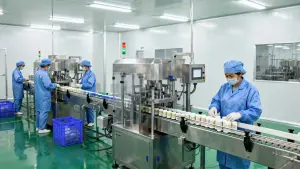
The capsule filling machine you select directly impacts your cost per unit, production speed, formulation flexibility, and regulatory compliance. At SREKE, our GMP-certified manufacturing facility in Guangzhou operates multiple HPMC capsule filling lines ranging from semi-automatic to high-speed fully automatic systems, each matched to specific brand needs and volume requirements.
According to industry data from Grand View Research, the global vegetarian capsule market is projected to grow at a compound annual growth rate (CAGR) of over 6% through 2030, driven largely by consumer demand for clean-label, plant-based supplements. For brand owners, this means investing in the right filling infrastructure now positions you for scalable growth.
Key Manufacturing Considerations at SREKE
Types of HPMC Capsule Filling Machines
At SREKE, we work with four primary categories of capsule filling equipment, each suited to different production scales:
- Manual Capsule Filling Machines: These are entry-level units ideal for R&D batches, clinical trial supplies, and very small production runs. They typically handle 50 to 200 capsules per hour depending on operator skill. We recommend manual fillers for brands testing formulations before committing to full-scale production.
- Semi-Automatic Capsule Filling Machines: These machines automate the cap-body separation and filling process but require manual loading and unloading. Production speeds range from 2,000 to 8,000 capsules per hour. Semi-automatic systems are a strong fit for medium-volume brands that need flexibility across multiple SKUs and capsule sizes without the capital expenditure of a fully automatic line.
- Fully Automatic Capsule Filling Machines (Low to Medium Speed): These integrated systems handle capsule orientation, separation, filling, and ejection with minimal human intervention. Speeds typically range from 10,000 to 40,000 capsules per hour. They are ideal for established brands running consistent volumes of one or two capsule sizes.
- High-Speed Fully Automatic Capsule Filling Lines: These are turnkey production lines capable of 60,000 to 120,000+ capsules per hour. They include automated feeding, sorting, filling, closing, and often in-line inspection systems. At SREKE, our high-speed lines are equipped with metal detection, weight check weighers, and visual inspection stations to ensure every capsule meets quality specifications before packaging.
Capsule Size Compatibility
HPMC capsules are available in standard sizes 000, 00, 0, 1, 2, 3, 4, and 5. The capsule size you choose affects fill weight, active ingredient concentration, and overall product cost. At SREKE, our filling machines are configurable for multiple capsule sizes within a single production run, reducing changeover time and allowing brands to offer a range of dosing options.
Powder and Partial-Fill Formulations
HPMC capsules are predominantly filled with powder blends, though some formulations may include partial fills with pellets, beads, or microtablets. Our filling equipment accommodates both free-flowing and cohesive powders through adjustable dosing mechanisms — including dosator and tamping pin systems. For difficult-to-flow materials, we offer vibratory feeders and auger filling systems that maintain consistency across the entire batch.
GMP and Regulatory Compliance
All capsule filling operations at SREKE comply with current Good Manufacturing Practices (cGMP) as defined by the U.S. FDA and aligned with EU Directive 2011/62/EU (Falsified Medicines Directive) requirements for contract manufacturers. Our facility holds ISO 22000 certification and HACCP-based food safety management. Every production batch is documented with full traceability, including raw material lot numbers, equipment cleaning records, in-process quality checks, and finished product release testing.
Moisture Control and Encapsulation Environment
HPMC capsules are hygroscopic and can absorb moisture from the environment, which may affect capsule hardness and sealing integrity. At SREKE, our encapsulation suites are maintained at controlled relative humidity levels between 25% and 40%, monitored continuously with calibrated hygrometers. This environmental control is critical for ensuring consistent capsule quality and preventing filling defects such as double caps or open capsules.
How SREKE Helps You Get to Market Faster
At SREKE, we streamline the path from formulation to shelf-ready product. Here is how our approach reduces your time to market:
- Low MOQ for HPMC Capsules: We offer flexible minimum order quantities starting as low as 10,000 to 50,000 capsules per SKU, depending on capsule size and complexity. This allows emerging brands to launch with manageable inventory commitments.
- Fast Lead Times: Standard production lead times range from 15 to 30 business days for established formulas, with expedited options available for time-sensitive launches. Our in-house tooling and formulation development team can also accelerate new product creation.
- In-House Formulation Support: Our team of formulators works with you to optimize your formula for capsule filling, considering factors such as powder flow, compressibility, stability, and bioavailability. We provide technical guidance on excipient selection and fill weight optimization at no additional cost.
- Packaging and Secondary Packaging: Beyond capsule filling, we offer complete packaging solutions including blisters, HDPE bottles, child-resistant closures, and outer cartons — all managed under one roof to simplify your supply chain.
- Compliance Documentation: We provide full regulatory support including COA (Certificate of Analysis), GMP certificates, MSDS, and documentation required for FDA establishment registration and EU market access.
Industry Trends and Market Opportunities
The HPMC capsule segment is experiencing several notable trends that brand owners should factor into their product strategy:
- Clean-Label Demand: Consumers are increasingly scrutinizing capsule ingredients. HPMC capsules contain no animal products, no dyes in most standard variants, and no sulfated polysaccharides — aligning with clean-label positioning.
- Extended-Release and Modified-Release Capsules: Advances in capsule filling technology now allow for sustained-release and enteric-coated HPMC capsule formulations, opening new product categories in the supplement space.
- Combination Products: Multi-compartment and dual-chamber HPMC capsules are gaining traction for formulations where ingredient compatibility is a concern. These require more sophisticated filling equipment and process validation.
- Sustainability: HPMC is derived from plant cellulose, and its production has a lower environmental footprint compared to gelatin. Brands targeting eco-conscious consumers can leverage this as a differentiator on packaging and marketing materials.
- Personalized Nutrition: The rise of personalized supplement programs requires flexible, small-batch manufacturing capabilities. Our semi-automatic and low-volume automatic lines are specifically designed to support this trend.
Frequently Asked Questions
What is the difference between HPMC capsules and gelatin capsules?
HPMC capsules are made from plant-derived cellulose and are suitable for vegans and vegetarians. Gelatin capsules are derived from animal collagen, typically bovine or porcine. HPMC capsules also tend to have better moisture resistance and are preferred for high-humidity formulations. Both types are generally recognized as safe (GRAS) by the FDA when used in accordance with good manufacturing practices.
What is the typical MOQ for HPMC capsule production at SREKE?
Our MOQ varies by capsule size and formulation complexity. For standard HPMC capsule fills, we typically start at 10,000 to 50,000 units per SKU. We encourage you to contact our team for a specific quote based on your product requirements.
Can you handle difficult-to-fill powder formulations?
Yes. Our team evaluates powder characteristics such as bulk density, particle size distribution, and flowability during the formulation stage. For challenging powders, we utilize specialized dosing systems including auger fillers and vacuum-assisted feeding to ensure accurate and consistent fill weights.
Do you provide stability testing and shelf-life determination?
We offer accelerated and long-term stability testing in accordance with ICH guidelines. Our quality laboratory conducts testing for potency, moisture content, microbial limits, and capsule integrity over defined time periods to establish reliable shelf-life recommendations.
What certifications does SREKE hold?
SREKE operates under cGMP standards and holds ISO 22000 certification. Our facility is registered with the FDA and complies with HACCP principles. We can also support certifications such as Kosher, Halal, and NSF upon request.
How long does it take to develop a new HPMC capsule formula from scratch?
Formula development timelines depend on complexity. A straightforward powder fill may be completed in 2 to 4 weeks, while more complex formulations involving extended-release technologies or combination products may require 6 to 12 weeks. Our in-house R&D team guides you through every stage, from initial concept to production-ready specification.
Can you fill capsules with liquid or semi-solid contents?
HPMC hard-shell capsules are primarily designed for powder and solid fills. For liquid or semi-solid fills, we recommend softgel encapsulation, which is also available at our facility. We can advise you on the best delivery format during your product development consultation.