






Why 3D Printing Supplements Matters for Supplement Brands
At SREKE, we recognize that the supplement industry is evolving rapidly, driven by consumer demand for hyper-personalization and precise dosing. While traditional manufacturing methods like compression and encapsulation remain the backbone of mass production, 3D printing (additive manufacturing) represents a significant leap forward in custom supplement creation. For brand owners, this technology offers the ability to produce low-MOQ, highly tailored formulations without the massive overhead of traditional tooling.
We believe that understanding the intersection of digital fabrication and GMP-certified production is crucial for staying competitive. 3D printed supplements allow for complex geometries and multi-layered active ingredients that are impossible to achieve with standard tablet presses. This capability supports personalized nutrition strategies, enabling brands to offer products that adapt to individual metabolic needs, thereby promoting better customer retention and loyalty.
Key Manufacturing Considerations at SREKE
When evaluating 3D printing for dietary supplements, several technical and regulatory factors must be addressed. At SREKE, our quality control protocols ensure that every innovation meets stringent safety and efficacy standards.
Material Compatibility and Stability
Not all powdered ingredients are suitable for extrusion-based or powder-bed fusion 3D printing. We utilize specialized binders and excipients that maintain the stability of active compounds such as vitamins, minerals, and botanical extracts. Our R&D team rigorously tests these materials to ensure they do not degrade during the printing process, preserving the potency of the final product.
Precision Dosing and Uniformity
One of the primary advantages of 3D printing is the ability to control dosage with micron-level precision. In traditional manufacturing, minor variations in powder flow can lead to weight variation issues. At SREKE, we use advanced sensor feedback loops during the printing process to verify that each unit contains the exact amount of active ingredient specified on the label. This level of accuracy is critical for compliance with FDA labeling requirements and ensures consistent consumer experience.
GMP and Regulatory Compliance
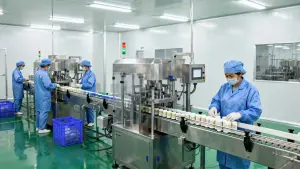
Even with cutting-edge technology, we adhere strictly to cGMP (current Good Manufacturing Practices) guidelines. Our facility integrates 3D printing lines within controlled environments that meet ISO and HACCP standards. We ensure that the supply chain for raw materials used in printing is fully traceable, providing brands with the documentation needed for audits and regulatory submissions.
How SREKE Helps You Get to Market Faster
Speed to market is often the deciding factor for successful supplement launches. Traditional tooling for tablets or softgels can take weeks to manufacture and validate. At SREKE, we leverage digital manufacturing to significantly reduce lead times for prototyping and small-batch production.
- Rapid Prototyping: We can iterate formulations quickly based on sensory or functional feedback, allowing brands to refine their products before committing to large-scale runs.
- Low MOQ Flexibility: For niche markets or limited-edition campaigns, 3D printing allows us to fulfill orders with minimal minimum order quantities, reducing inventory risk for our partners.
- Custom Packaging Integration: We offer end-to-end solutions, including custom packaging design that complements the unique shape or size of 3D-printed supplements, enhancing shelf appeal.
Industry Trends and Market Opportunities
The global market for personalized nutrition is expanding, with consumers increasingly seeking products tailored to their specific health goals. At SREKE, we see 3D printing as a key enabler of this trend. Emerging opportunities include:
- Complex Release Profiles: Creating tablets with multi-layered structures that release different ingredients at different times, supporting sustained energy or targeted nutrient absorption throughout the day.
- Sensory Innovation: Designing supplements with unique textures and flavors by combining various powder blends, contributing to a more enjoyable consumer experience.
- Sustainability: Additive manufacturing generates less waste than subtractive methods, aligning with the growing consumer preference for environmentally responsible brands.
Frequently Asked Questions
Is 3D printed supplement manufacturing safe?
Yes. At SREKE, all 3D printed products are manufactured under strict cGMP conditions. We use food-grade binders and conduct rigorous testing for purity, potency, and contaminants to ensure safety and compliance with FDA regulations.
What is the Minimum Order Quantity (MOQ) for 3D printed supplements?
Compared to traditional molding, 3D printing allows for much lower MOQs. We work with you to determine the most cost-effective quantity for your launch, often accommodating smaller batches for testing and niche markets.
Can you print complex shapes and multi-ingredient tablets?
Absolutely. One of the main benefits of our 3D printing technology is the ability to create complex geometries and embed multiple active ingredients within a single dose, which is difficult or impossible with standard compression techniques.
How does 3D printing affect the shelf life of supplements?
Our formulation experts select binders and processing parameters that maintain the chemical stability of active ingredients. We conduct accelerated stability testing to ensure that 3D printed supplements meet or exceed the shelf life requirements of conventional products.
Ready to launch your supplement brand? SREKE provides GMP-certified OEM/ODM manufacturing for softgels, capsules, tablets, powders, gummies, and liquids. Contact us for a free quote or email [email protected] — we respond within 24 hours.