




The global protein supplement market surpassed $22 billion in 2025, with plant-based protein growing at over 15% annually compared to 7% for whey. Protein powders represent the single largest format in sports nutrition, accounting for about 55% of category sales. For brands entering this market, the manufacturing complexity lies not in the ingredient itself but in powder blending consistency, flavor masking and packaging quality.
Why Protein Powder Is the Foundation of Any Sports Nutrition Line
Protein powder serves as the entry point for most consumers into the supplement category and the anchor product for any sports nutrition brand. Consumer purchase data shows that protein powder buyers are 3x more likely to purchase other supplement categories. For B2B buyers, protein also offers strong repeat purchase cycles — consumers typically repurchase every 30-45 days. The challenge is differentiation in a crowded market, which manufacturers can address through unique flavor profiles, custom protein blends, or novel delivery formats.
Key Factors to Consider When Manufacturing Protein Powders
What protein sources are most common in contract manufacturing?
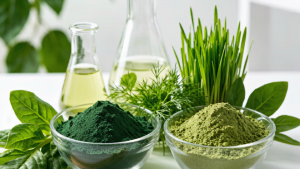
The major protein types are whey concentrate (WPC80 at 80% protein), whey isolate (WPI90 at 90% protein), micellar casein, pea protein (80-85% protein), brown rice protein (80%), soy protein isolate (90%), and newer entrants like hemp and pumpkin seed proteins. Each has different solubility, amino acid profile and flavor characteristics. Whey isolates dominate the premium segment, while plant-based blends are capturing the fastest growth. SREKE manufactures all protein types with dedicated processing lines for dairy and plant-based separation.
What MOQ applies to protein powder production?
For standard protein powder stick packs (30-60g per pack), MOQ starts at 25,000 packs. For bulk protein powder tubs (500g-2kg), MOQ starts at 500 kg per SKU. Custom protein blends requiring multiple ingredient sources typically require 1,000 kg minimum to justify formulation and blending setup.
How do you ensure powder blend uniformity?
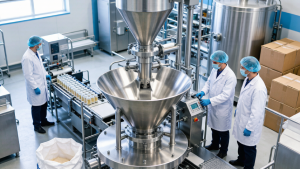
Protein powder blending is one of the most technically demanding processes in supplement manufacturing. SREKE uses V-blenders (for up to 500 kg batches) and ribbon blenders (for larger volumes), with geometric dilution for low-concentration active ingredients of less than 1% of the total blend. Blending uniformity is verified by protein content analysis from three different sampling points in each batch.
What are the key quality tests for protein powders?
Protein powders require Kjeldahl or Dumas nitrogen analysis for protein content verification, amino acid profiling for complete protein claims, solubility testing, heavy metals screening (especially for plant-based proteins), and microbiological testing (no salmonella, E. coli or yeast/mold). SREKE performs all these tests in-house with third-party verification available.
Step-by-Step Process for Private Label Protein Powder Manufacturing
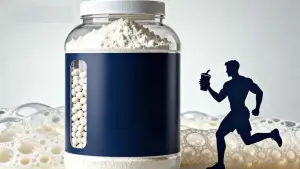
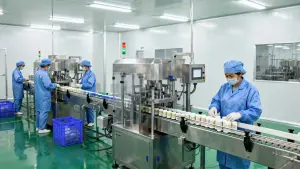
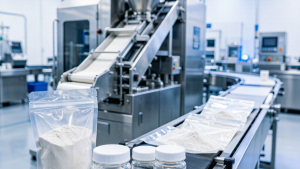
The protein powder manufacturing process begins with raw material testing — each protein batch is verified for protein content, microbiological safety and physical characteristics (particle size, bulk density). The formulation phase determines the exact blend ratio, flavor system (natural or artificial), sweetener type and level, and any functional add-ins (digestive enzymes, probiotics, MCT powder). Blending is conducted in controlled-temperature environments to prevent protein denaturation. The finished blend is tested for uniformity before filling — either into stick packs (vertical form-fill-seal machines at 80-120 packs/min) or bulk tubs with scoop. Each sealed container undergoes weight verification and metal detection before boxing.
Whey Protein vs Plant-Based Protein — Manufacturing and Market Comparison
| Factor | Whey Protein (Isolate) | Plant-Based (Pea + Rice) |
|---|---|---|
| Protein content | 90%+ | 75-85% |
| PDCAAS score | 1.0 (complete protein) | 0.8-1.0 (when blended) |
| Solubility | Excellent | Moderate |
| Flavor profile | Mild, creamy | Earthy, requires masking |
| Allergen risk | Dairy | Minimal |
| Manufacturing cost | $$ | $$-$$$ |
| Typical tub size | 2-5 lbs | 1-2 lbs |
| Consumer base | Athletes, bodybuilders | Lifestyle, vegan, flexitarian |
Frequently Asked Questions
Can you produce both whey and plant-based proteins in the same facility?
Yes, but with strict allergen separation protocols. SREKE maintains dedicated production lines and processing schedules for dairy and plant-based proteins to prevent cross-contact. Complete allergen cleaning verification is performed between runs.
What flavors do you offer for protein powders?
We offer a comprehensive flavor library including chocolate, vanilla, strawberry, cookies and cream, unflavored, and custom flavor development. Minimum flavor batch is typically 500 kg.
What is the typical lead time for protein powder orders?
Standard lead time is 3-4 weeks for established formulas and stick pack formats. Bulk tub orders on established formulas ship in 2-3 weeks. Custom blend development adds 2-4 weeks.
Do you offer organic protein options?
Yes, organic pea, organic brown rice and organic soy protein isolates are available for brands targeting the organic market. Organic-certified production requires dedicated organic scheduling.
What packaging options do you offer for protein powders?
Options include stick packs (single-serve), resealable stand-up pouches, plastic tubs with induction seals, and kraft paper composite containers. Custom label design assistance is available.
How do you ensure protein supplements meet label claims?
Every batch is tested for protein content using Kjeldahl nitrogen analysis. Finished product CoA includes protein percentage per serving, amino acid profile, heavy metals, and microbial results.
How to Get Started with SREKE
SREKE's protein powder manufacturing capabilities span whey, plant-based and custom blends with flexible packaging options from single-serve stick packs to bulk tubs. Our quality systems ensure batch-to-batch consistency and full regulatory compliance. If you are looking for OEM/ODM/CDMO contract manufacturing services, please visit https://www.sreke.com/contact.php to submit your inquiry.