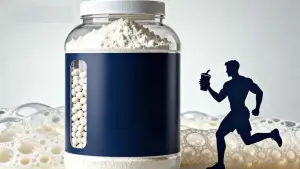
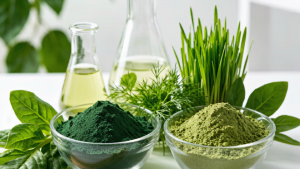




The global sports nutrition and dietary supplement powder market reached approximately $24.3 billion in 2025, growing at 7.8% CAGR driven by protein powders, pre-workout formulas, greens blends, and functional drink mixes. For brands looking to enter this space, powder supplements offer the lowest cost-per-serving, the widest range of active ingredient loadings, and flexible packaging from single-serve stick packs to bulk tubs. Understanding the OEM manufacturing process — from raw material sourcing to finished product — is essential to launch a competitive powder supplement line that retailers and consumers trust.
Why Powder Supplements Matter for Your Brand
Powder formats dominate the supplement industry for three reasons. First, powders deliver high active ingredient dosages that are impossible to fit into capsules or tablets — a single 30g serving can carry 25g of protein plus vitamins, minerals, and botanical extracts. Second, powders are 30-50% cheaper to manufacture per serving than ready-to-drink liquids or softgels because they skip encapsulation and require no liquid filling equipment. Third, consumers perceive powders as premium and customizable, which supports higher retail price points and brand loyalty.
For B2B brand owners, powder supplements also mean faster formulation iteration. You can test flavor variants, adjust serving sizes, and swap ingredients without retooling production lines — a flexibility that capsules and gummies simply cannot match. This matters when you are racing to capture shelf space or launching a DTC subscription model.
Key Factors to Consider When Manufacturing Powder Supplements
What is the typical MOQ for powder supplement OEM?
Most OEM factories set MOQ at 500 kg to 1,000 kg per formula for bulk powder in tubs or bags. For stick packs and sachets, MOQ often starts at 100,000 units due to filling machine minimum run lengths. At SREKE, we work with brands to lower entry barriers — our standard MOQ is 500 kg for tub-based powders and 50,000 stick packs, with pilot runs available for startups validating market demand.
How long does powder supplement production take?
Lead times typically run 35-45 days from formula approval to finished goods, assuming raw materials are in stock. Custom ingredient sourcing can add 15-30 days. Flavor development and stability testing add another 2-4 weeks if you need a novel taste profile. Plan for 8-12 weeks total from first contact to product in hand.
What packaging formats are available for powder supplements?
Common formats include HDPE tubs (200g-2kg), stand-up pouches with zip closure (100g-500g), single-serve stick packs (5g-30g), and aluminum cans for premium positioning. Each format has distinct cost structures — stick packs cost $0.08-0.15 per unit including filling, while tubs run $0.50-1.20 depending on size and decoration.
What quality certifications should I require?
At minimum, your OEM partner should hold cGMP certification (FDA 21 CFR Part 111), ISO 22000, and HACCP. If you target the EU market, look for GMP registration and EFSA-compliant labeling. For halal or kosher markets, verify the facility holds active certifications — not just claims. Every production batch should come with a Certificate of Analysis covering potency, heavy metals, microbial limits, and identity testing.
Step-by-Step Powder Manufacturing Process
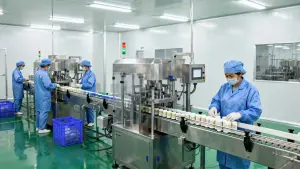
Understanding the production workflow helps you communicate effectively with your OEM partner and anticipate bottlenecks. Here is how powder supplements move from concept to finished product:
Step 1 — Formula Development: R&D engineers draft a formula based on your target active ingredients, flavor preferences, and claim structure. Expect 2-3 rounds of lab samples (50g batches) before locking the final specification.
Step 2 — Raw Material Sourcing: The OEM purchases certified raw materials with CoA documentation. Lead times depend on ingredient availability — standard vitamins and minerals ship in 7-10 days; specialized botanicals or patented ingredients may take 3-6 weeks.
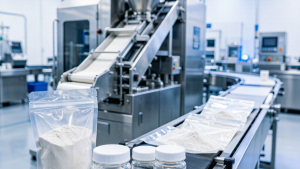
Step 3 — Blending: Ingredients are weighed, sifted, and blended in V-blenders or ribbon mixers. Blending time and rotation speed are critical — under-blending causes dose inconsistency; over-blending can cause ingredient segregation. A typical 500 kg batch blends for 20-30 minutes.
Step 4 — Quality Check (In-Process): QC samples are pulled from top, middle, and bottom of the blender to verify uniformity. The batch proceeds only if all three samples meet specification within ±5%.
Step 5 — Packaging: Blended powder is transferred to the packaging line. Stick pack machines run at 80-120 units per minute; tub filling lines handle 30-50 units per minute. Nitrogen flushing is applied for oxygen-sensitive ingredients.
Step 6 — Final QC and Release: Finished products undergo microbial testing, potency verification, and visual inspection. A Certificate of Analysis is issued before shipment.
Powder vs Capsule vs Gummy: Which Format Is Right for Your Brand?
Choosing the right dosage format is one of the earliest and most consequential decisions in supplement brand development. The table below compares the three most popular formats across the dimensions that matter to B2B buyers:
| Factor | Powder | Capsule | Gummy |
|---|---|---|---|
| Max active per serving | 30g+ (highest) | 1g (limited) | 2-3g (moderate) |
| Cost per serving | $0.15-0.40 (lowest) | $0.05-0.15 | $0.10-0.25 |
| MOQ | 500 kg / 50K sticks | 300K capsules | 100K gummies |
| Lead time | 35-45 days | 25-35 days | 40-50 days |
| Flavor flexibility | Excellent | Limited | Excellent |
| Consumer perception | Premium, performance | Convenient, clinical | Fun, approachable |
Powders win when your formula needs high dosing, your audience values performance, or your brand strategy centers on visible, tangible servings. Capsules suit convenience-focused lines. Gummies work best for wellness brands targeting non-traditional supplement users.
Frequently Asked Questions
Q: Can I supply my own raw materials to the OEM factory?
A: Yes, most OEMs accept customer-supplied materials if they come with valid CoAs and pass the factory's incoming QC inspection. However, this shifts inventory risk to you and may extend lead times if materials fail inspection.
Q: How are powder supplement flavors developed?
A: Flavor houses create custom flavor systems (natural, artificial, or N&A) matched to your base ingredients. A protein powder might need a different vanilla flavor than a greens blend due to interactions. Expect 3-5 flavor iterations at $300-800 per round.
Q: What is the shelf life of powder supplements?
A: Most powder supplements carry a 24-month shelf life when packaged in moisture-barrier materials. Protein powders in nitrogen-flushed tubs can reach 36 months. Stability testing (accelerated and real-time) confirms the claim.
Q: Do powder supplements require registration before sale?
A: In the US, dietary supplements do not require pre-market FDA approval, but you must file a New Dietary Ingredient notification for novel ingredients and comply with labeling regulations. The EU requires notification under the Food Supplements Directive. Your OEM should provide all technical documents needed for regulatory filing.
Q: Can I do both stick packs and tubs with the same formula?
A: Generally yes, but flowability may differ — stick packs require a more free-flowing powder to prevent clogging in the filling nozzle. Your R&D team can adjust with anti-caking agents like silicon dioxide at 0.1-0.5%.
Q: What testing is included with each batch?
A: Standard testing covers potency (HPLC or UV), heavy metals (Pb, As, Cd, Hg via ICP-MS), microbial (total plate count, yeast/mold, E. coli, Salmonella), and identity. Additional tests like solvent residue or allergen screening are available on request.
These statements have not been evaluated by the FDA. This information is intended for B2B manufacturing partners and does not constitute a claim about any finished product.
How to Get Started with SREKE
Launching a private label powder supplement line does not have to be complicated. SREKE handles the entire journey — from formula development and flavor optimization to cGMP-certified production, packaging, and export documentation. Our team has manufactured powders across protein, pre-workout, greens, electrolyte, and functional botanical categories for brands in over 30 countries.
To start, prepare a brief covering your target product category, desired serving size, preferred packaging format, and estimated annual volume. We will respond within 48 hours with a manufacturing proposal, cost estimate, and development timeline. If you are looking for OEM/ODM/CDMO contract manufacturing services, please visit https://www.sreke.com/contact.php to submit your inquiry.