



Consumer demand for stress and mood support supplements has accelerated sharply, with the global market for anxiety and stress relief supplements growing from $1.6 billion in 2021 to an estimated $3.2 billion by 2026. For supplement brands and private label buyers, this category presents unique opportunities and challenges: the target consumer base is broad and growing, but formulation requires careful attention to ingredient synergy, dosage accuracy and regulatory claim limits.
Why Stress and Mood Support Is a Growing Opportunity for Brands
The post-pandemic focus on mental wellness has transformed stress and mood support from a niche category into a mainstream staple. According to market data, stress management supplement sales on Amazon grew over 35% annually between 2022 and 2025. Unlike many supplement categories, mood products enjoy high repeat purchase rates — consumers who find an effective product tend to stay with it for months or years. For private label manufacturers, this translates to stable recurring revenue.
Key Factors to Consider When Manufacturing Mood Support Supplements
What are the most popular mood support ingredients?
The top ingredients in stress and mood support supplements include L-Theanine (100-200 mg), 5-HTP (50-100 mg), magnesium glycinate or citrate (100-400 mg elemental), ashwagandha root extract (300-600 mg standardized to 5% withanolides), and saffron extract (30 mg). Each ingredient targets different pathways — L-Theanine promotes alpha-wave activity for calm focus, while 5-HTP supports serotonin production. SREKE manufactures all these ingredients in hard capsule, tablet and powder formats.
What MOQ applies to mood and stress formulations?
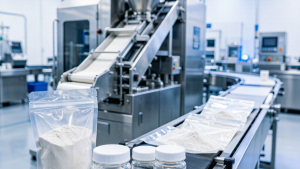
Capsule MOQ for single-ingredient products starts at 100,000 capsules. For multi-ingredient stress relief formulas (combining L-Theanine, magnesium and ashwagandha), MOQ is 100,000 capsules. Tablet MOQ starts at 50,000 tablets. Powder stick packs start at 10,000 packs.
What quality testing is critical for mood support ingredients?
5-HTP requires HPLC purity testing (typically ≥98% from Griffonia simplicifolia seed extract) and screening for Peak X (a potential impurity). L-Theanine requires amino acid analysis and enantiomeric purity verification. Ashwagandha requires withanolide glycoside quantification. SREKE performs full identity, potency and purity testing on all raw materials and finished products.
How do you address ingredient stability in combination formulas?
Some mood support ingredients are sensitive — 5-HTP degrades under high heat and light, magnesium compounds can accelerate capsule shell degradation. SREKE addresses these through light-protected packaging, moisture-controlled processing environments, and stability study protocols that verify potency through the declared shelf life.
Step-by-Step Process for Private Label Stress and Mood Supplements
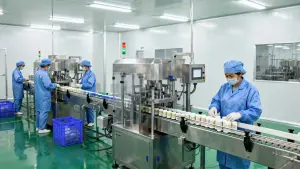
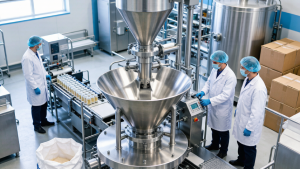
The manufacturing process begins with a target product profile: quick-relief (L-Theanine for acute stress) versus daily maintenance formulas (adaptogenic blends). Ingredient compatibility is assessed in the lab, followed by a pilot batch for dissolution testing and stability profiling. Commercial production is conducted in climate-controlled environments with in-process sampling every 30 minutes. Each batch undergoes finished product testing before release, including disintegration, content uniformity and microbial limits.
Single-Ingredient vs Multi-Ingredient Mood Support — Formulation Approach
| Factor | Single Ingredient (e.g., L-Theanine) | Multi-Ingredient Blend |
|---|---|---|
| Formulation complexity | Low | High — compatibility testing required |
| Dosage flexibility | Easy to adjust dose | Constrained by capsule size |
| Consumer perception | "Clean" and transparent | "Comprehensive" and "synergistic" |
| Regulatory risk | Lower | Moderate — more claims management |
| Capsule count per dose | 1 capsule | 2-4 capsules |
| Manufacturing cost | Lower | Moderate |
Frequently Asked Questions
Can L-Theanine and 5-HTP be combined in one capsule?
Yes, this is a very common combination. Typical ratios range from 2:1 to 4:1 L-Theanine to 5-HTP. They are chemically compatible and stable when stored in light-protected packaging.
Do you offer vegetarian capsule options for mood supplements?
Yes, SREKE provides both gelatin and vegetarian HPMC capsules. All ingredients used in mood supplements are compatible with vegetarian capsules.
What is the typical lead time for mood support products?
Standard lead time is 4-6 weeks for established formulas. Custom formulations with new ingredients typically require 8-10 weeks.
What labeling claims can I use for mood support supplements?
Permitted structure-function claims include "supports a calm mood," "promotes relaxation," and "helps manage everyday stress." These statements have not been evaluated by the FDA. Direct mental health condition claims such as "treats anxiety" or "alleviates depression" are strictly prohibited.
Is ashwagandha better as capsule or powder?
Both formats work well. Capsules are preferred for precise dosing (300-600 mg). Powder forms are available for smoothie blends or single-serve stick packs, though the dosage must be carefully controlled in powder blends.
Do you offer delayed-release capsules for mood supplements?
Yes, enteric-coated capsules are available for ingredients that benefit from delayed release, particularly for those that may cause gastric discomfort at high doses.
How to Get Started with SREKE
SREKE's experience in stress and mood support supplement manufacturing covers the full range of popular ingredients and dosage forms. Our R&D team can help you develop a unique formula that differentiates your brand in this competitive category. If you are looking for OEM/ODM/CDMO contract manufacturing services, please visit https://www.sreke.com/contact.php to submit your inquiry.