









The global joint health supplement market is projected to reach $18.3 billion by 2032, growing at 7.2% CAGR. The bone health segment adds another $5.2 billion in annual sales driven by aging demographics and increased awareness of osteoporosis prevention. For private label brands, this category benefits from strong consumer awareness — over 70% of adults over 40 are familiar with glucosamine, chondroitin, and calcium supplements — and high repeat purchase intent among users who experience noticeable benefits.
Why Bone and Joint Health Matters for Your Product Line
The aging global population is the primary growth driver: by 2030, over 1 in 6 people worldwide will be aged 60 or older. Osteoarthritis affects over 500 million people globally, and osteoporosis contributes to nearly 9 million fractures annually. Beyond seniors, athletes, active adults, and post-menopausal women represent significant target demographics for joint support products.
Key ingredients span two sub-categories: joint support (glucosamine sulfate 1,500 mg, chondroitin sulfate 800–1,200 mg, MSM 1,000–3,000 mg, type II collagen 40 mg) and bone health (calcium 500–1,200 mg, vitamin D3 800–2,000 IU, vitamin K2 90–180 mcg, magnesium 200–400 mg). Combination products that bridge both categories — such as "bone and joint" formulas — are increasingly popular.
Key Factors to Consider When Manufacturing Bone and Joint Supplements
What are the most clinically supported joint health ingredients?
Glucosamine sulfate (1,500 mg daily) is the most studied joint ingredient, with over 40 clinical trials. Chondroitin sulfate (800–1,200 mg) is often combined with glucosamine for synergistic effects. MSM (1,000–3,000 mg) provides sulfur for connective tissue support. Type II collagen (40 mg UC-II®) is a newer alternative backed by clinical studies. For bone health, calcium citrate is better absorbed than calcium carbonate, particularly in older adults. Vitamin K2 (menaquinone-7) directs calcium to bones rather than soft tissues. Our R&D team selects ingredient forms based on bioavailability and clinical evidence.
Which dosage form is optimal for bone and joint supplements?
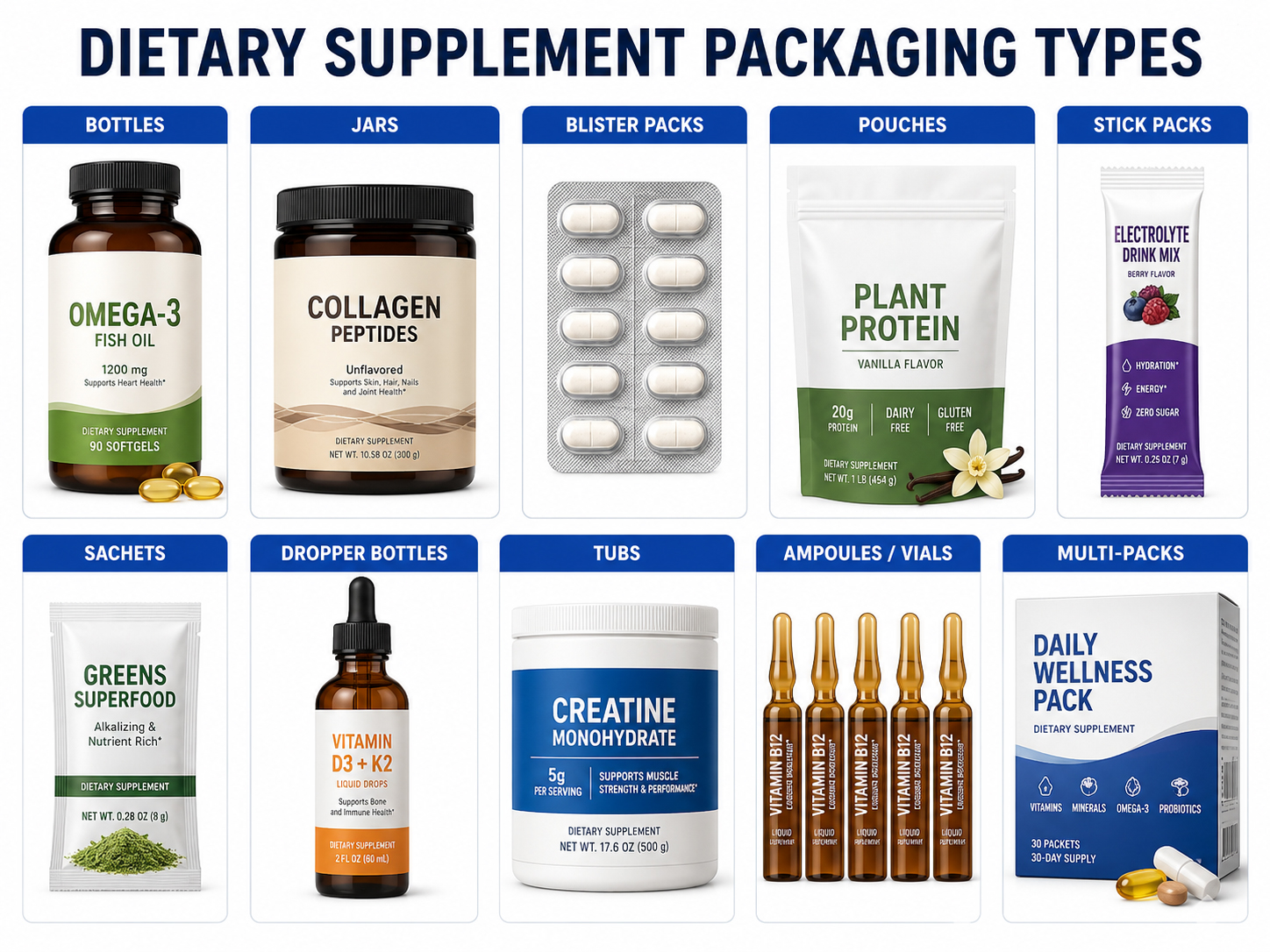
Tablets dominate the calcium category because of high-dose requirements — a single tablet can deliver 500–1,000 mg calcium. Softgels are preferred for glucosamine, chondroitin, MSM, and vitamin D/K2 combinations, particularly when oils or waxes are part of the delivery system. Powders are popular for collagen joint formulas and for consumers who prefer mixing into beverages. Capsules offer flexibility for multi-ingredient joint support blends.
What quality testing is critical for bone and joint supplements?
Calcium products require dissolution testing to ensure bioavailability — calcium carbonate in particular must disintegrate properly for absorption. Glucosamine identity testing (sourced from shellfish or vegetarian fermentation) is essential for allergen labeling. Chondroitin requires molecular weight verification. Heavy metals testing is critical for marine-sourced ingredients. SREKE performs comprehensive testing on every batch with full traceability documentation.
Step-by-Step: Bone and Joint Supplement Manufacturing
The process starts with ingredient selection — choosing between glucosamine HCl vs sulfate (sulfate is clinically preferred), calcium carbonate vs citrate, and vitamin K1 vs K2 (MK-7 is preferred for bone health). Raw materials undergo identity, potency, and purity testing. For tablets, the granulation process ensures content uniformity in high-dose formulations. For softgels, precise control of fill weight and shell composition is critical. Finished products undergo