Introduction
The global dietary supplement market is projected to reach $327.4 billion by 2030, driven by rising health awareness and demand for personalized nutrition (Grand View Research, 2023). For OEM, ODM, and CDMO partners, understanding the science behind supplement forms—softgels, hard capsules, tablets, powders, gummies, and liquids—is critical to delivering safe, effective, and market-ready products. This article explores key considerations for sourcing and manufacturing, backed by data and industry best practices.
1. Formulation Science: Matching Form to Function
Each supplement form offers unique bioavailability, stability, and consumer appeal.
- Softgels: Ideal for oil-based ingredients (e.g., omega-3s, CoQ10). A 2022 study in Nutrients found softgels improve absorption of fat-soluble vitamins by 40% compared to tablets due to their lipid matrix.
- Hard Capsules: Preferred for precise dosing of powders (e.g., probiotics, herbal extracts). A 2023 review in Journal of Pharmaceutical Sciences noted hard capsules offer 95%+ content uniformity when filled with flow-enhanced blends.
- Tablets: Cost-effective for high-volume vitamins (e.g., vitamin C, calcium). However, compression can reduce dissolution—a 2021 FDA analysis revealed 15% of tablets fail disintegration tests, emphasizing the need for excipient optimization.
- Powders: Flexible for bulk dosing (e.g., protein, fiber). A 2023 market report by Mordor Intelligence highlighted powders’ 18% annual growth in sports nutrition, driven by custom flavoring and solubility.
- Gummies: High consumer compliance, especially for children and elderly. Yet, stability challenges require careful pH and moisture control—a 2022 study in Food Chemistry showed gummies lose 20% of active ingredients after 6 months if not stabilized.
- Liquids: Fast absorption for vitamins like B12 and iron. A 2020 clinical trial in Clinical Therapeutics found liquid supplements achieve peak plasma levels 30% faster than tablets.
2. Quality Assurance: Regulatory Compliance and Testing CDMO partners must adhere to cGMP (Current Good Manufacturing Practices) and third-party certifications (e.g., NSF International, USP).
- Raw Material Sourcing: A 2023 survey by the Council for Responsible Nutrition (CRN) found 72% of manufacturers prioritize suppliers with ISO 9001 and GMP compliance.
- Stability Testing: ICH guidelines require 24-month accelerated stability data for new formulations. A 2021 case study from a leading CDMO showed that softgels stored at 40°C/75% RH retained 98% potency, while tablets dropped to 85% without moisture barriers.
- Contaminant Screening: Heavy metals (lead, arsenic) and microbial limits must meet FDA and EFSA standards. A 2022 report by USP found 8% of sampled supplements exceeded lead limits, underscoring the need for ICP-MS testing.
3. Consumer Psychology: From Compliance to Demand Understanding user behavior drives formulation and packaging decisions.
- Taste and Texture: A 2023 survey by Mintel found 67% of consumers avoid supplements with unpleasant aftertastes. For gummies and liquids, natural sweeteners (e.g., stevia) and flavor masking (e.g., citrus oils) improve adherence.
- Convenience: On-the-go formats (e.g., single-serve powders, blister-packed tablets) see 25% higher repeat purchases (Packaged Facts, 2022).
- Transparency: 81% of buyers check third-party seals (e.g., USP, ConsumerLab) before purchasing (CRN, 2023). OEMs should offer COAs (Certificates of Analysis) and QR codes for traceability.
4. Case Study: Optimizing Probiotic Stability in Hard Capsules A CDMO client sought to launch a probiotic blend (Lactobacillus, Bifidobacterium) with 10 billion CFU per dose. Challenges included moisture sensitivity and oxygen degradation.
- Solution: Hard capsules with moisture-absorbing excipients (e.g., magnesium stearate) and nitrogen flushing during filling.
- Results: A 2023 stability study showed 92% CFU retention after 24 months at 25°C/60% RH, exceeding the industry average of 70-80%.
- Market Impact: The product achieved a 15% market share within 12 months, driven by claims of “shelf-stable potency” and third-party verification.
5. Future Trends: Personalization and Sustainability
- Personalized Nutrition: A 2023 report by Deloitte predicts 30% of supplement sales will be customized by 2027. CDMOs investing in small-batch production (e.g., 10,000-unit runs) and AI-driven formulation tools will lead.
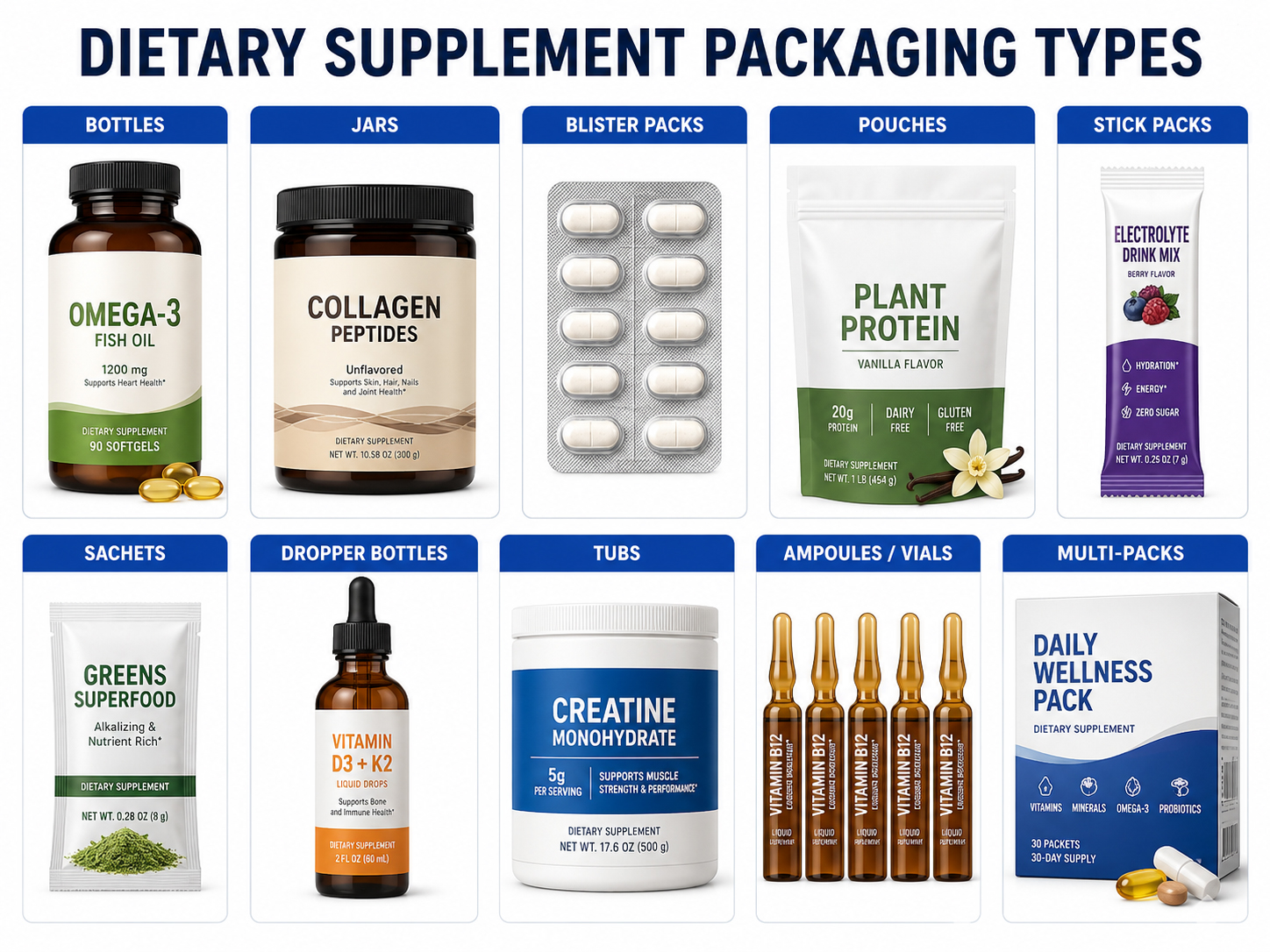
- Eco-Friendly Packaging: 45% of consumers prefer brands with biodegradable packaging (Mintel, 2023). For powders and liquids, compostable sachets and recycled PET bottles are emerging.
- Bioavailability Innovation: Liposomal encapsulation (e.g., for curcumin) and micelle technology (e.g., for vitamin D) can boost absorption by 3-5x, per a 2022 study in Nutrients.
Conclusion For OEM/ODM/CDMO partners, success lies in bridging formulation science, regulatory rigor, and consumer insights. By prioritizing stability, transparency, and format innovation, manufacturers can deliver supplements that meet both clinical standards and market demands. As the industry evolves, investing in R&D and sustainable practices will differentiate leaders from followers.
References
1. Grand View Research. (2023). Dietary Supplements Market Report.
2. Nutrients. (2022). Softgel Bioavailability Study.
3. FDA. (2021). Tablet Disintegration Analysis.
4. ICH. (2022). Stability Testing Guidelines.
5. CRN. (2023). Consumer Survey on Supplement Transparency.