



Why Dissolution Testing Matters for Supplement Brands
At SREKE, we understand that dissolution testing is one of the most critical quality control steps in the production of dietary supplements. Dissolution testing measures the rate and extent to which an active ingredient is released from a tablet or capsule into a solution under standardized conditions. For supplement brand owners, this test is not just a regulatory checkbox — it is a direct indicator of product performance and bioavailability.
When a consumer swallows a tablet or capsule, the product must disintegrate and dissolve properly so the body can absorb the active ingredients. If dissolution is too slow or incomplete, the supplement may not deliver the promised benefits, regardless of how well-formulated it appears on paper. This is why dissolution testing is essential at every stage of manufacturing, from raw material evaluation to finished product release.
Regulatory bodies such as the U.S. Food and Drug Administration (FDA) and the European Medicines Agency (EMA) recognize dissolution testing as a key quality attribute. While dietary supplements are regulated under different frameworks than drugs, the principles of dissolution testing remain highly relevant. At SREKE, we align our testing protocols with FDA guidance and USP <711> Dissolution standards to ensure your products meet the highest quality benchmarks.
Key Manufacturing Considerations at SREKE
Understanding the Dissolution Process
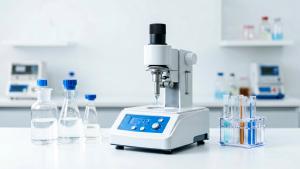
Dissolution testing follows a well-defined scientific process. A tablet or capsule is placed in a dissolution vessel containing a specified medium — typically an aqueous solution that simulates gastrointestinal conditions. The vessel is maintained at a controlled temperature, usually 37 degrees Celsius, and the medium is agitated at a set rotation speed. Samples are drawn at predetermined time intervals and analyzed, commonly using UV-Vis spectrophotometry or high-performance liquid chromatography (HPLC), to determine the concentration of dissolved active ingredient.
USP Apparatus Options
The United States Pharmacopeia defines multiple apparatus types for dissolution testing, each suited to different dosage forms and release profiles:
- Apparatus 1 (Basket): Ideal for tablets and capsules that tend to float or produce debris. The sample is contained within a wire mesh basket rotating in the dissolution medium.
- Apparatus 2 (Paddle): The most widely used method, suitable for a broad range of tablet and capsule formulations. The sample rests at the bottom of the vessel beneath a rotating paddle.
- Apparatus 3 (Reciprocating Cylinder): Useful for modified-release formulations and products that may adhere to the basket or paddle.
- Apparatus 4 (Flow Cell): Employed for poorly soluble compounds and generic drug products, offering high sensitivity with minimal medium volume.
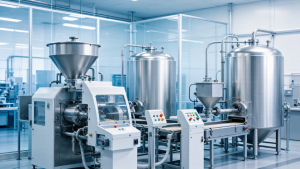
At SREKE, our GMP-certified facility is equipped with all four USP apparatus types, allowing us to select the most appropriate method for each unique formulation we develop for our partners.
Factors That Influence Dissolution Performance
Several formulation and manufacturing variables can significantly affect dissolution results. At SREKE, we carefully control each of these factors during production:
- Particle size of the active ingredient: Smaller particles generally dissolve faster due to increased surface area. We employ micronization and milling processes to optimize particle size distribution.
- Excipient selection: Binders, disintegrants, and lubricants all play a role. Disintegrants such as croscarmellose sodium and sodium starch glycolate help tablets break apart rapidly, while excessive lubricant can slow dissolution.
- Compression force: For tablets, higher compression forces can reduce porosity and slow dissolution. We optimize tablet hardness to balance durability with performance.
- Coating formulation: Film-coated and enteric-coated tablets require specific dissolution media and conditions to evaluate coating integrity and release behavior.
- Capsule shell composition: The grade and thickness of gelatin or hypromellose capsules affect disintegration time and subsequent dissolution.
Quality Standards and Compliance
At SREKE, all dissolution testing is conducted in compliance with Good Manufacturing Practices (GMP) as defined by the FDA and aligned with ISO 9001 quality management standards. Our laboratory follows HACCP principles for risk management and maintains full documentation traceability for every batch tested. We perform dissolution testing at multiple stages — including incoming raw material inspection, in-process checks, and final product release — to ensure consistent quality throughout the manufacturing lifecycle.
How SREKE Helps You Get to Market Faster
At SREKE, we know that time-to-market is a critical factor for supplement brand owners. Our streamlined OEM and ODM services are designed to accelerate your product development without compromising quality or compliance.
- Fast formulation development: Our experienced R&D team can develop and optimize formulations for target dissolution profiles, reducing the number of iteration cycles needed.
- Flexible MOQ options: We offer competitive minimum order quantities tailored to brands of all sizes, from emerging startups to established companies.
- Streamlined lead times: Our efficient production workflows and in-house quality control lab allow us to deliver finished products faster than many traditional manufacturers.
- End-to-end support: From capsule and tablet selection to packaging design and labeling compliance, we guide you through every step of the process.
- Regulatory-ready documentation: We provide comprehensive batch records, certificates of analysis, and dissolution test reports to support your regulatory filings and quality audits.
Whether you are launching a new herbal supplement, a vitamin-mineral complex, or a specialized sports nutrition product, our team works closely with you to ensure the final dosage form delivers the performance your brand promises.
Industry Trends and Market Opportunities
The dietary supplement industry continues to evolve rapidly, and dissolution testing plays an increasingly important role in keeping pace with consumer demands and regulatory expectations.
Rise of Advanced Delivery Systems
Consumers are seeking supplements with faster onset and improved bioavailability. This has driven demand for advanced dosage forms such as fast-dissolving tablets, softgels with optimized release profiles, and capsule formulations designed for enhanced absorption. At SREKE, we stay ahead of these trends by investing in cutting-edge dissolution testing equipment and staying informed about the latest pharmacopeial updates.
Personalized and Niche Formulations
The growth of personalized nutrition has created opportunities for custom formulations that require precise dissolution control. Our ODM capabilities allow us to develop bespoke products that meet specific dissolution targets, giving brand owners a competitive edge in differentiated markets.
Global Regulatory Harmonization
As regulatory frameworks around the world continue to converge on quality standards, dissolution testing remains a universal benchmark for product performance. Brands that prioritize rigorous dissolution testing are better positioned to meet requirements in both domestic and international markets. At SREKE, our adherence to internationally recognized standards ensures your products are ready for global distribution.
Sustainability and Clean Label Trends
Consumers are increasingly demanding clean-label supplements with minimal excipients. Formulating products with fewer additives while maintaining acceptable dissolution performance presents a unique challenge. Our formulation experts specialize in developing clean-label solutions that meet both consumer expectations and dissolution quality standards.
Frequently Asked Questions
What is the difference between disintegration and dissolution testing?
Disintegration testing measures how quickly a tablet or capsule breaks apart into smaller particles, while dissolution testing measures how quickly the active ingredient dissolves into the medium. Disintegration is typically a prerequisite for dissolution — a product must first disintegrate before its ingredients can dissolve. At SREKE, we perform both tests as part of our comprehensive quality control process.
How long does dissolution testing take?
The duration of a dissolution test depends on the dosage form and the specified dissolution profile. For immediate-release tablets and capsules, testing typically runs for 30 to 60 minutes with samples collected at intervals such as 10, 15, 20, 30, and 45 minutes. Modified-release formulations may require testing over several hours. At SREKE, our efficient laboratory workflows ensure timely results without sacrificing accuracy.
What dissolution medium should be used for supplement tablets?
The choice of dissolution medium depends on the solubility characteristics of the active ingredient and the intended route of administration. Common media include simulated gastric fluid, simulated intestinal fluid, and simple aqueous solutions such as purified water or buffer solutions at controlled pH levels. Our formulation team at SREKE selects the appropriate medium based on the specific properties of each product.
Can you help with reformulating an existing product to improve dissolution?
Absolutely. At SREKE, our R&D team specializes in formulation optimization. If your current product is experiencing dissolution issues, we can analyze the root cause and develop improved formulations that meet your target specifications. We offer both ODM reformulation services and custom OEM development to suit your needs.
What are the typical MOQ and lead times for tablet and capsule production?
Our MOQ varies depending on the dosage form, packaging, and complexity of the formulation. We work with brands of all sizes and can accommodate both small-batch and large-scale production runs. Lead times typically range from a few weeks for standard formulations to several months for complex custom projects. Contact our team for a detailed quote tailored to your specific requirements.
Does SREKE provide dissolution testing reports for regulatory compliance?
Yes. We provide comprehensive batch-specific dissolution test reports as part of our quality documentation. These reports include test conditions, medium details, apparatus type, sampling intervals, and results compared to acceptance criteria. Our documentation supports regulatory audits and compliance requirements in both the United States and international markets.