

Why Sublingual Supplement Manufacturing Matters for Supplement Brands
At SREKE, we see sublingual supplements continue to gain traction among brand owners seeking faster absorption and enhanced bioavailability. The sublingual route—delivering active ingredients through the mucous membranes under the tongue—bypasses first-pass metabolism, allowing compounds to enter systemic circulation directly. This mechanism is well-documented in pharmacological literature and drives consumer demand for sublingual formulations, particularly in the vitamins, minerals, and wellness categories.
However, sublingual manufacturing introduces distinct regulatory, technical, and quality challenges that separate it from conventional tablet or capsule production. For supplement brand owners, understanding these nuances is essential to ensuring compliance, product efficacy, and a smooth path to market.
The U.S. Food and Drug Administration (FDA) regulates sublingual dietary supplements under the Dietary Supplement Health and Education Act (DSHEA) of 1994. In the European Union, EFSA oversees health claims and novel food considerations that may affect sublingual product development. At SREKE, we design our manufacturing processes to meet both FDA current Good Manufacturing Practices (cGMP, 21 CFR Part 111) and EFSA regulatory expectations where applicable.
Key Manufacturing Considerations at SREKE
Formulation Science and Excipient Selection
Sublingual formulations require careful excipient selection to balance disintegration speed, taste masking, and mucosal compatibility. At SREKE, we work with proven disintegrants such as croscarmellose sodium, sodium starch glycolate, and microcrystalline cellulose that promote rapid tablet breakdown upon contact with saliva.
We evaluate each active ingredient for sublingual suitability, considering particle size, solubility, and stability. Ingredients with poor aqueous solubility may require micronization or alternative delivery enhancers. Our formulation team reviews all excipients against FDA GRAS (Generally Recognized as Safe) listings and EFSA positive ingredient lists to ensure compliance in target markets.
Tablet Compression and Hardness Control
Sublingual tablets must disintegrate within a specific timeframe—typically under three minutes—to deliver the intended absorption profile. At SREKE, our compression equipment is calibrated to achieve target hardness ranges that support both manufacturability and rapid disintegration. We conduct in-house disintegration testing on every production batch, documenting results against USP general chapter <701> Dissolution or equivalent standards.
Our facility maintains environmental controls including relative humidity management, which is critical for sublingual tablet stability. Excessive moisture can compromise disintegration performance and accelerate degradation of moisture-sensitive actives.
Coating and Taste Masking
Bitterness and oral irritation are common barriers to consumer acceptance of sublingual products. At SREKE, we apply taste-masking strategies including film coatings, sweetener systems (such as sucralose and stevia extract), and flavoring agents that comply with FDA and EFSA flavoring substance regulations. Our quality team verifies that all flavor and sweetener ingredients carry appropriate GRAS notifications or EFSA safety opinions before incorporation into any formulation.
Packaging for Moisture and Light Protection
Sublingual tablets are particularly susceptible to humidity-induced degradation. At SREKE, we recommend and supply packaging solutions including aluminum-aluminum blisters, high-barrier PVC/aluminum blisters, and desiccant-containing child-resistant bottles. Our packaging engineering team validates seal integrity and moisture vapor transmission rates to ensure shelf-life claims are supported by stability data.
Regulatory Compliance Framework
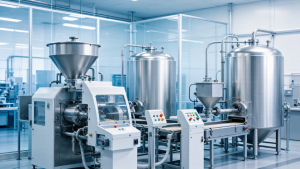
At SREKE, our GMP-certified facility in Guangzhou operates under a comprehensive quality management system aligned with:
- FDA 21 CFR Part 111 (cGMP for Dietary Supplements)
- ISO 22000 and HACCP principles for food safety management
- EFSA regulations for novel foods and health claims where products are intended for the EU market
- NMPA (China) regulations for export documentation and Chinese market compliance
We maintain full ingredient traceability, supplier qualification records, and batch-level documentation to support FDA inspections and EU market surveillance requirements. Our team prepares Dietary Supplement Facts labels, structure/function claims, and all required pre-market documentation in alignment with applicable regulations.
Quality Testing and Stability Programs
Every sublingual product manufactured at SREKE undergoes rigorous quality testing including identity, potency, purity, disintegration, dissolution, microbiological limits, and heavy metals analysis. We conduct accelerated and long-term stability studies per ICH Q1A guidelines to establish shelf life and storage conditions. Stability data underpins our shelf-life declarations and supports regulatory submissions.
How SREKE Helps You Get to Market Faster
At SREKE, we understand that time-to-market is a competitive advantage. Our OEM and ODM services for sublingual supplements are structured to minimize delays while maintaining full regulatory compliance.
Streamlined Development Process
Our product development timeline typically ranges from 8 to 16 weeks depending on formulation complexity, regulatory requirements, and packaging selection. We begin with a formulation feasibility assessment, followed by prototype development, stability testing, and regulatory review. Our in-house regulatory team supports label compliance, ingredient verification, and market-specific documentation.
Flexible MOQ and Scalable Production
At SREKE, we offer competitive minimum order quantities to accommodate startups and established brands alike. Our production lines are scalable, allowing you to begin with a pilot batch and transition to full-scale manufacturing as demand grows. We provide transparent lead time estimates during the quoting phase so you can plan inventory and launch timelines with confidence.
Private Label and Custom ODM Options
Whether you require a private-label formula from our existing portfolio or a fully custom ODM development, our team delivers end-to-end support—from ingredient sourcing and formulation design to packaging, labeling, and quality assurance. We also assist with third-party lab testing coordination and certificate of analysis (COA) preparation.
Documentation and Compliance Support
We provide comprehensive documentation packages including facility certificates (GMP, ISO, HACCP), product specifications, COAs, stability summaries, and regulatory compliance statements. For U.S. market clients, we support FDA facility registration and dietary supplement establishment listing requirements. For EU market clients, we assist with notification procedures and EFSA-compliant claim language.
Industry Trends and Market Opportunities
At SREKE, we observe several key trends shaping the sublingual supplement market:
- Rising consumer demand for fast-acting formats: Sublingual delivery is increasingly favored for vitamins (particularly B12 and D), magnesium, melatonin, and immune-support formulas where rapid absorption is a selling point.
- Clean-label formulation requests: Brand owners are prioritizing natural sweeteners, hypoallergenic excipients, and transparent ingredient lists. We formulate to meet clean-label expectations while maintaining disintegration performance and stability.
- Regulatory scrutiny of structure/function claims: The FDA and EFSA continue to review supplement claims closely. At SREKE, we help brands craft compliant structure/function statements that avoid unauthorized disease claims while effectively communicating product benefits.
- Sustainability in packaging: Consumers and regulators are pushing for recyclable and reduced-plastic packaging. We evaluate eco-friendly packaging alternatives without compromising product protection.
- Global market expansion: Sublingual supplements are gaining popularity across North America, Europe, and Asia-Pacific. Our export experience and multilingual compliance support enable brands to enter multiple markets efficiently.
The global dietary supplement market continues to grow, with sublingual and orodispersible formats representing an expanding segment. At SREKE, we invest in ongoing R&D to stay ahead of formulation innovations, regulatory changes, and consumer preferences so our partners can launch products that meet both market demand and compliance standards.
Frequently Asked Questions
What is the typical MOQ for sublingual supplement manufacturing at SREKE?
Our MOQ varies by product format and packaging configuration. We provide specific MOQ details during the quotation process. We work with brands of all sizes, from emerging startups to established companies, and can accommodate pilot production runs before scaling to full-volume orders.
How long does it take to develop and produce a sublingual supplement?
Development timelines typically range from 8 to 16 weeks, including formulation, prototyping, quality testing, and stability assessment. Production lead time depends on order volume and packaging complexity. We provide detailed timelines during project planning.
Do you support FDA and EFSA compliance for sublingual products?
Yes. Our GMP-certified facility operates under 21 CFR Part 111, and our quality system incorporates EFSA regulatory requirements for EU market products. We provide compliance documentation, label review, and regulatory support throughout the development process.
Can you help with taste masking for bitter active ingredients?
Absolutely. Our formulation team has extensive experience with taste-masking technologies including film coatings, sweetener systems, and flavoring strategies that comply with FDA GRAS and EFSA regulations. We test sensory acceptability during the development phase.
What quality certifications does SREKE hold?
SREKE holds GMP certification, ISO 22000, and HACCP certification. Our facility is registered with the FDA for dietary supplement manufacturing, and we support export documentation for international markets including the EU, U.S., and Asia-Pacific regions.
Do you offer stability testing and shelf-life determination?
Yes. We conduct accelerated and long-term stability studies per ICH guidelines and use the resulting data to establish scientifically supported shelf-life claims and storage recommendations for your products.
Can I visit your manufacturing facility?
We welcome facility visits for qualified brand partners. Please contact our team to schedule a tour and discuss your manufacturing requirements in detail.