

Why 3D Printing Supplements Technology Matters for Supplement Brands
At SREKE, we are closely monitoring the emergence of 3D printing technology in the dietary supplement industry. Also known as additive manufacturing, 3D printing has the potential to transform how supplement brands develop, customize, and scale their product lines. While the technology is still evolving, early adopters are already exploring its applications for personalized nutrition, complex dosage forms, and rapid prototyping.
Traditional supplement manufacturing relies on established processes such as tablet compression, softgel encapsulation, and powder filling. Each of these methods has proven reliability under GMP conditions. However, 3D printing introduces new possibilities — including patient-specific dosing, multi-layer formulations, and on-demand production — that were previously impractical or impossible at scale.
For supplement brand owners, understanding where this technology stands today and where it is headed is essential to making informed sourcing and development decisions. At SREKE, we evaluate emerging manufacturing technologies against our core commitments: regulatory compliance, product quality, and manufacturability at commercial scale.
Key Manufacturing Considerations at SREKE
When we assess any new manufacturing technology, including 3D printing, we consider several critical factors that directly impact your product and your brand.
Regulatory Compliance and Safety
Under FDA regulations, dietary supplements are governed by the Dietary Supplement Health and Education Act (DSHEA) and current Good Manufacturing Practices (cGMPs) outlined in 21 CFR Part 111. Any 3D printing process used for supplement production must meet the same rigorous standards as conventional manufacturing methods. At SREKE, we ensure that all materials, inks, and printing substrates used in any additive manufacturing process are compliant with FDA requirements for dietary supplement ingredients and food-contact surfaces.
Similarly, EFSA (European Food Safety Authority) evaluates novel food ingredients and processing methods under Regulation (EU) 2015/2283. If 3D printing introduces novel excipients or processing conditions, those must undergo appropriate safety assessments before products can be marketed in the EU.
Material Compatibility and Ink Formulations
3D printing for supplements typically uses printable inks or feedstocks based on active ingredients, excipients, and binders. Common approaches include:
- Fused Deposition Modeling (FDM): Uses thermoplastic-based filaments or inks containing active compounds. Suitable for solid dosage forms such as tablets and capsules with controlled-release profiles.
- Material Jetting (Inkjet-Based): Deposits liquid formulations layer by layer. Allows for precise dosing and multi-ingredient printing within a single dosage form.
- Stereolithography (SLA): Uses light-cured resins. While promising for precision, resin compatibility with ingested products requires careful evaluation of residual solvent levels and biocompatibility.
At SREKE, we prioritize GRAS (Generally Recognized as Safe) excipients and FDA-compliant binder materials. We work closely with formulation scientists to ensure that printable ink systems maintain ingredient stability, bioavailability, and dosage accuracy throughout the printing process.
Quality Control and Batch Consistency
One of the most important considerations for supplement brands is whether 3D printing can deliver the same batch-to-batch consistency that consumers and regulators expect. Key quality parameters include:
- Dosage accuracy: Each printed unit must contain the labeled amount of active ingredient within acceptable variance (typically ±10% per USP general chapters).
- Weight uniformity: Printed tablets and capsules must meet weight variation standards.
- Disintegration and dissolution: 3D-printed dosage forms must release actives at the expected rate, which can be influenced by layer adhesion, porosity, and binder distribution.
- Microbial safety: Any aqueous or bio-based ink system must be evaluated for microbial risk, especially in multi-step printing processes.
At SREKE, our quality control protocols are built around ISO 9001 principles and HACCP hazard analysis. We apply the same level of analytical rigor — including HPLC testing, dissolution profiling, and stability monitoring — to any new manufacturing technology we evaluate.
Scalability and Production Capacity
While 3D printing excels at prototyping and small-batch customization, scaling to commercial volumes remains a challenge for many additive manufacturing methods. Current 3D printing speeds for solid dosage forms are generally slower than high-speed tablet compression or softgel encapsulation lines, which can produce thousands of units per hour.
At SREKE, we believe 3D printing is most valuable today for:
- Rapid prototyping: Testing formulations and dosage forms before committing to full-scale tooling.
- Limited-edition or personalized products: Custom-dosed supplements for specific consumer segments.
- Complex dosage designs: Multi-layer tablets, hollow structures, or geometric forms that conventional manufacturing cannot easily produce.
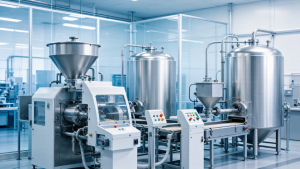
For high-volume production, we continue to rely on and invest in proven GMP-compliant manufacturing lines for tablets, softgels, capsules, gummies, powders, and liquids — while keeping a close watch on advancements that may improve printing throughput in the coming years.
How SREKE Helps You Get to Market Faster
Whether you are launching a new supplement brand or expanding an existing product line, speed to market is critical. At SREKE, we combine deep industry expertise with agile manufacturing to help you move from concept to shelf efficiently.
Formulation Development and Optimization
Our in-house R&D team works with you to develop formulations that are not only effective but also manufacturable at scale. We consider ingredient compatibility, stability, bioavailability, and regulatory status from the outset. If your vision includes innovative dosage forms — whether through 3D printing or conventional methods — we help you identify the most practical and compliant path forward.
Low MOQ Options for Startup Brands
We understand that emerging brands need flexibility. SREKE offers competitive minimum order quantities across our product categories, including softgels, capsules, tablets, powders, gummies, and liquids. This allows you to test the market, validate your formula, and scale production as demand grows — without excessive upfront inventory investment.
Streamlined Lead Times
Our Guangzhou-based facility is equipped with modern production lines and a streamlined quality assurance process. Typical lead times for OEM/ODM projects range from 4 to 8 weeks depending on product type, complexity, and packaging requirements. We provide real-time project updates so you always know where your order stands.
Full-Service Packaging and Compliance Support
From label design review to regulatory documentation, we support you through every step. Our team is familiar with FDA labeling requirements, EU supplement regulations, and other key market standards. We also offer private labeling, custom packaging, and barcoding services to help you build a professional, market-ready product.
Industry Trends and Market Opportunities
The global dietary supplement market continues to grow, with personalized nutrition and innovative delivery formats driving consumer interest. According to industry analysts, the global supplement market was valued at approximately USD 170–190 billion in 2024 and is projected to expand at a compound annual growth rate (CAGR) of 7–9% through 2030. Personalized and precision nutrition is one of the fastest-growing segments within this space.
Personalized Nutrition and Custom Dosing
Consumers increasingly expect supplements tailored to their individual needs — whether based on age, gender, health goals, or lifestyle. 3D printing technology aligns naturally with this trend by enabling variable dosing and custom formulation per unit. While large-scale personalization is still emerging, early commercial applications are appearing in the wellness and sports nutrition spaces.
Sustainable and Waste-Reduced Manufacturing
Additive manufacturing inherently generates less material waste than subtractive processes. For supplement brands committed to sustainability, 3D printing offers a potential pathway to reduce raw material scrap and energy consumption — particularly in prototyping and small-batch production runs.
Innovation in Delivery Formats
3D printing enables geometric and structural innovations that are difficult or impossible with conventional tablet compression or encapsulation. Examples include multi-layer tablets with separated incompatible ingredients, hollow-core capsules for enhanced dissolution, and porous structures that improve the bioavailability of poorly soluble compounds. At SREKE, we are actively exploring how these innovations can be adapted for commercial supplement production under GMP conditions.
Regulatory Evolution
As 3D printing moves from research to commercial application, regulatory frameworks will continue to evolve. The FDA has not yet issued specific guidance dedicated to 3D-printed dietary supplements, but the agency has published guidance on 3D-printed medical devices and pharmaceuticals that may inform future supplement regulation. At SREKE, we stay informed on regulatory developments and proactively ensure that our processes meet or exceed current standards.
Frequently Asked Questions
Is 3D printing supplements already available commercially?
3D printing of dietary supplements is in an early commercial stage. Some companies are using the technology for prototyping, limited-batch production, and personalized dosing. However, it has not yet replaced conventional manufacturing methods for high-volume supplement production. At SREKE, we are evaluating the technology and will incorporate it into our offerings when it meets our standards for quality, compliance, and scalability.
Are 3D-printed supplements safe and regulatory-compliant?
Yes — provided they are manufactured under appropriate GMP conditions using approved ingredients and materials. Any 3D-printed supplement must comply with the same FDA cGMP regulations (21 CFR Part 111) as conventionally manufactured products. At SREKE, we ensure that all materials and processes meet regulatory requirements before any product reaches the market.
Can 3D printing reduce my product's cost per unit?
For high-volume production, conventional manufacturing methods such as tablet compression and softgel encapsulation currently offer lower per-unit costs due to established economies of scale. 3D printing may reduce costs in specific scenarios — such as personalized dosing, reduced material waste, or eliminating tooling costs for small batches. We can help you evaluate the cost structure for your specific product and volume requirements.
What is the minimum order quantity (MOQ) at SREKE?
Our MOQ varies by product type and packaging. We work with brands of all sizes, from emerging startups to established companies. Contact our team for specific MOQ details based on your product category and order volume.
How long does it take to produce a supplement order at SREKE?
Typical lead times range from 4 to 8 weeks depending on product type, formulation complexity, packaging requirements, and order volume. Rush production may be available for select products. We provide detailed timelines during the quoting process.
Does SREKE offer private labeling and custom packaging?
Yes. We provide full private-label services including custom bottle and blister packaging, label design support, barcoding, and compliance review. Our team can guide you through packaging options that meet your brand identity and regulatory requirements.
What certifications does SREKE hold?
SREKE operates under GMP certification and maintains quality management systems aligned with ISO and HACCP principles. Our facility is located in Guangzhou, China, and we serve brands worldwide with products compliant with FDA, EU, and other international standards.
Can I request a sample before placing a full order?
Absolutely. We encourage you to request product samples so you can evaluate quality, dosage form, and packaging before committing to a production run. Contact our team to arrange sampling.
Ready to launch your supplement brand? SREKE provides GMP-certified OEM/ODM manufacturing for softgels, capsules, tablets, powders, gummies, and liquids. Contact us for a free quote or email [email protected] — we respond within 24 hours.