






Why Heavy Metal Testing Matters for Supplement Brands
At SREKE, we see firsthand how critical heavy metal testing is for supplement brands entering or scaling in the global market. Heavy metals—lead, cadmium, arsenic, and mercury—are naturally present in soil and can accumulate in botanical ingredients, minerals, and other raw materials used in dietary supplements. For brand owners, failing to address this risk can result in product recalls, regulatory action, and irreversible brand damage.
The U.S. FDA does not approve dietary supplements before they reach the market, but it does enforce Good Manufacturing Practices (GMPs) under 21 CFR Part 111, which require manufacturers to establish specifications for identity, purity, strength, and composition—including limits on contaminants. In the European Union, EFSA has established tolerable weekly intake levels for heavy metals in food and food supplements, and the EU's novel food regulations further tighten heavy metal limits for certain botanical ingredients. China's GB 16740 and GB 14880 standards similarly mandate heavy metal testing for health foods and nutritional supplements.
For brand owners, this means every batch of raw material and finished product must be tested against clearly defined heavy metal specifications. At SREKE, our GMP-certified facility in Guangzhou ensures that every ingredient entering our production line is accompanied by a certificate of analysis (CoA) verifying compliance with heavy metal limits before manufacturing begins.
Key Manufacturing Considerations at SREKE
Raw Material Screening and Supplier Qualification
At SREKE, we begin every formulation project with rigorous supplier qualification. Our procurement team evaluates every raw material supplier against our quality standards, which include:
- Verification of GMP or equivalent certification at the supplier's facility
- Review of historical heavy metal testing data for each ingredient batch
- On-site or third-party audits of high-risk botanical and mineral sources
- Specification agreements that define acceptable limits for lead, cadmium, arsenic, and mercury
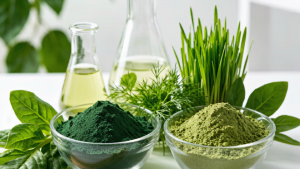
We recognize that botanical ingredients—such as ashwagandha, turmeric, ginkgo biloba, and green tea extract—are among the highest-risk categories for heavy metal contamination because plants absorb these elements from soil. Our team works with suppliers to source materials from regions with known low heavy metal profiles and requires third-party ICP-MS (Inductively Coupled Plasma Mass Spectrometry) testing for every incoming lot.
Testing Methods and Detection Limits
At SREKE, we use validated analytical methods to detect heavy metals at parts per million (ppm) and parts per billion (ppb) levels. Our standard testing panel includes:
- Lead (Pb): Detected via ICP-MS or ICP-OES, with typical acceptance criteria of ≤0.5 ppm for botanicals and ≤1.0 ppm for mineral-derived ingredients
- Cadmium (Cd): Same analytical methods, with acceptance criteria of ≤0.2 ppm for most botanical ingredients
- Arsenic (As): Total arsenic testing, with many brand owners specifying ≤0.1 ppm for high-risk botanicals
- Mercury (Hg): Detected at ≤0.1 ppm for fish-derived and botanical ingredients
These thresholds align with the stricter standards found in California Proposition 65, the USP <232> and <233> chapters for elemental impurities, and the EFSA guidance values for heavy metals in food supplements. We also offer optional testing for additional elements such as aluminum, barium, and nickel upon request.
In-Process and Finished Product Testing
Heavy metal control does not end at raw material acceptance. At SREKE, our manufacturing process includes in-process checks and final product testing to ensure that no contamination occurs during blending, encapsulation, compression, or packaging. Our quality assurance team reviews every batch record and CoA before product release, and we provide full documentation to our brand partners—including test reports from ISO 17025-accredited third-party laboratories when required.
Compliance Documentation for Global Markets
Different markets have different regulatory expectations. At SREKE, we prepare compliance documentation tailored to your target market:
- USA: FDA GMP compliance (21 CFR 111), Prop 65 testing reports, DSHEA registration support
- European Union: EFSA compliance documentation, novel food status verification, EU GMP Annex quality records
- China: GB standard compliance testing, NHC (National Health Commission) registration support, Chinese-language CoAs
- Australia: TGA listing compliance, heavy metal limits per the Compendium of Identified Ingredients
- Canada: DIN application support, heavy metal testing per Natural Health Products Regulations
How SREKE Helps You Get to Market Faster
At SREKE, we understand that speed to market is essential for supplement brand owners. Our integrated OEM and ODM capabilities allow us to move from formulation to finished product efficiently while maintaining full heavy metal compliance at every step.
Streamlined Formulation and Testing
Our in-house R&D team develops formulations that meet your heavy metal specification requirements from the outset. We select raw materials with proven clean-supply histories and run pre-production stability and contaminant testing before committing to full-scale manufacturing. This approach reduces the risk of late-stage formulation changes caused by failing raw material tests.
Scalable Production with Consistent Quality
Whether you need 5,000 units or 500,000 units, our GMP-certified facility in Guangzhou produces softgels, capsules, tablets, powders, gummies, and liquids on the same quality-controlled lines. Every batch is tested for heavy metals before release, and we maintain batch traceability from raw material receipt through finished product shipping.
Transparent Lead Times and MOQs
At SREKE, we provide clear lead time estimates and minimum order quantities during the quoting phase. Our standard OEM lead time ranges from 4 to 8 weeks depending on product format, packaging complexity, and testing requirements. For ODM projects using our existing formula library, lead times can be significantly shorter. Contact our team for a detailed production timeline tailored to your project.
Packaging Options That Protect Product Integrity
Heavy metal contamination can also occur during packaging if materials do not meet food-grade standards. At SREKE, we source and test all packaging components—including bottles, blister packs, capsules, and labels—for compliance with FDA food-contact material regulations and EU Regulation (EC) No 1935/2004. We offer a wide range of packaging options and can accommodate private-label and white-label configurations.
Industry Trends and Market Opportunities
The global dietary supplement market continues to grow, and heavy metal compliance is becoming a key differentiator for brands that want to build consumer trust. At SREKE, we observe several trends shaping how brand owners approach supplement manufacturing:
- Third-party certification demand: Consumers and retailers increasingly expect third-party tested seals such as USP Verified, NSF Certified for Sport, or Informed-Choice. These programs require comprehensive heavy metal testing beyond basic GMP compliance.
- Botanical ingredient scrutiny: Regulatory bodies and brand owners are paying closer attention to heavy metal contamination in botanicals. Ingredients like ashwagandha, tulsi, and ashwagandha root have been subject to import alerts and testing advisories in the US and EU.
- Supply chain transparency: Brand owners are demanding full supply chain traceability, including origin farming practices, harvest conditions, and testing histories for every raw material lot.
- Regulatory tightening: Both the FDA and EFSA are increasing enforcement actions against supplements with heavy metal contamination. Staying ahead of regulatory changes is essential for long-term brand success.
At SREKE, we stay current on regulatory developments across all major markets and incorporate compliance requirements into our manufacturing workflows so our brand partners can focus on growth rather than risk management.
Frequently Asked Questions
What heavy metals are most commonly tested in supplements?
The four primary heavy metals tested in dietary supplements are lead, cadmium, arsenic, and mercury. These are specified in USP <232> and <233>, California Proposition 65, and EFSA guidance documents. At SREKE, every product we manufacture includes a standard heavy metal test panel covering these four elements.
Do you require third-party testing or can you test in-house?
At SREKE, we perform in-house heavy metal screening on all incoming raw materials and finished products. For regulatory submissions, third-party certification programs, or market-specific compliance requirements, we also arrange testing through ISO 17025-accredited external laboratories. We provide full test reports with every shipment.
What is your minimum order quantity (MOQ)?
Our MOQ varies by product format. For standard softgels and capsules, MOQs typically start at 5,000 units. For tablets and powders, MOQs may be lower depending on packaging. Contact our team at [email protected] for specific MOQ details for your product category.
How long does the manufacturing process take?
Standard OEM production lead times range from 4 to 8 weeks from formula approval to finished product shipment. ODM projects using our existing formulations can move faster. Rush production is available for urgent launches—reach out to discuss your timeline.
Can you help with international regulatory compliance?
Yes. At SREKE, we support brand owners targeting the US, EU, China, Australia, Canada, and other markets. Our compliance team prepares the necessary documentation, testing reports, and registration support materials for your target market. We also assist with Prop 65, EFSA, TGA, and NHC compliance requirements.
What formats do you manufacture?
We produce softgels, capsules, tablets, powders, gummies, and liquids. All formats are manufactured in our GMP-certified facility in Guangzhou, China, with full heavy metal testing and quality documentation for every batch.
Ready to launch your supplement brand? SREKE provides GMP-certified OEM/ODM manufacturing for softgels, capsules, tablets, powders, gummies, and liquids. Contact us for a free quote or email [email protected] — we respond within 24 hours.