

Why Dissolution Testing Matters for Supplement Brands
At SREKE, we understand that dissolution testing is one of the most critical quality control steps in the manufacture of solid oral dosage forms. For supplement brand owners, this process directly impacts product efficacy, regulatory compliance, and consumer trust.
Dissolution testing measures the rate and extent to which an active ingredient is released from a tablet or capsule into a solution under standardized conditions. According to the United States Pharmacopeia (USP) General Chapter <711> Dissolution, this test is essential for ensuring that dietary supplement products deliver the labeled potency within specified limits.
Without proper dissolution testing, a supplement may pass all other quality checks yet fail to release its active ingredients adequately in the gastrointestinal tract. This means consumers receive less than the labeled dose, leading to inconsistent results and potential brand damage.
We have observed that supplement brands who invest in rigorous dissolution testing from the development stage through commercial production consistently experience fewer batch failures, smoother regulatory audits, and stronger market performance.
Key Manufacturing Considerations at SREKE
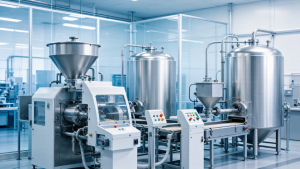
At SREKE, our GMP-certified manufacturing facility in Guangzhou integrates dissolution testing into every phase of tablet and capsule production. Here are the key considerations that define our approach:
1. USP Compliance and Method Development
Our quality control laboratory follows USP <711> and <1724> Dissolution standards for dietary supplements. We develop validated dissolution methods tailored to each formulation, considering factors such as:
- Dissolution medium composition (typically 0.5% to 1% w/v sodium lauryl sulfate in purified water for poorly soluble ingredients)
- Apparatus type — USP Apparatus 1 (basket) or Apparatus 2 (paddle), selected based on product characteristics
- Temperature control at 37 ± 0.5°C to simulate physiological conditions
- Rotation speed, typically 50 to 100 rpm depending on the dosage form
- Sampling time points, commonly at 15, 30, and 45 minutes
We also comply with USP <1045> Apparatus Acceptance, ensuring all dissolution equipment is qualified and maintained according to regulatory expectations.
2. In-Process and Release Testing
At SREKE, we perform dissolution testing at multiple stages:
- Batch release testing: Every commercial batch undergoes dissolution testing before shipment, ensuring consistency with validated specifications.
- In-process monitoring: We conduct intermediate testing during production to detect formulation or process deviations early.
- Stability-indicating testing: Dissolution is monitored throughout shelf-life studies per ICH Q1A(R2) guidelines to ensure product performance remains within specifications over time.
3. Formulation Factors That Influence Dissolution
We work closely with brand owners during formulation development to optimize dissolution performance. Key factors we consider include:
- Excipient selection: Disintegrants such as croscarmellose sodium, sodium starch glycolate, and microcrystalline cellulose are selected based on their impact on disintegration time and subsequent dissolution rate.
- Granulation and compression parameters: For tablets, granulation method, compression force, and tablet hardness directly affect dissolution. Higher compression forces can reduce porosity and slow dissolution, which we mitigate through optimized formulation design.
- Capsule shell composition: For hard gelatin and HPMC capsules, we evaluate shell thickness, opacity agents, and print ink compatibility to ensure timely disintegration and drug release.
- Particle size reduction: Micronization or nanosizing of active ingredients can significantly improve dissolution rates for poorly water-soluble compounds such as curcumin, resveratrol, and coenzyme Q10.
4. Equipment and Technology
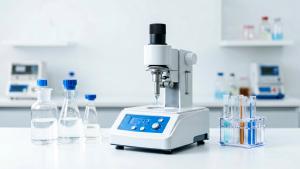
Our facility is equipped with automated dissolution testing systems from leading manufacturers, including Electrolab and Sotax apparatuses. These systems provide:
- Real-time monitoring of dissolution profiles
- Automated sampling and filtration
- Data integrity compliant with 21 CFR Part 11 for electronic records
- UV-Vis and HPLC detection methods for accurate quantification
5. Regulatory Documentation and Audit Readiness
We maintain comprehensive dissolution testing records that support regulatory submissions and audit readiness. Our documentation includes:
- Validated analytical methods with system suitability criteria
- Calibration and maintenance logs for all dissolution equipment
- Batch-specific dissolution profiles and acceptance criteria
- Out-of-specification (OOS) investigation records per USP <1229>
- Stability data packages with dissolution trending
How SREKE Helps You Get to Market Faster
At SREKE, we streamline the dissolution testing process to reduce time-to-market without compromising quality or compliance.
Formulation Development Support
Our in-house R&D team assists brand owners with formulation optimization during the development phase. We conduct pre-formulation dissolution screening to identify the optimal excipient blend, compression parameters, or capsule specification before scaling to production. This proactive approach reduces the number of formulation iterations and accelerates project timelines.
Fast Turnaround on Testing
Our quality control laboratory typically completes dissolution testing within 3 to 5 business days for standard tablet and capsule formulations. For expedited projects, we offer priority testing services to support urgent batch releases or regulatory submissions.
Flexible MOQ and Scalability
At SREKE, we offer competitive MOQs for both tablets and capsules, making it accessible for emerging supplement brands to launch with professionally manufactured products. Our production lines can scale from pilot batches to full commercial runs while maintaining consistent dissolution performance across all batch sizes.
Complete Packaging and Labeling Services
Beyond manufacturing, we provide comprehensive packaging solutions including child-resistant closures, amber glass bottles, blister packs, and sachets. All packaging materials comply with FDA 21 CFR requirements for food-contact substances and dietary supplement labeling per 21 CFR 101.
Compliance and Certification
Our facility operates under strict GMP guidelines and holds certifications including:
- FDA registration and compliance with 21 CFR Part 111 (Current Good Manufacturing Practice for Dietary Supplements)
- ISO 22000 and HACCP certification for food safety management
- NSF certification for dietary supplement manufacturing
- GMP certification from recognized third-party auditors
We also support third-party certifications such as NSF Certified for Sport, Kosher, Halal, and Non-GMO Project Verified upon request.
Industry Trends and Market Opportunities
The global dietary supplement market continues to evolve, and dissolution testing plays an increasingly important role in meeting consumer and regulatory expectations.
Trend 1: Rise of Advanced Delivery Systems
There is growing demand for sustained-release, delayed-release, and orally disintegrating tablet formulations. These advanced dosage forms require specialized dissolution testing methods that may include pH-gradient media or multi-stage dissolution protocols to accurately reflect their release profiles. At SREKE, we have expertise in developing and validating these specialized methods.
Trend 2: Natural and Botanical Ingredients
Botanical extracts and natural ingredients often present unique dissolution challenges due to their complex chemical composition and variable solubility. Our formulation scientists have extensive experience working with popular botanicals including turmeric extract, green tea extract, ashwagandha, and milk thistle, developing dissolution methods that accurately reflect their bioavailability characteristics.
Trend 3: Regulatory Scrutiny and Quality Expectations
Regulatory agencies worldwide, including the FDA and EFSA, are placing greater emphasis on quality by design (QbD) principles in supplement manufacturing. The FDA's Dietary Supplement Good Manufacturing Practices (DSGMP) regulation requires manufacturers to perform appropriate testing, including dissolution when applicable, to verify that products meet their labeled specifications. Brands that prioritize dissolution testing are better positioned for regulatory compliance and market access.
Trend 4: Consumer Demand for Bioavailability
Modern consumers are more informed about supplement quality and bioavailability. Brands that can demonstrate rigorous dissolution testing and quality control have a competitive advantage in the marketplace. We recommend that brand owners include dissolution testing results in their product documentation and quality certificates to build consumer confidence.
Trend 5: Private Label and White Label Growth
The private label supplement market continues to expand, with new brands entering the space regularly. Contract manufacturers like SREKE enable these brands to launch high-quality products quickly by providing end-to-end services from formulation to finished packaging. Our dissolution testing capabilities ensure that every private label product meets consistent quality standards.
Frequently Asked Questions
What is dissolution testing and why is it important for supplements?
Dissolution testing measures how quickly and completely an active ingredient is released from a tablet or capsule into a simulated gastrointestinal fluid. It is important because it directly relates to bioavailability — the amount of active ingredient that becomes available for absorption. The FDA considers dissolution testing a critical quality attribute for solid oral dosage forms under 21 CFR 111.
Does the FDA require dissolution testing for dietary supplements?
While the FDA does not mandate dissolution testing for all dietary supplements, 21 CFR 111.75 requires manufacturers to establish written specifications for identity, purity, strength, and composition. For tablet and capsule products, dissolution testing is widely recognized as a best practice and is often required by retailers, third-party certifiers, and international regulatory bodies. At SREKE, we recommend dissolution testing for all tablet and capsule products to ensure quality and compliance.
What is the difference between disintegration and dissolution testing?
Disintegration testing measures the time required for a tablet or capsule to break apart into smaller particles, while dissolution testing measures the rate at which the active ingredient dissolves into the testing medium. Disintegration is a prerequisite for dissolution — a tablet must first disintegrate before its ingredients can dissolve. Both tests are important quality control parameters, and we perform both at our facility.
How long does dissolution testing take for a typical tablet or capsule?
A standard dissolution test typically runs for 30 to 45 minutes, with samples collected at predetermined time points. However, the total turnaround time from sample submission to report delivery at SREKE is typically 3 to 5 business days, accounting for method setup, testing, data analysis, and quality review. For novel formulations requiring method development, additional time may be needed.
What dissolution standards does SREKE follow?
We follow USP <711> Dissolution, USP <1724> Pharmaceutical Dosage Forms, and USP <1045> Apparatus Acceptance. For international markets, we can also conduct testing according to European Pharmacopoeia (Ph. Eur.) and Japanese Pharmacopoeia (JP) standards. Our methods are validated per ICH Q2(R1) guidelines for analytical procedure validation.
Can SREKE help with dissolution method development for new formulations?
Yes. Our R&D team has extensive experience developing and validating dissolution methods for a wide range of supplement formulations, including tablets, hard capsules, softgels, and orally disintegrating formats. We offer this service as part of our ODM development process and can also provide standalone method development for brand owners who need it.
What is the typical MOQ for tablet and capsule manufacturing at SREKE?
Our MOQs vary by product type and packaging. For standard tablets and capsules, we typically offer MOQs starting from 50,000 to 100,000 units per SKU, depending on formulation complexity and packaging requirements. We also accommodate smaller pilot batches for product development and market testing. Contact our team for specific MOQ information based on your product requirements.
What is the lead time for OEM/ODM tablet and capsule orders?
At SREKE, typical lead times range from 4 to 8 weeks for standard formulations, depending on formulation complexity, raw material availability, packaging requirements, and order volume. ODM projects that include custom formulation development may require additional time. We provide detailed production schedules during the quoting process so you can plan your launch timeline effectively.
Does SREKE provide certificates of analysis (COA) with dissolution results?
Yes. Every batch we manufacture includes a comprehensive COA that documents dissolution test results along with other quality parameters such as identity, potency, heavy metals, microbial limits, and physical characteristics. Our COAs are available in both digital and printed formats and support your regulatory record-keeping requirements.
Can SREKE manufacture tablets and capsules for international markets?
Absolutely. Our facility is registered with the FDA and holds international certifications including ISO 22000, HACCP, and NSF. We have extensive experience supplying products to markets in North America, Europe, Asia-Pacific, and the Middle East. We can adapt formulations, packaging, and documentation to meet the specific regulatory requirements of your target market.
Ready to launch your supplement brand? SREKE provides GMP-certified OEM/ODM manufacturing for softgels, capsules, tablets, powders, gummies, and liquids. Contact us for a free quote or email [email protected] — we respond within 24 hours.