






Why 3D Printing Supplements Technology Matters for Supplement Brands
At SREKE, we see 3D printing — also called additive manufacturing — as one of the most transformative developments in supplement production. The technology allows precise, layer-by-layer creation of dosage forms, enabling customized shapes, doses, and release profiles that traditional compression or encapsulation cannot easily achieve.
The global 3D printing in pharmaceuticals market was valued at approximately USD 450 million in 2023 and is projected to grow at a compound annual growth rate (CAGR) of over 20% through 2030, according to industry reports from Grand View Research and Smithers. While most regulated 3D-printed products to date have been pharmaceuticals — such as Aprecia Pharmaceuticals' Sprycel, the first FDA-approved 3D-printed drug — the same technology is increasingly being adapted for dietary supplements.
For supplement brand owners, this means new possibilities: personalized dosing, complex geometric designs that improve swallowability, multi-layer tablets with time-release properties, and rapid prototyping without the high tooling costs of traditional manufacturing.
Key Manufacturing Considerations at SREKE
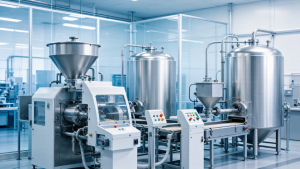
At SREKE, our GMP-certified manufacturing facility in Guangzhou evaluates every emerging technology against the standards our clients expect. Here is what you need to consider when exploring 3D printing for your supplement line.
Regulatory Compliance and FDA/EFSA Standards
Any 3D-printed supplement must comply with the same regulatory frameworks that govern conventional dosage forms. In the United States, dietary supplements are regulated under the Dietary Supplement Health and Education Act (DSHEA) and must meet FDA cGMP requirements outlined in 21 CFR Part 111. In the European Union, supplements must comply with EFSA regulations and the novel food framework where applicable.
At SREKE, we ensure that every material and process meets these standards. We source excipients and active ingredients from verified suppliers and maintain full traceability — a non-negotiable requirement whether you are producing traditional tablets or exploring advanced manufacturing methods.
Material Compatibility and Excipient Selection
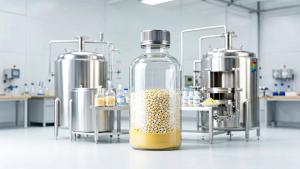
3D printing in supplements typically uses powder-bed fusion, binder jetting, or extrusion-based methods. Each technique has specific requirements for powder flowability, particle size distribution, and moisture content. At SREKE, our technical team evaluates formulation compatibility before recommending a printing approach.
Common excipients used in 3D-printed supplement matrices include microcrystalline cellulose, lactose monohydrate, mannitol, and copovidone. The choice of excipient affects print resolution, tablet hardness, and dissolution performance — all critical quality attributes we monitor closely.
Quality Control and Validation
At SREKE, quality control is embedded at every stage. For 3D-printed products, we validate:
- Dimensional accuracy and weight variation per USP <790> standards
- Hardness and friability consistent with USP <1217> and <1090>
- Content uniformity per USP <905>
- Dissolution profiles per USP <711>
- Microbial limits per USP <61> and <62>
Our facility holds GMP certification, ISO 22000, HACCP, Kosher, and Halal certifications, ensuring your product meets international quality expectations regardless of manufacturing method.
MOQ and Cost Structure
One of the significant advantages of 3D printing is the potential for lower minimum order quantities compared to traditional tooling-intensive processes. At SREKE, we offer flexible MOQs depending on the product format and printing parameters. For prototype runs and limited-edition launches, we can accommodate smaller batches, allowing you to test the market before committing to large-scale production.
Lead Time and Time-to-Market
Traditional tablet tooling can require four to eight weeks for mold fabrication. 3D printing eliminates much of that lead time because no physical tooling is needed — the digital file drives the process directly. At SREKE, we leverage this advantage to help brands accelerate their go-to-market timelines significantly.
How SREKE Helps You Get to Market Faster
At SREKE, we combine advanced manufacturing capabilities with deep regulatory expertise to streamline your product launch. Here is how we support you at every stage.
From Concept to Commercial Production
Whether you are developing a single innovative formula or an entire product line, our ODM team handles formulation development, stability testing, and scale-up. Our OEM services cover softgels, capsules, tablets, powders, gummies, and liquids — and we are actively evaluating 3D printing integration for select product categories.
Custom Packaging and Branding
At SREKE, we offer private-label packaging solutions including custom bottles, blister packs, and pouches. Our in-house design team can create packaging that reflects your brand identity while meeting all labeling requirements under FDA and EFSA regulations.
Regulatory Documentation Support
We provide comprehensive documentation including COA (Certificate of Analysis), MSDS, and regulatory dossiers to support your market registration. Our team stays current on evolving FDA and EFSA guidance to ensure your product complies with all applicable requirements.
Industry Trends and Market Opportunities
At SREKE, we track industry trends closely so our clients can make informed decisions. Here are the key developments shaping the future of supplement manufacturing.
Personalized Nutrition
The personalized nutrition market is projected to exceed USD 20 billion by 2027, according to data from MarketsandMarkets. 3D printing is uniquely positioned to serve this trend by enabling dose customization and personalized supplement blends tailored to individual health profiles.
Complex Release Profiles
Multi-layer and gradient-density tablets printed via 3D technology can achieve immediate, sustained, or delayed release profiles within a single dosage form. This capability opens new formulation possibilities for brands seeking differentiated products.
Sustainability and Waste Reduction
Additive manufacturing inherently generates less material waste than subtractive processes. At SREKE, we recognize sustainability as a growing expectation from both regulators and consumers, and we incorporate efficient material usage into our manufacturing philosophy.
Smart Manufacturing and Industry 4.0
The integration of IoT sensors, real-time analytics, and automated quality inspection into supplement manufacturing is accelerating. SREKE invests in smart factory technologies to maintain consistent quality and enable data-driven process optimization across all our production lines.
Frequently Asked Questions
Is 3D printing for supplements FDA-approved?
The FDA has approved 3D-printed pharmaceutical products, and the same cGMP frameworks apply to dietary supplements. At SREKE, we ensure all products meet 21 CFR Part 111 requirements regardless of the manufacturing technology used. We are actively evaluating 3D printing for select supplement categories.
What is the MOQ for 3D-printed supplement orders?
At SREKE, MOQs vary by product format and complexity. For 3D-printed prototypes and small-batch runs, we offer flexible minimums to help brands validate their concepts. Contact our team for a detailed quotation tailored to your specifications.
How does 3D printing affect lead time?
3D printing can significantly reduce lead time because it eliminates the need for physical tooling and molds. At SREKE, we use this advantage to help brands move from formulation to finished product faster than traditional methods allow.
Can SREKE handle both traditional and 3D-printed formats?
Yes. At SREKE, we manufacture softgels, capsules, tablets, powders, gummies, and liquids using conventional processes, and we are integrating 3D printing capabilities for specialized applications. Our GMP-certified facility supports a full range of manufacturing technologies.
What quality certifications does SREKE hold?
Our facility holds GMP certification, ISO 22000, HACCP, Kosher, and Halal certifications. All products are manufactured under strict quality control protocols and come with full documentation support including COA and regulatory dossiers.
Are there any EFSA considerations for 3D-printed supplements in Europe?
Supplements targeting the European market must comply with EFSA regulations and, where applicable, the novel food regulation (EU) 2015/2283. At SREKE, our regulatory team ensures that all formulations and labeling meet both FDA and EFSA requirements for your target market.
Ready to launch your supplement brand? SREKE provides GMP-certified OEM/ODM manufacturing for softgels, capsules, tablets, powders, gummies, and liquids. Contact us for a free quote or email [email protected] — we respond within 24 hours.