




Why 3D Printing Supplements Technology Matters for Supplement Brands
At SREKE, we are closely monitoring the emergence of 3D printing in dietary supplement manufacturing. While the technology is still evolving, it presents compelling opportunities for brands seeking personalized dosing, rapid prototyping, and greater formulation flexibility. For supplement brand owners evaluating whether to adopt this innovation, understanding its current capabilities and limitations is essential.
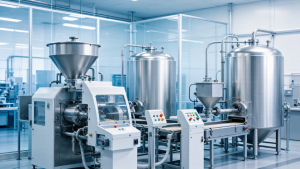
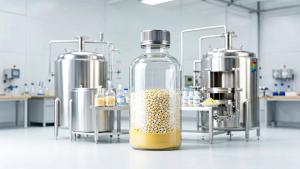
3D printing, or additive manufacturing, in the supplement space refers to layer-by-layer deposition of powdered or semi-solid ingredients to create tablets, capsules, or other dosage forms. Unlike traditional compression or encapsulation methods, 3D printing does not require hard tooling, enabling rapid design changes and small-batch production without significant upfront investment.
The global 3D printing market in healthcare and pharmaceuticals is projected to grow at a compound annual rate exceeding 20% through 2030, according to industry analyses from Grand View Research and Smithers. While the supplement sector represents a smaller share of this growth, early adoption by forward-thinking brands could provide a meaningful competitive advantage in product differentiation and time-to-market.
Key Manufacturing Considerations at SREKE
At SREKE, our GMP-certified facility in Guangzhou, China, maintains rigorous quality standards across all our manufacturing processes. When evaluating 3D printing technology for supplement production, we consider several critical factors that directly impact your product quality, compliance, and bottom line.
Ingredient Compatibility and Stability
Not every active or excipient material is suitable for 3D printing. Binders, flow agents, and powder rheology properties must be carefully evaluated. At SREKE, our R&D team assesses each formulation for printability, ensuring that active ingredients maintain potency and stability throughout the printing and post-processing stages. We conduct accelerated stability testing in accordance with ICH guidelines to verify shelf-life integrity.
Regulatory Compliance and Documentation
Any manufacturing technology deployed in our facility must meet FDA 21 CFR Part 111 requirements for dietary supplements and EU GMP standards. At SREKE, all production processes—including emerging technologies—are documented with full traceability. Batch records, equipment qualification, and validation protocols are maintained to support regulatory audits and inspections.
Quality Control and Testing Protocols
Our quality control laboratory performs incoming raw material testing, in-process checks, and finished product release testing. For 3D printed products, we evaluate dimensional accuracy, weight uniformity, disintegration time, and active content homogeneity. These parameters align with USP general chapters and ISO 9001 quality management requirements that govern our operations.
Scalability and Production Volume
While 3D printing excels at low-volume and prototyping runs, scaling to commercial production volumes requires careful planning. At SREKE, we offer both traditional high-volume manufacturing and emerging additive processes, allowing you to select the approach that best fits your MOQ requirements and launch timeline.
Packaging and Shelf Stability
3D printed tablets and dosage forms may have different surface characteristics compared to compression-molded products, which can affect packaging compatibility and moisture protection. Our packaging team evaluates barrier properties, desiccant requirements, and container selection to ensure product integrity from manufacturing through to the consumer.
How SREKE Helps You Get to Market Faster
At SREKE, our OEM and ODM services are designed to reduce your time-to-market without compromising quality. Whether you are prototyping a novel dosage form or scaling full production, we provide end-to-end support across formulation, manufacturing, and packaging.
- Low MOQ flexibility: We accommodate smaller initial orders for market testing, with clear pathways to scale production volumes.
- Rapid prototyping: Our development team can produce sample batches quickly, allowing you to evaluate taste, texture, and appearance before committing to full production.
- Formulation expertise: With over 15 years of experience, our in-house formulators work with you to optimize ingredient combinations for your target delivery format—whether softgel, capsule, tablet, powder, gummy, or liquid.
- Streamlined compliance: We handle COA generation, label review, and regulatory documentation support, ensuring your product meets the requirements of your target market.
- Lead time efficiency: Our Guangzhou facility operates with lean manufacturing principles, and we provide realistic timeline estimates during the quoting process so you can plan your launch with confidence.
Contact our team to discuss how we can support your product development journey from concept to shelf.
Industry Trends and Market Opportunities
The dietary supplement industry is experiencing several converging trends that make manufacturing innovation increasingly valuable for brand owners.
Personalization and Precision Dosing
Consumer demand for personalized nutrition continues to grow. 3D printing technology enables precise dosing adjustments and customized formulations at the unit level—a capability that traditional high-speed manufacturing lines cannot easily replicate. Brands that can offer personalized supplement regimens may capture growing segments of health-conscious consumers.
Sustainability and Waste Reduction
Additive manufacturing generates less material waste than subtractive processes. At SREKE, we are evaluating how 3D printing can support sustainability goals by reducing scrap rates and enabling on-demand production that minimizes overstock and expiration waste.
Complex Dosage Forms
3D printing allows for geometrically complex tablet designs, including multi-layered structures and porous matrices that can control release profiles. These design freedoms open new product development possibilities for brands looking to differentiate through innovative delivery systems.
Supply Chain Resilience
The global supply chain disruptions experienced in recent years have highlighted the value of flexible manufacturing. Brands that can pivot between product formats and volumes more quickly will be better positioned to respond to market demand shifts. At SREKE, we support this agility through our diverse production capabilities and responsive project management.
Frequently Asked Questions
Is 3D printing supplements technology ready for commercial production?
At SREKE, we view 3D printing as an emerging capability that is best suited for prototyping, low-volume specialty runs, and personalized dosing applications. For high-volume standard production, traditional compression, encapsulation, and filling methods remain the most efficient and cost-effective approach. We can advise you on the optimal manufacturing method for your specific product and volume requirements.
What are the typical MOQs for 3D printed supplement products?
MOQs vary depending on the product format and complexity. At SREKE, we offer flexible MOQs to support brands at different stages of growth. We recommend reaching out to our team for a detailed quote that reflects your specific formulation, packaging, and volume needs.
How does 3D printing affect product shelf life?
Shelf life is determined primarily by ingredient stability and packaging protection, not by the manufacturing method alone. At SREKE, we conduct stability testing on all products to establish accurate expiration dates in compliance with FDA and EFSA labeling requirements. We ensure that 3D printed products meet the same quality and stability standards as conventionally manufactured items.
Can SREKE handle regulatory compliance for international markets?
Yes. Our facility holds GMP certification and follows HACCP and ISO quality management principles. We support brands targeting the US FDA, EU EFSA, and other international regulatory frameworks. Our documentation and labeling review services help ensure your product meets the requirements of your destination market.
What is the typical lead time for a new supplement product at SREKE?
Lead times depend on formulation complexity, testing requirements, packaging specifications, and order volume. At SREKE, we provide estimated timelines during the initial consultation and keep you informed throughout the production process. Our goal is to deliver quality products on schedule so you can meet your launch targets.
Ready to launch your supplement brand? SREKE provides GMP-certified OEM/ODM manufacturing for softgels, capsules, tablets, powders, gummies, and liquids. Contact us for a free quote or email [email protected] — we respond within 24 hours.