
Why Sublingual Supplement Manufacturing Matters for Supplement Brands
At SREKE, we see sublingual delivery emerging as one of the most strategically valuable formats in the dietary supplement industry. Sublingual administration — placing a formulation under the tongue for absorption through the mucous membranes — bypasses first-pass hepatic metabolism, enabling higher bioavailability for compounds such as vitamin B12, vitamin D3, curcumin, and certain peptides.
According to published pharmacokinetic research, sublingual delivery can achieve systemic availability that is significantly higher than oral ingestion for lipophilic and poorly water-soluble actives. For brand owners, this translates into lower effective doses, faster onset of action, and a differentiated product that commands premium positioning.
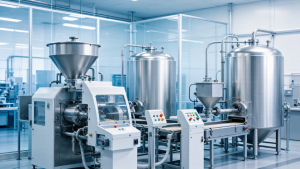
However, sublingual manufacturing introduces distinct technical and regulatory challenges. The formulation must balance rapid disintegration with adequate stability, the packaging must protect against moisture degradation, and the manufacturing environment must meet GMP standards for products that do not pass through traditional compression or encapsulation lines in their final form. At SREKE, we address each of these variables through purpose-built processes and rigorous quality systems.
Key Manufacturing Considerations at SREKE
Formulation Science for Sublingual Delivery
Sublingual formulations require careful selection of excipients that promote rapid mucoadhesion and dissolution without leaving an unpleasant residue. Key formulation considerations include:
- Disintegrants: We utilize superdisintegrants such as croscarmellose sodium and sodium starch glycolate to ensure rapid tablet or film breakdown upon contact with saliva.
- Solubility enhancers: For lipophilic actives, we employ co-solvents, surfactants, and cyclodextrin complexation to improve mucosal permeability.
- Palatability modifiers: Sublingual products are held in the mouth, making taste masking and flavor systems critical for consumer acceptance.
- Stability optimization: We conduct accelerated and real-time stability testing per ICH guidelines to validate shelf life for moisture- and light-sensitive actives.
Manufacturing Modalities We Offer
At SREKE, we support three primary sublingual delivery formats, each with distinct manufacturing requirements:
- Sublingual tablets: Produced using direct compression or melt granulation on specialized low-pressure tablet presses. Our GMP-certified facility maintains environmental controls to manage humidity-sensitive powders.
- Sublingual films (orally dissolving films): Cast or extruded onto release liners using polymer bases such as PVA, PVP, or HPMC. These films offer precise dosing and rapid dissolution.
- Sublingual drops and sprays: Liquid formulations dispensed in amber glass dropper bottles or metered spray containers, suitable for liquid actives and tincture-style delivery.
Regulatory Compliance and Quality Systems
Every sublingual product we manufacture is produced under current Good Manufacturing Practices (cGMP) as enforced by the U.S. FDA under 21 CFR Part 111, and our Guangzhou facility is certified to ISO 22000 and HACCP standards. For brands targeting the European market, we ensure compliance with EU Regulation (EC) No 178/2002 and EFSA nutritional health claim regulations.
Our quality assurance protocol includes:
- Raw material identity, purity, and potency testing before production release
- In-process checks for weight variation, disintegration time, and content uniformity
- Finished product testing against defined specifications for assay, dissolution, microbial limits, and heavy metals
- Stability studies conducted at 25°C/60% RH and 30°C/75% RH per ICH Q1A(R2) guidelines
Packaging for Sublingual Products
Moisture is the primary stability threat for sublingual tablets and films. At SREKE, we recommend and supply packaging solutions that protect product integrity:
- Aluminum blister packs with high-barrier PVC or PVDC backing for tablets and films
- Unit-dose foil pouches with desiccant inclusion for maximum moisture protection
- Amber glass dropper bottles with tamper-evident seals for liquid sublingual formats
- Child-resistant closures where required by market regulations
MOQ and Lead Time
Our standard MOQ for sublingual tablet and film programs is 50,000 units per SKU, with flexible packaging configurations available for emerging brands. Typical lead times range from 8 to 14 weeks from formula finalization to shipment, including regulatory documentation support. Express timelines are available for qualified projects.
How SREKE Helps You Get to Market Faster
At SREKE, we streamline the path from concept to shelf through an integrated OEM/ODM model. Our in-house R&D team works with you to select proven sublingual delivery systems, optimize your active ingredient for mucosal absorption, and validate the formulation through our stability laboratory — all before production begins.
We provide:
- ODM formula library: Pre-validated sublingual formulations for high-demand categories including B-complex, vitamin D3, magnesium, melatonin, and adaptogenic blends that can be customized to your specification.
- Regulatory documentation: Full COA, GMP certificates, formulation dossiers, and label compliance review aligned with FDA and EFSA requirements.
- Private-label packaging design: Our design team supports artwork, structural packaging selection, and print-ready file production.
- Third-party testing coordination: We arrange independent analytical testing through accredited laboratories for additional brand confidence.
By managing formulation, manufacturing, packaging, and compliance documentation under one roof, we reduce the coordination complexity that typically slows brand launches.
Industry Trends and Market Opportunities
The global sublingual and orally dissolving supplement market is expanding as consumer preferences shift toward faster-acting, higher-bioavailability delivery formats. Key trends shaping this space include:
- Growth in nootropic and cognitive support: Sublingual delivery is increasingly favored for B-vitamin complexes and racetam-class compounds where rapid onset is a selling point.
- Rise of sleep and stress formulas: Sublingual melatonin and L-theanine products are gaining traction among consumers seeking quick-relief formats without water.
- Premiumization of vitamin D and K2: These fat-soluble vitamins benefit substantially from sublingual bioavailability, driving demand in the senior health and immunity segments.
- Clean-label and allergen-free formulations: Brands are requesting gluten-free, dairy-free, and vegan sublingual options, which our facility can produce under dedicated batch protocols.
- Regulatory scrutiny on health claims: Both the FDA and EFSA continue to enforce structure/function claim requirements. We advise all clients to frame sublingual benefits around support and promotion language rather than treatment or cure claims.
At SREKE, we monitor these trends continuously and update our ODM portfolio to align with what discerning brand owners and their consumers are demanding.
Frequently Asked Questions
What is the minimum order quantity for sublingual products?
At SREKE, our standard MOQ is 50,000 units per SKU for both sublingual tablets and films. We offer flexible MOQ arrangements for established brands and can discuss options for new entrants during your consultation.
Can you help with FDA structure/function claim compliance?
Yes. Our regulatory team reviews all product labeling to ensure claims comply with FDA structure/function guidelines and EFSA permitted health claims where applicable. We do not make disease treatment claims on your behalf.
What stability testing do you perform on sublingual formulations?
We conduct accelerated stability testing at elevated temperature and humidity conditions per ICH guidelines, along with real-time stability monitoring, to establish shelf life and storage recommendations for your product.
Do you offer private-label sublingual formulas?
Absolutely. We maintain an ODM library of sublingual formulations and can also develop custom formulas tailored to your active ingredient, potency, and flavor requirements.
What certifications does your facility hold?
Our Guangzhou manufacturing facility operates under cGMP, ISO 22000, and HACCP certification. We also support third-party audits and can provide documentation for your compliance records.
How long does it take to produce a sublingual supplement order?
Typical lead time is 8 to 14 weeks from formula approval to shipment, depending on complexity, packaging requirements, and testing timelines. Rush production is available for qualified projects.
Ready to launch your supplement brand? SREKE provides GMP-certified OEM/ODM manufacturing for softgels, capsules, tablets, powders, gummies, and liquids. Contact us for a free quote or email [email protected] — we respond within 24 hours.