

Why Sublingual Supplement Manufacturing Matters for Supplement Brands
At SREKE, we see sublingual delivery emerge as one of the fastest-growing formats in the dietary supplement industry. Sublingual administration involves placing a formulation under the tongue, where active ingredients absorb directly through the mucous membranes into the bloodstream. This route bypasses first-pass hepatic metabolism, offering higher bioavailability compared to traditional oral tablets and capsules.
According to industry research published in the Journal of Pharmaceutical Sciences, sublingual delivery can achieve bioavailability rates significantly higher than conventional oral routes for compounds that are poorly absorbed in the gastrointestinal tract or extensively metabolized by the liver. For brand owners, this translates into lower effective doses and faster onset of action — two factors that consumers increasingly demand.
The global sublingual market has expanded alongside consumer interest in vitamins, minerals, nootropics, and wellness compounds that require rapid absorption. At SREKE, we recognize that sublingual manufacturing presents unique technical and regulatory challenges that require specialized GMP-certified infrastructure and formulation expertise.
Key Manufacturing Considerations at SREKE
Formulation Development for Sublingual Delivery
Our formulation scientists at SREKE approach sublingual products with careful attention to several critical factors:
- Absorption enhancers: We evaluate permeation promoters such as cyclodextrins, surfactants, and fatty acid derivatives that facilitate mucosal transport without causing irritation. EFSA has evaluated the safety of several excipients commonly used in sublingual formulations, and we ensure all components meet established safety thresholds.
- pH and osmolarity: The sublingual mucosa is sensitive to extreme pH and osmotic conditions. Our R&D team optimizes formulation pH to remain within the physiological range to maximize comfort and absorption efficiency.
- Particle size reduction: Micronization of active ingredients enhances dissolution rate and mucosal contact. At SREKE, we employ jet milling and other advanced particle size reduction techniques to achieve optimal particle distributions for sublingual bioavailability.
- Stability considerations: Sublingual formulations, particularly liquids and orally disintegrating forms, require careful stability profiling. We conduct accelerated and real-time stability studies in accordance with ICH Q1A(R2) guidelines to ensure product shelf-life claims are scientifically supported.
Manufacturing Formats We Support
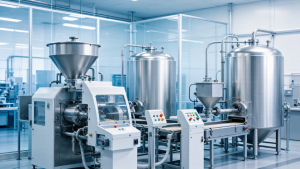
At SREKE, our GMP-certified facility in Guangzhou supports multiple sublingual delivery formats:
- Sublingual tablets and orodispersible tablets: Compressed or directly compressed tablets designed to disintegrate rapidly under the tongue. We utilize high-shear granulation and direct compression techniques suited for moisture-sensitive actives.
- Sublingual strips and films: Water-soluble polymer-based films (typically using HPMC, PEG, or gelatin matrices) that dissolve within seconds upon contact with saliva. These represent one of the most innovative sublingual formats available.
- Sublingual liquids and drops: Concentrated liquid formulations delivered via dropper bottles or pre-measured single-dose vials. We ensure homogeneity, microbial control, and preservative system efficacy.
- Sublingual sprays: Metered-dose or non-metered sprays that deliver precise doses directly to the sublingual mucosa. Our filling lines are equipped for both aqueous and alcoholic-based spray formulations.
Regulatory Compliance and Quality Standards
At SREKE, regulatory compliance is foundational to everything we do. Our manufacturing facility operates under the following quality systems:
- China GMP certification for dietary supplements, meeting the requirements of China's National Medical Products Administration (NMPA)
- ISO 22000 food safety management certification
- HACCP implementation across all production lines
- FDA registration — our facility is registered with the U.S. Food and Drug Administration as a dietary supplement manufacturing establishment, in compliance with 21 CFR Part 111 (Current Good Manufacturing Practice for Dietary Supplements)
- HALAL and KOSHER certification available upon request for specific product lines
For brands targeting the U.S. market, we ensure all formulations comply with FDA dietary supplement labeling requirements under 21 CFR Part 101, including structure/function claim language that avoids any disease treatment or prevention claims. For European market clients, we align with EU Regulation (EC) No 1924/2006 on nutrition and health claims and EU Directive 2002/46/EC on food supplements.
Packaging for Sublingual Products
Proper packaging is essential for sublingual products, as many active ingredients are sensitive to moisture, light, and oxygen. At SREKE, we offer:
- Blister packaging with aluminum lidding for sublingual tablets and strips — providing excellent moisture barrier protection
- Amber glass or HDPE dropper bottles for liquid sublingual formulations
- Single-dose ampoules and vials for preservative-free liquid formats
- Desiccant inclusion and nitrogen flushing where required for moisture-sensitive actives
How SREKE Helps You Get to Market Faster
At SREKE, we understand that time-to-market is a critical competitive advantage. Our streamlined OEM/ODM process is designed to move your sublingual supplement from concept to shelf efficiently.
Our OEM/ODM Process
- Consultation and feasibility assessment: We evaluate your formulation concept, target market, and compliance requirements in an initial technical consultation.
- Formulation development: Our R&D team develops and refines the formulation, conducting preliminary stability and compatibility studies.
- Prototype and testing: We produce pilot batches for your evaluation, including sensory testing, disintegration time verification, and microbiological testing.
- Regulatory documentation: We prepare all required documentation, including COAs (Certificates of Analysis), formulation declarations, and label compliance review.
- Commercial production: Full-scale GMP manufacturing with in-process quality controls at every critical stage.
- Packaging and fulfillment: Final packaging, labeling, and preparation for shipment with full traceability.
MOQ and Lead Time
At SREKE, we offer flexible MOQ (Minimum Order Quantity) options tailored to brand owners at every stage of growth. Our standard MOQ ranges vary by format — sublingual tablets and capsules typically have lower MOQ thresholds compared to custom film strip formats, which require specialized tooling. We recommend contacting our team for format-specific pricing and lead time estimates.
Typical lead times from order confirmation to shipment range from 4 to 12 weeks depending on formulation complexity, packaging customization, and regulatory documentation requirements. For urgent projects, we offer expedited timelines on select formats.
Quality Assurance and Testing
Every batch produced at SREKE undergoes rigorous quality testing, including:
- Identity and potency testing by HPLC, UV, or GC as appropriate
- Microbiological analysis per USP <61> and <62>
- Heavy metals testing per USP <232> and <233>
- Disintegration and dissolution testing for tablet and strip formats
- Packaging integrity testing
- Stability testing per ICH guidelines
Industry Trends and Market Opportunities
At SREKE, we monitor global market dynamics to help our partners make informed product development decisions. Several key trends are shaping the sublingual supplement landscape:
- Bioavailability-focused formulations: Consumers and brands increasingly prioritize ingredients with proven absorption advantages. Sublingual delivery is a key differentiator for compounds such as vitamin B12, vitamin D, magnesium, and certain botanical extracts.
- Fast-acting wellness products: The nootropic and stress-management categories are driving demand for sublingual formats that deliver perceptible effects within minutes rather than hours.
- Senior-friendly formats: Sublingual tablets and strips offer an alternative for consumers who experience difficulty swallowing conventional capsules and tablets — a growing demographic as the global population ages.
- Clean-label and natural excipients: There is increasing demand for sublingual formulations that use recognizable, naturally derived excipients, aligning with clean-label trends across the supplement industry.
- Personalized nutrition: Sublingual delivery supports customized dosing strategies, enabling brands to offer tailored formulations for specific consumer segments.
According to market research from Grand View Research and other industry analysts, the global sublingual drug and supplement delivery market is projected to maintain strong compound annual growth, driven by rising consumer awareness of bioavailability and convenience factors. Brands that partner with an experienced GMP-certified manufacturer like SREKE are well-positioned to capture this growth.
Frequently Asked Questions
What is sublingual supplement manufacturing?
Sublingual supplement manufacturing involves producing dietary supplement formats designed to be placed under the tongue, where active ingredients are absorbed through the sublingual mucosa directly into the bloodstream. This route of administration can enhance bioavailability and reduce onset time compared to swallowed oral dosage forms.
Is sublingual manufacturing regulated by the FDA?
Sublingual dietary supplements are regulated under the same FDA framework as all dietary supplements — specifically 21 CFR Part 111 (cGMP regulations). The FDA does not pre-approve dietary supplement formulations or claims before they reach the market. However, manufacturers are responsible for ensuring product safety, label accuracy, and compliance with all applicable regulations. SREKE's FDA-registered facility ensures our processes meet these requirements.
What is the typical MOQ for sublingual products at SREKE?
MOQ at SREKE varies by product format. Sublingual tablets and capsules generally have lower MOQs, while custom sublingual strips may require higher initial volumes due to specialized tooling. We provide format-specific MOQ details during our consultation process. Contact our team for current pricing.
Can SREKE handle both U.S. and EU market compliance?
Yes. At SREKE, we support brands targeting multiple markets. For the U.S., we ensure compliance with FDA 21 CFR Part 111 and labeling requirements under 21 CFR Part 101. For the EU, we align with EU Regulation (EC) No 1924/2006 on nutrition and health claims and EU Directive 2002/46/EC on food supplements. Our team can advise on ingredient compliance for both regions.
What types of sublingual formats does SREKE manufacture?
SREKE manufactures sublingual tablets, orodispersible tablets, sublingual strips/films, liquid drops, and sprays. Each format has distinct formulation, manufacturing, and packaging requirements, and our GMP-certified facility supports all of these formats.
How long does sublingual supplement production take?
Production timelines at SREKE typically range from 4 to 12 weeks from order confirmation to shipment, depending on format complexity, formulation development needs, packaging customization, and regulatory documentation requirements. Expedited timelines are available for select projects.
Does SREKE offer private label and custom formulation services?
Yes. At SREKE, we offer both OEM (private label using our existing formulations) and ODM (fully custom formulation development) services. Our R&D team works closely with brand owners to develop custom sublingual formulations tailored to their target market and product positioning.
Ready to launch your supplement brand? SREKE provides GMP-certified OEM/ODM manufacturing for softgels, capsules, tablets, powders, gummies, and liquids. Contact us for a free quote or email [email protected] — we respond within 24 hours.