


Why Dissolution Testing Matters for Supplement Brands
At SREKE, we understand that dissolution testing is one of the most critical quality benchmarks in tablet and capsule manufacturing. Dissolution testing measures how quickly and completely an active ingredient is released from its dosage form into solution — a direct indicator of bioavailability and product performance. For supplement brand owners, this test is not optional; it is a cornerstone of Good Manufacturing Practice (GMP) compliance and a reliable proxy for how a product will behave in the human body.
Under FDA 21 CFR Part 111, dietary supplement manufacturers are required to establish written procedures and perform appropriate tests to verify that finished products meet their specifications. EFSA similarly emphasizes the importance of bioavailability data for health claim substantiation in the European market. Dissolution profiles provide that data. At SREKE, every tablet and capsule batch we produce undergoes dissolution testing according to USP <711> standards before release.
Without proper dissolution testing, brands risk inconsistent product performance, failed stability studies, and non-compliance with regulatory audits. Our facility ensures that every formulation we manufacture for you meets clearly defined dissolution specifications, giving you confidence from the first unit to the last.
Key Manufacturing Considerations at SREKE
Dissolution Methods We Use
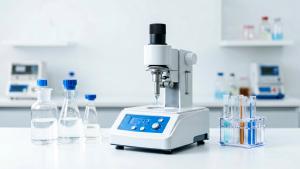
Our laboratory is equipped with USP Apparatus 1 (basket) and Apparatus 2 (paddle), the two most widely accepted methods for tablet and capsule dissolution testing. We also utilize flow-through cell Apparatus 4 for challenging formulations. Our standard test conditions include:
- USP Apparatus 2 (paddle) at 50 or 100 rpm, using 900 mL of medium
- USP Apparatus 1 (basket) at 100 rpm, using 900 mL of medium
- Media: 0.1 N HCl (pH 1.2), acetate buffer (pH 4.5), phosphate buffer (pH 6.8), and purified water, depending on formulation requirements
- Temperature: 37 ± 0.5°C, simulating human body temperature
- Time points: typically 10, 15, 20, 30, 45, and 60 minutes
Factors That Influence Dissolution Performance
At SREKE, we carefully control the variables that affect dissolution rates during manufacturing:
- Granulation and blending: Uniform powder flow and particle size distribution directly impact compaction and disintegration. Our high-shear granulators and fluid-bed dryers ensure consistent particle engineering.
- Compression force: Tablet hardness is calibrated to balance structural integrity with rapid disintegration. Over-compression can significantly delay dissolution; under-compression risks capping and friability issues.
- Binder selection: We select binders such as PVP K30, HPMC, and microcrystalline cellulose based on their known effect on disintegration time and active release profiles.
- Disintegrants: Cross-carmellose sodium, crospovidone, and sodium starch glycolate are commonly used at SREKE to promote rapid tablet breakdown and active release.
- Capsule shell composition: For hard-shell capsules, we use USP-grade gelatin and vegetarian HPMC shells. The shell type and size directly affect disintegration time, which typically ranges from 5 to 15 minutes under standard conditions.
- Lubricants: Magnesium stearate is used at optimized concentrations (typically 0.25% to 1.0%) to prevent over-lubrication, which can create hydrophobic barriers and slow dissolution.
Compliance Standards We Follow
Our dissolution testing protocols are aligned with the following recognized standards:
- USP <711> Dissolution — the pharmacopeial standard for performing and evaluating dissolution tests
- USP <701> Disintegration — required for capsules and tablets that must disintegrate before dissolution can occur
- FDA 21 CFR Part 111 — Current Good Manufacturing Practice for Dietary Supplements
- ISO 22000:2018 — Food safety management requirements applicable to our GMP facility
- EU GMP Guidelines (EudraLex Volume 4) — for brands targeting the European market
Specification Setting and Acceptance Criteria
At SREKE, we help brand owners define dissolution specifications that are both scientifically sound and commercially viable. Our standard acceptance criteria follow the USP five-stage test:
- S1 (Q + 20%): If one unit falls below Q − 20%, 10 additional units are tested
- S2 (Q + 10%): If the average of 6 units from S1 plus the original 6 is below Q − 10%, 10 more are tested
- S3: The average of all 24 units must be equal to or greater than Q, and no unit is below Q − 25%
- Typical Q values: 75% active released within 30 minutes for immediate-release tablets
For modified-release or enteric-coated products, we develop custom dissolution profiles with specific pH-dependent release criteria.
How SREKE Helps You Get to Market Faster
At SREKE, we streamline the dissolution testing process so your product reaches the market efficiently without compromising quality. Here is how we support your timeline and compliance needs:
- Formulation development with dissolution in mind: Our R&D team designs formulations with target dissolution profiles from the start, reducing the number of iteration cycles needed before batch release.
- Stability-indicating methods: We develop and validate dissolution methods that can detect degradation products, ensuring your product remains within specification throughout its shelf life.
- Batch release testing: Every production batch undergoes dissolution testing before release. Our in-house QC lab delivers results within 5 to 7 business days, keeping your supply chain on schedule.
- Regulatory documentation support: We provide full batch records, test reports, and COAs (Certificates of Analysis) that include dissolution data, ready for FDA or EFSA submission.
- Low MOQ flexibility: SREKE supports brands of all sizes with competitive minimum order quantities, allowing you to validate dissolution performance on a small batch before scaling to full production.
- Lead time efficiency: From formula finalization to first commercial batch, our typical lead time is 6 to 10 weeks, including dissolution method development and validation.
Our Guangzhou facility operates under strict GMP protocols with ISO 22000 certification, HACCP food safety management, and regular third-party audits. Whether you need private-label tablets, custom softgels, or encapsulated powders, we ensure dissolution performance is built into every product we manufacture for you.
Industry Trends and Market Opportunities
The global dietary supplement market continues to grow, with the tablet and capsule segment representing the largest share. According to industry reports, the global tablet and capsule market is projected to exceed USD 35 billion by 2027, driven by consumer demand for convenient, standardized, and bioavailable formats. At SREKE, we see several key trends shaping dissolution testing and formulation development:
- Bioavailability-focused formulations: Consumers and brands increasingly demand products with proven absorption. Fast-dissolving tablets and rapidly releasing capsules are in high demand, especially for active ingredients such as curcumin, coenzyme Q10, and vitamin D3.
- Plant-based and vegetarian capsules: HPMC capsule shells are gaining market share over gelatin, particularly in North America and Europe. We test dissolution for both shell types to ensure equivalent performance.
- Enteric and delayed-release formats: For ingredients sensitive to stomach acid — such as probiotics, omega-3 fatty acids, and certain botanical extracts — enteric-coated tablets and capsules are becoming a standard offering. Our facility develops and validates pH-dependent dissolution profiles for these products.
- Regulatory scrutiny on dissolution data: Both the FDA and EFSA are placing greater emphasis on dissolution testing as part of pre-market and post-market surveillance. Brands that partner with GMP-certified manufacturers like SREKE are better positioned to meet these expectations.
- Personalized nutrition and combination products: Multi-ingredient formulas require dissolution methods that can individually quantify each active. Our lab supports multi-component dissolution analysis using HPLC and UV spectrophotometry.
At SREKE, we stay ahead of these trends by continuously investing in laboratory equipment, staff training, and method development. Our goal is to help you launch products that not only meet regulatory standards but also deliver the performance your consumers expect.
Frequently Asked Questions
What is dissolution testing, and why is it important for supplements?
Dissolution testing measures the rate and extent to which an active ingredient is released from a tablet or capsule into a liquid medium. It is important because it serves as a proxy for bioavailability — how quickly and completely your body can absorb the active ingredients. Regulatory agencies such as the FDA and EFSA expect dissolution data as part of GMP compliance and quality assurance.
What is the difference between disintegration and dissolution?
Disintegration refers to the physical breakdown of a tablet or capsule shell into smaller particles. Dissolution is the subsequent process by which those particles dissolve into the testing medium. Disintegration is a prerequisite for dissolution in most solid oral dosage forms. At SREKE, we test both parameters — disintegration per USP <701> and dissolution per USP <711>.
How long does dissolution testing take for a new formulation?
Method development and validation for a new formulation typically takes 2 to 4 weeks. Once the method is validated, routine batch dissolution testing takes approximately 30 to 60 minutes per run, depending on the number of time points and units tested. At SREKE, we provide full method validation reports as part of our product development package.
Can SREKE help with dissolution method development?
Yes. Our in-house R&D and QC teams develop and validate dissolution methods tailored to your specific formulation. This includes selecting the appropriate USP apparatus, dissolution medium, pH, agitation speed, and detection method (UV or HPLC). We ensure the method is stability-indicating and compliant with pharmacopeial standards.
What dissolution specifications do you use for tablets and capsules?
Our standard specification for immediate-release tablets and capsules is a minimum of 75% active ingredient released within 30 minutes, tested in phosphate buffer (pH 6.8) or 0.1 N HCl, using USP Apparatus 2 at 50 rpm. Custom specifications are available for modified-release, enteric-coated, or poorly soluble formulations.
Do you test dissolution for all dosage forms?
We perform dissolution testing for tablets, hard-shell capsules, and softgels. Powders, gummies, and liquids are evaluated using different quality parameters such as uniformity of dosage units, microbial limits, and assay potency, as dissolution testing is specific to solid oral dosage forms.
How does SREKE ensure consistency across production batches?
At SREKE, we control raw material sourcing, manufacturing parameters, and finished product testing to ensure batch-to-batch consistency. Each batch undergoes dissolution testing before release, and we maintain full traceability through our GMP-compliant documentation system. Statistical process control (SPC) is used to monitor trends and detect any deviations early.
What is the typical MOQ and lead time for a tablet or capsule project at SREKE?
Our MOQ varies by dosage form and packaging, starting as low as 5,000 to 10,000 units for standard products. Custom formulations may require higher MOQs depending on ingredient availability and production complexity. Our typical lead time from formula approval to first shipment is 6 to 10 weeks, including method development, validation, and regulatory documentation.