
Why HPMC Capsule Filling Machine Types Matter for Supplement Brands
At SREKE, we have seen firsthand how the choice of capsule filling technology directly impacts product quality, production speed, and compliance. HPMC (hypromellose) capsules — also known as vegetarian capsules — are made from plant-derived cellulose rather than animal gelatin. This makes them a preferred choice for brands targeting vegan, halal, and kosher markets worldwide.
The type of HPMC capsule filling machine you choose determines your output capacity, filling accuracy, changeover flexibility, and overall cost structure. At SREKE, our GMP-certified facility in Guangzhou operates multiple filling lines — from semi-automatic to high-speed fully automatic systems — each matched to specific client needs and order volumes.
Understanding these machine types helps you make informed decisions about MOQ, lead time, and formulation compatibility before you commit to a manufacturing partnership.
Key Manufacturing Considerations at SREKE
Semi-Automatic Capsule Filling Machines
Semi-automatic HPMC capsule filling machines are ideal for small-batch production, R&D samples, and startups testing new formulations. At SREKE, we use these machines during the formulation development phase and for low-MOQ orders.
- Output capacity: 500 to 5,000 capsules per hour, depending on product density and operator skill.
- Best for: Startup brands, clinical trial supplies, custom prototypes, and formulations requiring frequent changeovers.
- Advantages: Lower initial cost, minimal setup time, flexibility to handle diverse powder blends and liquid fills.
- Considerations: Requires trained operators; not suited for high-volume commercial runs.
Fully Automatic Capsule Filling Machines
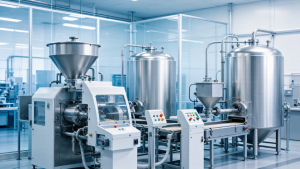
Our fully automatic HPMC capsule filling lines — including models from industry leaders such as Fette Compacting and Bosch — deliver consistent, high-precision filling with minimal manual intervention. These machines are the backbone of our standard OEM production.
- Output capacity: 10,000 to 30,000 capsules per hour.
- Best for: Established supplement brands with consistent monthly volumes and established SKUs.
- Advantages: Automated dosing, closing, and ejection; reduced labor cost; consistent fill weight accuracy within ±2–3%.
- Considerations: Longer changeover time (approximately 30–60 minutes) when switching between capsule sizes or formulations.
High-Speed Capsule Filling Machines
For brands requiring large-scale production, SREKE operates high-speed HPMC capsule filling lines capable of producing up to 60,000–80,000 capsules per hour. These machines are engineered for continuous operation and are commonly used for well-established product lines with predictable demand.
- Output capacity: 40,000 to 80,000 capsules per hour.
- Best for: High-volume brands, private-label programs, and contract manufacturers fulfilling large retail orders.
- Advantages: Maximum throughput, advanced in-line inspection (weight check, metal detection), integrated batch coding and packaging.
- Considerations: Higher MOQ requirements; optimal for runs exceeding 500,000 capsules per SKU.
Key Technical Specifications at SREKE
- Filling accuracy: ±2–5% depending on machine class and product formulation
- Compatible capsule sizes: 000, 00, 0, 1, 2, 3, 4, 5 (standard HPMC sizes)
- Product types supported: Dry powders, micro-pellets, liquid fills, semi-solids
- Changeover time: 30–60 minutes for automatic machines; 10–20 minutes for semi-automatic
- Compliance: All equipment validated under cGMP, ISO 22000, and HACCP standards
How SREKE Helps You Get to Market Faster
At SREKE, we match the right filling machine to your specific product profile and business stage. Whether you need 5,000 sample capsules for investor pitches or 2 million units for a national retail launch, our flexible manufacturing platform adapts to your timeline.
- MOQ flexibility: Starting from 10,000 capsules per SKU for semi-automatic runs; 50,000+ for fully automatic lines.
- Lead time: 15–25 business days for standard formulations; 30–45 days for custom ODM projects including capsule sourcing and stability testing.
- Formulation support: Our in-house R&D team assists with powder flow optimization, lubricant selection, and capsule compatibility testing to prevent capping, jamming, or fill-weight variation.
- Quality assurance: Every batch undergoes in-process weight checks, dissolution testing, and final product release per USP/EP monographs for HPMC capsules.
- Regulatory compliance: All manufacturing follows FDA-registered cGMP guidelines, EU Directive 2002/46/EC for food supplements, and China's GB 16740 standards.
Industry Trends and Market Opportunities
The global HPMC capsule market is experiencing strong growth, driven by consumer demand for plant-based, allergen-free supplement formats. According to industry analyses from Grand View Research and CSM Reports, the vegetarian capsule segment is projected to grow at a CAGR of approximately 6–8% through 2030, outpacing traditional gelatin capsule growth.
Key trends shaping our work with brand owners include:
- Vegan and halal certification demand: HPMC capsules are inherently free from animal-derived ingredients, making them suitable for certifications from NSF, Kosher, and Halal accrediting bodies.
- Stability advantages: HPMC capsules exhibit lower moisture uptake than gelatin, making them ideal for hygroscopic actives such as probiotics, turmeric extracts, and omega-3 oil blends.
- Premium positioning: Brands increasingly use HPMC capsules as a differentiator on packaging, communicating quality and ethical sourcing to consumers.
- Private-label expansion: Retailers and DTC brands continue to expand private-label supplement lines, driving demand for flexible OEM partnerships with low-to-mid MOQ options.
At SREKE, we stay ahead of these trends by continuously investing in equipment upgrades and formulation expertise, ensuring our clients can launch competitive, compliant products without delay.
Frequently Asked Questions
What is the difference between HPMC and gelatin capsules?
HPMC capsules are made from hypromellose, a plant-based cellulose derivative, while gelatin capsules are derived from animal collagen (typically bovine or porcine). HPMC capsules are suitable for vegan, halal, and kosher certifications and generally offer better moisture stability for hygroscopic formulations.
What MOQ do you require for HPMC capsule production?
Our MOQ varies by production method. For semi-automatic filling, we accept orders starting at 10,000 capsules per SKU. For fully automatic lines, the minimum is typically 50,000 capsules per SKU. We are happy to discuss your specific volume needs during the quoting process.
How long does production take from order to shipment?
Standard lead time is 15–25 business days for formulations already in our portfolio. Custom ODM projects — including new formulation development, capsule sourcing, and stability testing — typically require 30–45 business days. Expedited timelines are available for repeat orders of existing products.
Can you fill liquid or oil-based formulations in HPMC capsules?
Yes. At SREKE, we use semi-solid and liquid filling techniques on our automatic and high-speed machines. We select the appropriate HPMC capsule grade and closure method to prevent leakage and ensure seal integrity, particularly for oil-based actives like fish oil, turmeric oleoresin, and MCT oil blends.
Do you provide regulatory and compliance documentation?
Absolutely. We provide a full compliance package including COA (Certificate of Analysis), GMP certificate, ISO 22000 certification, HACCP documentation, and formulation safety assessments. For US market clients, we support FDA facility registration and supplement label compliance under DSHEA guidelines.
What capsule sizes do you work with?
We produce HPMC capsules in all standard sizes: 000, 00, 0, 1, 2, 3, 4, and 5. Our team can recommend the optimal size based on your active ingredient dosage, excipient load, and target fill weight.
Can you help with capsule and outer packaging design?
Yes. In addition to capsule filling, SREKE offers full packaging solutions including bottle selection, blister packaging, label design, and secondary cartoning. Our in-house design team works with you to create packaging that meets your brand identity and regulatory labeling requirements.