


Why Dissolution Testing Matters for Supplement Brands
At SREKE, we understand that dissolution testing is one of the most critical quality control steps in tablet and capsule manufacturing. Dissolution testing measures the rate and extent to which an active ingredient dissolves from its dosage form into a solution — directly influencing bioavailability and product efficacy. For supplement brand owners, skipping or shortcutting this process can mean failed batches, FDA warning letters, or products that simply do not perform as advertised.
The U.S. FDA requires dissolution testing for all prescription drug products under 21 CFR Part 314, and dietary supplement manufacturers must comply with 21 CFR Part 111 (Current Good Manufacturing Practices for Dietary Supplements). While the FDA does not mandate dissolution testing for every dietary supplement, it is considered a best practice and is routinely expected during GMP audits by third-party certifiers and regulatory bodies. EFSA also references dissolution parameters when evaluating supplement ingredient bioavailability claims in the European market.
USP General Chapter <711> Dissolution establishes the official test methods used worldwide, including Apparatus 1 (basket), Apparatus 2 (paddle), Apparatus 3 (reciprocating cylinder), and Apparatus 4 (flow-through cell). At SREKE, our in-house quality laboratory is equipped with multi-station USP Apparatus 1 and 2 dissolution testers, allowing us to validate formulations across multiple conditions before production begins.
What Dissolution Testing Verifies
- Active ingredient release rate matches label claims
- Batch-to-batch consistency in manufacturing
- Stability of the product throughout its shelf life
- Impact of excipients, coating, and compression force on bioavailability
- Compliance with USP <711> and pharmacopeial standards
For brand owners, this means confidence that the product your customers receive delivers the intended nutritional benefit every time — and that your product passes regulatory scrutiny without surprise findings.
Key Manufacturing Considerations at SREKE
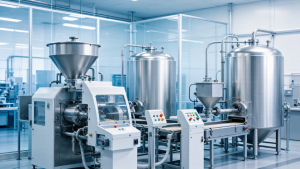
Our manufacturing facility in Guangzhou integrates dissolution testing into every stage of tablet and capsule production. Here is what brand owners should know about the factors that influence dissolution performance and how we address them.
Formulation Design
Dissolution is affected by ingredient particle size, binder type and concentration, disintegrant selection, and compression force. At SREKE, our formulation team works with you during the development phase to optimize these variables. We conduct preliminary dissolution studies using different excipient combinations and compression parameters to identify the formulation that meets your target dissolution profile — typically Q = 80% dissolved within 30 minutes for immediate-release products, as defined in USP <711>.
Compression and Capsule Filling Parameters
For tablets, the pressure applied during compression directly affects hardness and porosity, which in turn control dissolution rate. Our rotary tablet presses are equipped with real-time weight and hardness monitoring, ensuring each tablet falls within specified tolerances. For capsules, fill weight accuracy, powder flow characteristics, and seal integrity are all validated through dissolution testing before we approve a formula for full-scale production.
Dissolution Medium and Conditions
The choice of dissolution medium — typically simulated gastric fluid (pH 1.2), simulated intestinal fluid (pH 6.8), or purified water — depends on the solubility profile of the active ingredient. At SREKE, we select the appropriate medium and test conditions based on the pharmacopeial monograph or, when no monograph exists, on published scientific literature and ingredient supplier data. Temperature is maintained at 37 ± 0.5°C, and agitation speed is calibrated according to USP specifications.
Quality Control and Release Testing
Every production batch at SREKE undergoes dissolution testing before release. Our quality assurance team verifies that each batch meets the established dissolution specification — typically S1 acceptance criteria per USP <711> — before the product is packaged and shipped. We also conduct stability-indicating dissolution testing at defined intervals (0, 3, 6, 9, and 12 months) to confirm that products maintain performance throughout their labeled shelf life.
Compliance Documentation
We provide full dissolution test reports as part of our CoA (Certificate of Analysis) package for every batch. These reports include test conditions, medium composition, apparatus type, rotation speed, sampling time points, and results compared to specification. This documentation supports your regulatory filings and audit readiness, whether you are preparing for an FDA inspection, a USDA organic audit, or a GMP certification renewal.
How SREKE Helps You Get to Market Faster
At SREKE, we know that time-to-market is a competitive advantage. Our integrated OEM and ODM services are designed to move your product from concept to shelf with minimal delays.
Streamlined Development Timeline
- Formulation development: 2–4 weeks, including preliminary dissolution testing
- Pilot batch and validation: 2–3 weeks, with full dissolution profile confirmation
- Full-scale production: 3–6 weeks depending on order volume and dosage form
- Quality release and shipping: 1–2 weeks after production completion
Our in-house dissolution laboratory eliminates the need to outsource testing, reducing lead time by an average of 10–14 days compared to manufacturers that rely on third-party labs.
Low MOQ and Flexible Packaging
We understand that not every brand requires millions of units. SREKE offers competitive MOQs starting at 5,000–10,000 units per SKU for tablets and capsules, with flexible packaging options including blister packs, PET bottles, and pouches. Our packaging line supports custom labeling and private-label design to match your brand identity.
Regulatory Support
Our compliance team assists with GMP documentation, ingredient substantiation, and label claim verification. We ensure that all dissolution specifications and test methods are documented in your product's master manufacturing record, making future batch release and regulatory audits straightforward.
Third-Party Certification
SREKE holds GMP certification, ISO 22000, HACCP, and Kosher certifications. Our facility is registered with the FDA and compliant with 21 CFR Part 111. We also support Halal certification upon request. These credentials signal to your customers and regulators that your product was manufactured under the highest quality standards.
Industry Trends and Market Opportunities
The global dietary supplement market continues to grow, with dissolution testing playing an increasingly important role in product differentiation and regulatory compliance. At SREKE, we observe several trends that are shaping how supplement brands approach tablet and capsule manufacturing.
Increased Regulatory Scrutiny
The FDA has intensified its focus on dietary supplement GMP compliance in recent years. In 2023 and 2024, the agency issued multiple warning letters to manufacturers for failing to conduct adequate testing, including dissolution testing, before product release. Brands that partner with GMP-certified contract manufacturers like SREKE are better positioned to avoid these regulatory risks.
Bioavailability-Driven Formulations
Consumers and brands alike are demanding products with proven bioavailability. Dissolution testing is the primary scientific tool for demonstrating that an ingredient is released and absorbed as intended. We are seeing growing demand for enhanced dissolution profiles, particularly for poorly water-soluble ingredients such as curcumin, resveratrol, and CoQ10 — areas where our formulation team has extensive experience.
Sustained and Modified Release Products
The sustained-release supplement segment is expanding as consumers seek longer-lasting benefits from a single dose. SREKE offers expertise in coated tablets and multi-layer compression techniques that enable controlled-release formulations. Dissolution testing for these products follows USP <711> time-point specifications tailored to the release profile, typically requiring 75–80% release over 1–4 hours depending on the product design.
Private Label and White Label Growth
Private-label supplement brands are among the fastest-growing segments in the industry. These brands rely on contract manufacturers to handle formulation, testing, and compliance — making dissolution testing a key differentiator. SREKE's ODM program offers a library of proven formulas with documented dissolution profiles, allowing brands to launch quickly without the R&D investment.
Frequently Asked Questions
What is dissolution testing and why is it important for supplements?
Dissolution testing measures how quickly and completely an active ingredient dissolves from a tablet or capsule into a simulated bodily fluid. It is important because it confirms that the product delivers the labeled amount of ingredient in a bioavailable form. For supplement brands, it is a key quality assurance step that supports product efficacy and regulatory compliance.
Is dissolution testing required by the FDA for dietary supplements?
The FDA does not explicitly require dissolution testing for all dietary supplements under 21 CFR Part 111. However, it is considered a standard GMP practice and is expected during inspections. Manufacturers must ensure that their products meet identity, strength, quality, and purity specifications — and dissolution testing is one of the primary methods to verify these attributes for solid oral dosage forms.
What dissolution apparatus does SREKE use?
SREKE uses USP Apparatus 1 (basket) and USP Apparatus 2 (paddle) as our primary dissolution testers, consistent with USP General Chapter <711>. We also have access to Apparatus 3 (reciprocating cylinder) for coated and sustained-release products when required by the formulation.
How long does dissolution testing take for a new formulation?
At SREKE, initial dissolution profiling for a new formulation typically takes 1–2 weeks, including method development, medium selection, and testing at multiple time points. Full validation across three pilot batches adds approximately 1–2 additional weeks. These timelines are incorporated into our overall development schedule so you receive a clear timeline from project kickoff to production readiness.
What is the typical MOQ for tablet and capsule manufacturing at SREKE?
Our standard MOQ for tablets and capsules is 5,000–10,000 units per SKU, though this can vary depending on the complexity of the formulation, packaging requirements, and raw material availability. Contact our team for a quote tailored to your specific product and volume needs.
Can SREKE help with custom dissolution specifications?
Yes. We work with you to define dissolution specifications that align with your product's active ingredients, release profile, and target market requirements. Whether you need standard immediate-release specifications or a custom modified-release profile, our quality team documents all specifications in your product's master manufacturing record for consistent batch-to-batch performance.
Do you provide dissolution test reports with each batch?
Yes. Every batch produced at SREKE includes a Certificate of Analysis (CoA) with dissolution test results, test conditions, and comparison to specification. This documentation is included in your shipment and is available for your regulatory records and audit purposes.
Ready to launch your supplement brand? SREKE provides GMP-certified OEM/ODM manufacturing for softgels, capsules, tablets, powders, gummies, and liquids. Contact us for a free quote or email [email protected] — we respond within 24 hours.