




Why 3D Printing Supplements Matters for Supplement Brands
At SREKE, we have been closely monitoring the evolution of advanced manufacturing technologies in the dietary supplement industry. 3D printing, also known as additive manufacturing, represents a paradigm shift in how supplements are formulated, produced, and personalized. For brand owners seeking competitive differentiation, this technology offers capabilities that traditional compression, encapsulation, and filling methods simply cannot match.
The global 3D printing in healthcare and nutrition market is projected to grow significantly through 2030, driven by consumer demand for personalized dosing, novel delivery formats, and faster time-to-market. According to industry analyses, the personalized nutrition segment alone is expected to reach substantial valuations, with 3D printing positioned as a key enabling technology.
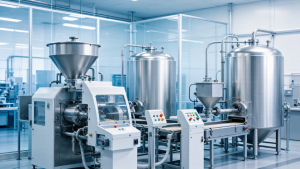
At SREKE, we recognize that supplement brands face increasing pressure to innovate while maintaining the highest standards of quality and regulatory compliance. Our GMP-certified facility in Guangzhou is actively evaluating and integrating 3D printing capabilities into our manufacturing workflow, ensuring our partners are positioned at the forefront of this transformation.
Key Manufacturing Considerations at SREKE
When evaluating 3D printing for supplement production, brand owners must consider several critical factors. At SREKE, we address each of these systematically to ensure your product meets both market expectations and regulatory requirements.
Regulatory Compliance and FDA/EFSA Standards
3D printed supplements must comply with the same regulatory frameworks as conventionally manufactured products. In the United States, the FDA regulates dietary supplements under the Dietary Supplement Health and Education Act (DSHEA) of 1994 and subsequent guidance documents. The FDA has acknowledged 3D printing as a legitimate manufacturing approach, provided that facilities follow Current Good Manufacturing Practices (cGMP) as outlined in 21 CFR Parts 111.
Similarly, the European Food Safety Authority (EFSA) evaluates novel food applications and ingredient safety regardless of manufacturing method. At SREKE, our quality assurance team ensures that every 3D printed product undergoes the same rigorous testing protocols as our conventional softgels, capsules, tablets, and powders — including identity testing, potency verification, heavy metals screening, microbial limits, and dissolution profiling.
Material Science and Printability
Not all supplement ingredients are equally suitable for 3D printing. The most common approaches include:
- Fused Deposition Modeling (FDM): Uses thermoplastic-based feedstocks containing active ingredients. Suitable for hard gelatin or HPMC-based shells with embedded actives.
- Jetting/Inkjet Printing: Deposits liquid formulations layer by layer. Ideal for precise dosing of liquids, tinctures, and oil-based softgel equivalents.
- Extrusion-Based Printing: Pushes semi-solid material through a nozzle. Well-suited for gummy and chewable formats with complex geometries.
- Stereolithography (SLA): Uses light-cured resins. Primarily applicable for specialized delivery systems rather than direct-consumption supplements.
At SREKE, our R&D team works closely with ingredient suppliers to develop printable formulations that maintain stability, bioavailability, and sensory acceptance. We source pharmaceutical-grade excipients and validate each material for printability, shelf life, and compliance with applicable monographs.
Quality Control and Validation
3D printing introduces unique quality control considerations. At our facility, we implement the following controls:
- Raw Material Qualification: Every input material is tested against specifications before entering production.
- Process Validation: Print parameters (temperature, speed, layer height, curing time) are optimized and validated to ensure batch-to-batch consistency.
- In-Process Testing: We monitor dimensional accuracy, weight uniformity, and active ingredient distribution across printed units.
- Finished Product Testing: Full compliance testing per USP <905> Uniformity of Dosage Units and equivalent international standards.
- Stability Studies: ICH-guided stability protocols confirm shelf life under recommended storage conditions.
Our quality management system is certified to ISO 9001 and GMP standards, with HACCP principles applied where applicable. Third-party audit readiness is maintained at all times.
MOQ, Lead Time, and Scalability
One of the most significant advantages of 3D printing for supplement brands is the potential for reduced minimum order quantities. Traditional manufacturing often requires high MOQs due to tooling and setup costs. 3D printing eliminates many of these barriers, allowing brands to start with smaller batches and scale as demand grows.
At SREKE, we offer flexible MOQ structures for 3D printed products, making it accessible for startups and established brands alike. Our typical lead times range from 4 to 8 weeks for new product development, depending on formulation complexity, regulatory requirements, and packaging specifications. For repeat orders, lead times are significantly shorter.
Packaging and Labeling
3D printed supplements may require specialized packaging considerations, particularly for moisture-sensitive formats. At SREKE, we provide comprehensive packaging solutions including child-resistant closures, desiccant integration, amber glass bottles, blister packs, and unit-dose packaging. All labeling complies with FDA Dietary Supplement Facts Panel requirements and, where applicable, EFSA labeling regulations for the European market.
How SREKE Helps You Get to Market Faster
At SREKE, we understand that speed to market is a critical competitive advantage. Our integrated OEM/ODM model is designed to streamline every step from concept to shelf-ready product.
Formulation Development
Our in-house team of formulators, backed by decades of experience in GMP supplement manufacturing, works with you to develop a 3D-printable formula that delivers the desired health benefits. Whether you are creating a personalized vitamin protocol, a novel nootropic stack, or a sports nutrition product with precise dosing, we handle the science so you can focus on your brand.
Regulatory Support
We assist with ingredient substantiation, label review, and regulatory documentation to ensure your product meets the requirements of your target market. Our team stays current with evolving FDA guidance, EFSA opinions, and other regulatory developments affecting supplement manufacturing.
Pilot Production and Scale-Up
Starting with pilot batches, we validate the 3D printing process before transitioning to full-scale production. This approach minimizes risk and ensures that your product performs consistently at volume. Our Guangzhou facility has the capacity to scale from hundreds to millions of units per month.
Custom Packaging and Private Label
From design consultation to final packaging, we offer end-to-end support. Our packaging team can create custom shapes, sizes, and materials that align with your brand identity while protecting product integrity.
Industry Trends and Market Opportunities
The supplement industry is experiencing several trends that make 3D printing increasingly relevant for brand owners:
- Personalized Nutrition: Consumers increasingly demand supplements tailored to their individual needs. 3D printing enables precise dosing and customizable formulations, positioning brands to capture this growing segment.
- Complex Dosage Forms: Multi-layer tablets, combination products, and sustained-release formats are becoming more common. 3D printing can produce geometries and structures that are impossible with conventional tooling.
- Fast Prototyping: Brands can iterate designs rapidly, testing multiple formulations and formats before committing to full production. This reduces development costs and accelerates innovation cycles.
- Sustainability: Additive manufacturing generates less waste than subtractive processes. At SREKE, we incorporate sustainability principles into our operations, from energy-efficient equipment to waste reduction programs.
- Direct-to-Consumer Models: The DTC supplement market continues to expand. 3D printing supports on-demand production, reducing inventory costs and enabling subscription-based business models.
At SREKE, we are investing in 3D printing technology and training our team to deliver these capabilities to our partners. We believe that brands who embrace this technology early will be well-positioned to capture emerging market opportunities.
Frequently Asked Questions
Is 3D printing for supplements FDA-approved?
The FDA does not "approve" manufacturing technologies themselves. Rather, it regulates the facilities and products. 3D printed supplements must comply with 21 CFR Part 111 (cGMP for dietary supplements) and all applicable labeling and safety requirements. At SREKE, our facility operates under cGMP certification, and we ensure all products meet FDA regulatory standards.
What is the minimum order quantity for 3D printed supplements at SREKE?
Our MOQ for 3D printed products is significantly lower than traditional manufacturing, making it accessible for emerging brands. Specific MOQs depend on the product format, packaging, and complexity. Contact our team for a detailed quote tailored to your project.
How long does it take to develop a 3D printed supplement?
Development timelines vary based on formulation complexity and regulatory requirements. Typically, the process from initial consultation to production-ready product takes 4 to 8 weeks. This includes formulation development, prototyping, quality testing, and packaging design.
Can SREKE handle international regulatory compliance?
Yes. In addition to FDA compliance, we support products destined for the European Union (EFSA regulations), Canada (NHPD), Australia (TGA), and other markets. Our team stays current with regional requirements and can guide you through the compliance process.
What types of supplements can be 3D printed?
At SREKE, we are developing capabilities across multiple formats including tablets with complex geometries, multi-layer capsules, personalized dosage forms, gummy-style products, and liquid-filled units. Our R&D team can evaluate the suitability of your specific formulation for 3D printing.
How does 3D printing affect product stability and shelf life?
Product stability depends on the formulation, packaging, and storage conditions — not solely on the manufacturing method. At SREKE, we conduct rigorous stability testing per ICH guidelines to determine shelf life and ensure your product maintains potency and quality throughout its intended duration.
Does SREKE offer private label and custom branding services?
Absolutely. We provide full private label and custom branding services, including custom packaging design, label creation, and brand consultation. Our goal is to help you build a distinctive, market-ready product that resonates with your target consumers.
What quality certifications does SREKE hold?
SREKE holds GMP certification, ISO 9001 quality management certification, and HACCP certification where applicable. Our facility undergoes regular third-party audits, and we maintain documentation ready for client inspections and regulatory reviews.