


Why Sublingual Supplement Manufacturing Matters for Supplement Brands
At SREKE, we see sublingual delivery emerge as one of the most promising routes for dietary supplement innovation. Unlike traditional oral capsules that must pass through the digestive system, sublingual supplements are absorbed directly through the mucous membranes under the tongue, offering faster onset and higher bioavailability for certain ingredients.
The global sublingual supplement market has grown steadily, driven by consumer demand for rapid-absorption formats and enhanced nutrient uptake. According to industry analyses from Grand View Research, the global sublingual drug delivery market—encompassing supplement applications—has been projected to grow at a compound annual rate above 7% through 2030. While this data primarily tracks pharmaceutical sublingual products, the parallel growth in nutraceutical sublingual formats reflects the same consumer shift toward convenience and efficacy.
For brand owners, understanding the manufacturing nuances of sublingual technology is critical. The formulation requirements, regulatory landscape, and production standards differ significantly from conventional tablet or capsule manufacturing. At SREKE, our Guangzhou facility holds GMP certification and has invested heavily in sublingual-specific production capabilities to help brands navigate these complexities.
Sublingual supplements support several high-growth categories including vitamins, minerals, herbal extracts, nootropics, and immune-support formulas. The technology is particularly suited for ingredients like vitamin B12, vitamin D, magnesium, curcumin, and adaptogenic compounds that benefit from bypassing first-pass metabolism.
Key Manufacturing Considerations at SREKE
At SREKE, we approach sublingual supplement manufacturing with a comprehensive framework that addresses formulation science, regulatory compliance, quality assurance, and scalability. Here are the critical considerations our team manages for every client project.
Formulation and Bioavailability
Sublingual formulations require careful selection of active ingredients that can be effectively absorbed through the sublingual mucosa. Not all compounds are suitable for this delivery route. At SREKE, our R&D team evaluates molecular weight, lipophilicity, and solubility profiles to determine formulation viability.
Key formulation factors we address include:
- Particle size reduction: Micronized or nano-sized ingredients enhance mucosal absorption. Our facility employs jet milling and high-shear mixing technologies to achieve optimal particle distribution.
- Permeation enhancers: We utilize GRAS-listed excipients such as menthol, peppermint oil, and certain surfactants that temporarily increase mucosal permeability without causing irritation.
- pH optimization: The sublingual mucosa absorbs both ionized and non-ionized forms differently. We formulate to balance pH for maximum absorption of each active ingredient.
- Stability considerations: Sublingual formats must remain stable during shelf life while dissolving rapidly upon administration. We conduct accelerated stability testing per ICH guidelines to validate product integrity.
Regulatory Compliance Framework
At SREKE, regulatory compliance is foundational to every sublingual product we manufacture. Our facility operates under multiple certification frameworks that ensure your product meets market requirements.
FDA Compliance: For the U.S. market, sublingual supplements are regulated as dietary supplements under the Dietary Supplement Health and Education Act (DSHEA) of 1994. At SREKE, we ensure:
- All ingredients are listed on the FDA's Dietary Ingredient database or have appropriate New Dietary Ingredient (NDI) notifications on file
- Facility registration and FDA dietary supplement GMP compliance per 21 CFR Part 111
- Proper structure/function claims that comply with FDA labeling requirements
- Foreign Supplier Verification Program (FSVP) compliance for imported ingredients
EFSA Compliance: For European Union markets, our team ensures compliance with Regulation (EC) No 1924/2006 on nutrition and health claims and Regulation (EC) No 1925/2006 on addition of vitamins and minerals. At SREKE, we reference the European Food Safety Authority's approved ingredient lists and permitted health claims for all EU-bound products.
Additional Certifications: Our Guangzhou facility maintains GMP certification, ISO 22000 food safety management, and HACCP protocols. For specific markets, we also support Halal and Kosher certification requirements.
Manufacturing Process and Quality Control
At SREKE, sublingual supplement production follows a controlled manufacturing workflow designed to maintain product integrity from raw material receipt through finished goods packaging.
Our process includes:
- Raw material qualification: Every ingredient undergoes identity testing, purity analysis, and contaminant screening before acceptance into production
- Weighing and dispensing: Controlled-environment weighing rooms prevent cross-contamination, with segregated areas for allergenic and potent ingredients
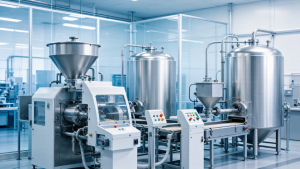
- Blending and homogenization: We utilize V-blenders, bin blenders, and microfluidization processes appropriate for sublingual formulation requirements
- Forming: Depending on the dosage form—sublingual tablets, strips, or films—we employ direct compression, freeze-drying, or solvent-casting techniques
- Quality testing: In-house QC laboratories perform identity, potency, dissolution, disintegration, and contaminant testing on every production batch
- Packaging: Moisture-controlled packaging is essential for sublingual products. We offer aluminum-aluminum blisters, child-resistant containers, and unit-dose packaging with desiccant inclusion
MOQ and Lead Time
At SREKE, we understand that brand owners need flexibility. Our sublingual manufacturing MOQs start at 5,000 units for private-label formats and 10,000 units for custom ODM formulations. For established brands, we offer scalable production runs from 50,000 to 500,000+ units per batch.
Typical lead times from SREKE are as follows:
- Private-label sublingual products: 4–6 weeks from order confirmation
- Custom ODM formulation: 8–12 weeks including R&D, testing, and regulatory documentation
- Stability testing support: Additional 4–8 weeks for full stability data packages
Packaging Solutions
Sublingual products are highly sensitive to moisture and environmental conditions. At SREKE, we provide packaging solutions that protect product integrity while meeting brand aesthetics and market requirements.
Our packaging options include:
- Aluminum-aluminum blister packs with moisture barrier ratings below 1g/m²/24hr
- HDPE or PET containers with tamper-evident seals
- Unit-dose foil packets for travel and on-the-go consumption
- Sublingual strip and film packaging with specialized moisture-proof laminates
- Custom-printed secondary packaging with full regulatory label compliance
How SREKE Helps You Get to Market Faster
At SREKE, our goal is to eliminate the friction between your supplement concept and a compliant, market-ready product. Our integrated OEM/ODM model means you work with a single partner for formulation, manufacturing, quality testing, and regulatory documentation.
Streamlined Development Process
Our development pathway at SREKE follows a structured timeline designed for efficiency:
- Week 1–2: Initial consultation, ingredient selection, and feasibility assessment
- Week 3–4: Prototype formulation and in-house stability screening
- Week 5–6: Pilot batch production and quality testing
- Week 7–8: Regulatory documentation preparation and packaging finalization
- Week 9–12: Full-scale production and shipment
For brands working with our pre-validated sublingual platforms, we can reduce this timeline to as little as 4 weeks from order to delivery.
Regulatory Documentation Support
At SREKE, we provide comprehensive documentation packages to support your market entry. This includes:
- Certificate of Analysis (CoA) for every batch
- GMP compliance certificates and facility documentation
- Ingredient safety data sheets (SDS) and supplier certifications
- NDI notification support for U.S. market entry
- EU compliance documentation including composition declarations and label review
- Third-party testing reports from accredited laboratories
Scalable Production Capacity
Our Guangzhou manufacturing facility operates 24/7 with multiple production lines dedicated to sublingual and fast-dissolve formats. At SREKE, we can scale from prototype batches of 5,000 units to commercial runs exceeding 1 million units per month without compromising quality or compliance standards.
Industry Trends and Market Opportunities
At SREKE, we monitor market dynamics closely to help our brand-owner partners capitalize on emerging opportunities. Several trends are shaping the sublingual supplement landscape.
Rise of Sublingual Strips and Films
Sublingual strips and orally dissolving films represent the fastest-growing segment within sublingual delivery. These formats offer superior convenience compared to traditional tablets, requiring no water for administration and providing rapid taste masking. The global orally dissolving film market is projected to reach significant valuation by 2030, driven by consumer preference for on-the-go supplement formats.
Personalized Nutrition and Sublingual Delivery
The convergence of personalized nutrition with sublingual technology creates new market opportunities. Brands are developing customized sublingual formulations based on individual nutrient profiles, age demographics, and lifestyle factors. At SREKE, we support small-batch production runs that enable brands to offer personalized supplement programs.
Sleep and Stress Support Categories
Sublingual delivery is particularly effective for sleep and stress-support formulas, where rapid onset is highly valued by consumers. Ingredients like melatonin, L-theanine, GABA, and magnesium glycinate benefit from sublingual absorption. At SREKE, we have developed multiple platform formulations in these high-demand categories that brands can customize with their own ingredient profiles and branding.
Clean-Label and Natural Formulation Trends
Consumers increasingly demand clean-label sublingual products free from artificial colors, flavors, and unnecessary excipients. At SREKE, we formulate using naturally-derived permeation enhancers and plant-based flavor systems that meet clean-label standards while maintaining product performance and regulatory compliance.
Sustainability in Packaging
Sustainable packaging is a growing priority for supplement brands. At SREKE, we offer recyclable and reduced-plastic packaging options for sublingual products, including paper-based blister alternatives and mono-material laminates that maintain moisture barriers while reducing environmental impact.
Frequently Asked Questions
What is sublingual supplement manufacturing?
Sublingual supplement manufacturing involves producing dietary supplements designed to be placed under the tongue for absorption through the sublingual mucosa. This route bypasses the digestive system and first-pass metabolism, resulting in faster absorption and higher bioavailability for certain ingredients. At SREKE, we manufacture sublingual tablets, strips, films, and liquid drops using GMP-certified processes.
What are the regulatory requirements for sublingual supplements?
In the United States, sublingual supplements are regulated as dietary supplements under DSHEA and must comply with FDA GMP regulations under 21 CFR Part 111. All ingredients must be approved dietary ingredients, and products must carry appropriate structure/function claims without disease treatment language. For the EU market, products must comply with EFSA regulations including Regulation (EC) No 1924/2006 for nutrition and health claims. At SREKE, our compliance team manages documentation for both markets.
What is the typical MOQ for sublingual supplement manufacturing?
At SREKE, our MOQ for sublingual products starts at 5,000 units for private-label options and 10,000 units for custom ODM formulations. We accommodate brands at every scale, from emerging startups to established enterprises, with flexible production scheduling and batch sizing.
How does sublingual absorption compare to oral capsules?
Sublingual absorption offers several advantages over conventional oral capsules. Ingredients absorbed sublingually enter the bloodstream directly through the rich vascular network under the tongue, bypassing gastrointestinal degradation and hepatic first-pass metabolism. This can result in absorption rates 3–5 times faster than oral administration and significantly improved bioavailability for compounds that are poorly absorbed through the digestive tract. However, not all ingredients are suitable for sublingual delivery, which is why our R&D team at SREKE evaluates each compound for formulation viability.
Can SREKE help with FDA NDI notifications?
Yes. At SREKE, we support New Dietary Ingredient (NDI) notifications for brands introducing novel ingredients to the U.S. market. Our team works with toxicologists and regulatory specialists to prepare the required safety documentation and submit notifications to the FDA through the CFSAN Portal. This service typically adds 4–8 weeks to the development timeline.
What testing does SREKE perform on sublingual products?
At SREKE, our in-house quality control laboratory performs comprehensive testing on every sublingual batch, including: identity and potency testing of active ingredients, disintegration time verification (critical for sublingual performance), dissolution testing, heavy metals and contaminant screening, microbial testing per USP standards, moisture content analysis, and packaging integrity testing. Third-party testing is available through accredited partner laboratories upon request.
What is the shelf life of sublingual supplements?
At SREKE, sublingual products typically carry a shelf life of 24–36 months when stored in properly sealed, moisture-protective packaging. Shelf life is determined through accelerated and real-time stability testing conducted in accordance with ICH Q1A(R2) guidelines. We recommend storing sublingual products in cool, dry conditions and provide specific storage instructions on product labeling.
Does SREKE offer sublingual formulation consulting?
Absolutely. At SREKE, our formulation scientists provide expert consulting to help brand owners select appropriate ingredients, optimize bioavailability, and design products that meet their target market requirements. Whether you have a complete formula or need help from concept to completion, our team is available to guide you through every step of the development process.