
Why Dissolution Testing Matters for Supplement Brands
At SREKE, we see firsthand how dissolution testing separates products that perform on the shelf from products that deliver results in the body. Dissolution testing measures how quickly and completely an active ingredient releases from its dosage form into solution under controlled conditions. For supplement brands, this isn't just a regulatory checkbox—it's a quality indicator that directly affects product efficacy and consumer trust.
Tablets and capsules are the two most common solid oral dosage forms in the dietary supplement industry. The United States Pharmacopeia (USP) General Chapter <711> Dissolution provides the foundational framework for testing these forms, and while dietary supplements are not subject to the same pre-market approval as drugs, major retailers, third-party certifiers, and international markets increasingly expect dissolution data as proof of product quality.
Without proper dissolution testing, several risks emerge:
- Poor bioavailability, meaning consumers don't receive the full benefit of the ingredients
- Batch-to-batch inconsistency that damages brand reputation
- Failed third-party certifications or retail compliance audits
- Regulatory scrutiny from the FDA or international authorities
- Product recalls stemming from label claims that the formulation cannot substantiate
At SREKE, we treat dissolution testing as an integral part of our quality management system, not an afterthought. Our facility conducts routine dissolution testing on every production lot for tablets and capsules, ensuring that each batch meets the release specifications defined during product development.
Key Manufacturing Considerations at SREKE
Dissolution performance is influenced by multiple formulation and manufacturing variables. Understanding these factors helps supplement brands make informed decisions during product development and partner selection.
Formulation Factors That Influence Dissolution
- Excipient selection: Disintegrants such as croscarmellose sodium and sodium starch glycolate promote tablet breakdown. Superdisintegrants can reduce disintegration time to under three minutes, which directly supports faster dissolution rates.
- Particle size of active ingredients: Smaller particle sizes increase surface area and generally improve dissolution. At SREKE, we recommend micronization or jet milling for poorly soluble actives during the formulation phase.
- Binder type and concentration: Hydrophilic binders like povidone and hypromellose affect both tablet hardness and dissolution rate. Higher binder concentrations can slow dissolution if overused.
- Lubricant choice: Magnesium stearate, when over-mixed, can create hydrophobic coatings on powder particles that retard dissolution. Our technicians control mixing time and speed to minimize this effect.
- Compression force: Higher tablet hardness improves stability but can reduce dissolution rate. We optimize compression parameters during scale-up to balance durability with performance.
Capsule-Specific Considerations
- Hard shell capsules (HSC) rely on shell dissolution and powder disintegration. Gelatin and hydroxypropyl methylcellulose (HPMC) shells dissolve at different rates depending on temperature and pH of the dissolution medium.
- Softgels require different testing approaches. The USP <711> method applies, but softgel dissolution often uses a basket method with surfactant-containing media to ensure complete release of the oil-based or suspended active.
- Fill volume, seal integrity, and shell composition all affect dissolution profiles for both capsule types.
Testing Methods We Use at SREKE
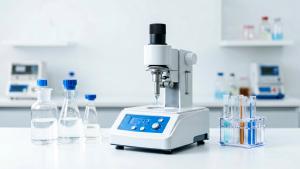
Our GMP-certified laboratory follows USP apparatus-based methods for dissolution testing:
- Apparatus 1 (Basket): Used for tablets and capsules that tend to float or require gentle agitation. Commonly applied to softgel testing.
- Apparatus 2 (Paddle): The most widely used method for standard tablets and hard shell capsules. Provides consistent hydrodynamic conditions for reproducible results.
- Apparatus 4 (Flow Cell): Used for products with low solubility or when minimal agitation is required, such as coated tablets.
Dissolution media typically includes pH 1.2 hydrochloric acid (simulating gastric fluid), pH 4.5 acetate buffer, pH 6.8 phosphate buffer (simulating intestinal fluid), and purified water. The choice of medium depends on the solubility profile of the active ingredient and the intended release characteristics.
Quality Standards and Compliance
At SREKE, our dissolution testing protocols align with the following standards and guidelines:
- USP <711> Dissolution—the primary reference method for solid oral dosage forms
- 21 CFR Part 111—FDA's Current Good Manufacturing Practice for Dietary Supplements, which requires component and product testing to meet specifications
- ISO 22000—our food safety management system certification
- HACCP principles—hazard analysis and critical control points integrated into our quality workflow
- GMP certification from recognized third-party auditors, including NSF and Kosher certification where applicable
Each lot released from our facility includes dissolution test results documented in our Certificate of Analysis (CoA). This documentation supports your compliance efforts and provides transparency for your own quality audits.
How SREKE Helps You Get to Market Faster
At SREKE, we understand that supplement brands operate under tight timelines. Our integrated OEM and ODM services are designed to move your product from concept to shelf efficiently while maintaining rigorous quality standards.
Formulation Development and Optimization
Our in-house R&D team works with you to develop formulations that are optimized for dissolution performance from the start. We conduct pre-formulation studies to understand the solubility characteristics of each active ingredient and select excipients and manufacturing processes that support consistent release profiles. This proactive approach reduces the risk of late-stage formulation changes that delay launch timelines.
Manufacturing at Scale
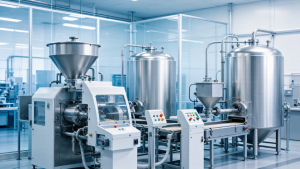
Our Guangzhou manufacturing facility is equipped with high-capacity tablet compression lines and capsule filling equipment capable of producing from small pilot batches to full commercial runs. We support flexible MOQs to accommodate brands at every stage of growth. Lead times are typically 4 to 8 weeks from formula approval to finished goods delivery, depending on dosage form, complexity, and packaging requirements.
Quality Assurance and Documentation
Every batch we produce undergoes incoming raw material testing, in-process quality checks, and finished product testing—including dissolution, hardness, friability, weight variation, and microbial analysis. We provide full documentation packages including CoAs, stability data, and GMP compliance records to support your regulatory filings and retailer requirements.
Custom Packaging Solutions
We offer a range of packaging options including blister packs, bottles, and sachets, with customization available for label design and secondary packaging. Our packaging materials are selected for compatibility with the dosage form and designed to maintain product stability throughout the shelf life.
Industry Trends and Market Opportunities
The global dietary supplement market continues to grow, and dissolution testing has become a differentiator that forward-thinking brands are leveraging to build consumer confidence and meet evolving regulatory expectations.
Growing Demand for Bioavailability Data
Consumers and retailers increasingly ask for evidence that supplement ingredients are actually absorbed. Brands that can provide dissolution testing data demonstrate a commitment to product performance that goes beyond label claims. This transparency builds trust and can justify premium positioning in a crowded marketplace.
Third-Party Certification as a Market Standard
Certifications such as NSF Certified for Sport, USP Verified, and Informed-Choice are becoming table stakes for brands targeting serious athletes and health-conscious consumers. These programs often require dissolution and bioequivalence data as part of their verification process. Partnering with a manufacturer like SREKE that already maintains robust dissolution testing protocols positions you to meet these certification requirements more efficiently.
International Market Expansion
As supplement brands expand into international markets, dissolution testing becomes even more critical. The European Food Safety Authority (EFSA), Health Canada, and other regulatory bodies have specific requirements for product quality documentation. Our experience manufacturing for global clients means we understand the varied regulatory landscapes and can support formulations that meet multiple market standards.
Emerging Dosage Form Innovations
Innovations such as fast-disintegrating tablets, layered tablets for ingredient compatibility, and sustained-release capsules are gaining traction in the supplement space. At SREKE, our R&D team stays current with these developments and can advise on the dissolution testing strategies best suited to each innovative format.
Frequently Asked Questions
What is dissolution testing and why is it important for supplements?
Dissolution testing measures how quickly an active ingredient releases from a tablet or capsule into solution. It is important because it indicates whether the product will deliver the labeled amount of ingredient to the consumer. Poor dissolution can result in reduced bioavailability and ineffective products, even when label claims appear correct.
Is dissolution testing required by the FDA for dietary supplements?
The FDA's 21 CFR Part 111 requires that dietary supplement manufacturers establish written specifications for identity, purity, strength, and composition, and that they perform appropriate testing to verify these specifications. While the FDA does not mandate dissolution testing for all dietary supplements specifically, it is considered a best practice and is required for many product categories and international markets. At SREKE, we include dissolution testing as a standard release criterion for all tablet and capsule products.
How long does dissolution testing take?
A standard dissolution test using USP Apparatus 1 or 2 typically runs for 30 to 45 minutes per batch, though the total time including sample preparation, analysis, and documentation is usually completed within a few hours. For stability-indicating methods or custom protocols, testing may take longer. At SREKE, we maintain turnaround times that support your production schedules.
What is the difference between disintegration and dissolution testing?
Disintegration testing measures how long it takes for a tablet or capsule shell to break apart into smaller particles. Dissolution testing goes a step further by measuring how quickly the active ingredient dissolves from those particles into solution. A product can disintegrate quickly but still have poor dissolution if the active ingredient has low solubility. Both tests provide valuable quality information.
Can SREKE help with formulation changes to improve dissolution?
Yes. Our formulation scientists can evaluate your current product and recommend changes to excipients, particle size, compression parameters, or capsule shell type to optimize dissolution performance. We conduct comparative testing during the development phase to ensure improvements are meaningful and reproducible at scale.
What MOQ do you require for tablet and capsule production?
Our MOQ varies by dosage form and complexity. For standard tablet and capsule products, we offer competitive minimum order quantities designed to support both emerging and established brands. Contact our team for specific MOQ details based on your product requirements.
Do you provide dissolution testing documentation for audits and certifications?
Absolutely. Every batch we produce includes dissolution test results in our Certificate of Analysis. We also maintain detailed test records, method validation documents, and stability data that support third-party certification applications and regulatory audits.
How does SREKE ensure batch-to-batch consistency in dissolution?
We control dissolution consistency through standardized raw material specifications, validated manufacturing processes, in-process quality checks, and routine dissolution testing on every production lot. Our GMP-certified facility and ISO 22000 quality management system provide the framework for consistent, repeatable results batch after batch.
Ready to launch your supplement brand? SREKE provides GMP-certified OEM/ODM manufacturing for softgels, capsules, tablets, powders, gummies, and liquids. Contact us for a free quote or email [email protected] — we respond within 24 hours.