








Why 3D Printing Supplements Technology Matters for Supplement Brands
At SREKE, we are closely monitoring the evolution of 3D printing in dietary supplement manufacturing. This emerging technology represents a significant shift in how brands can approach personalization, speed to market, and formulation flexibility. While still in its early adoption phase, 3D printing — also known as additive manufacturing — is beginning to influence how contract manufacturers and supplement brands think about production workflows.
The global 3D printing market, including applications in food and nutraceutical manufacturing, has been projected to grow substantially through 2030. According to industry analyses from Grand View Research and other market intelligence firms, the 3D printing sector across all industries is expected to reach multi-billion-dollar valuations, with healthcare and food applications representing some of the fastest-growing segments. For supplement brands, this means the technology is moving from novelty to a viable manufacturing option.
What makes 3D printing particularly relevant for supplement companies is its potential for:
- Personalized dosing: Each unit can be printed with a unique formulation or dosage, supporting the growing demand for personalized nutrition.
- Rapid prototyping: Brands can move from concept to physical sample in hours rather than weeks.
- Complex geometries: Traditional tablet pressing and capsule filling have shape limitations; 3D printing allows for innovative delivery forms.
- Reduced inventory complexity: Digital formulation files can replace physical inventory of multiple SKUs.
At SREKE, we believe supplement brands that understand these capabilities today will be better positioned to leverage them as the technology matures and regulatory frameworks become clearer.
Key Manufacturing Considerations at SREKE
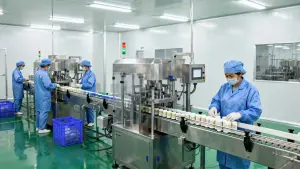
As a GMP-certified dietary supplement contract manufacturer, we evaluate emerging technologies through the lens of quality, compliance, and scalability. Here is what our team considers when assessing 3D printing for supplement production.
Regulatory and Compliance Landscape
The FDA has not yet established a dedicated regulatory framework specifically for 3D printed supplements. However, the agency has issued guidance on 3D printed medical devices and has signaled interest in how additive manufacturing applies to food and dietary products. Under current law, all dietary supplements — regardless of manufacturing method — must comply with 21 CFR Part 111 (Current Good Manufacturing Practice for Dietary Supplements) and adhere to FDA labeling requirements.
At SREKE, we recommend that brands work with manufacturers who understand both traditional GMP requirements and the unique compliance considerations of additive manufacturing. This includes documentation of material sourcing, process validation, and batch traceability.
Material Compatibility
3D printing for supplements typically uses powder-based or paste-based feedstocks. Common materials compatible with printing include:
- Protein powders and whey isolates
- Plant-based protein blends
- vitamin and mineral premixes
- Herbal extract powders
- Gelatin and pectin-based matrices (for gummy-style prints)
- Sugar and sugar-alcohol binders
Not all ingredients are equally printable. Particle size, flowability, hygroscopicity, and binding properties all affect print quality. At SREKE, we advise brands to consult with their contract manufacturer early in the formulation stage to ensure ingredient compatibility with the chosen printing technology.
Quality Control Challenges
Traditional supplement manufacturing benefits from well-established quality control protocols. 3D printing introduces new variables that require additional QC measures:
- Dosage accuracy: Each printed unit must deliver the labeled amount of active ingredients. In-process testing and statistical process control are essential.
- Uniformity of composition: Homogeneous mixing of powder feedstocks is critical before printing begins.
- Stability and shelf life: The printing process may affect the physical structure of the product, potentially impacting moisture content, dissolution rates, and long-term stability.
- Contamination control: Powder-handling equipment in additive manufacturing requires the same rigorous cleaning and sanitation protocols as any GMP production line.
Scalability and Lead Time
One of the most important questions for brand owners is whether 3D printing can scale to commercial production volumes. Currently, most 3D printing supplement processes are slower per-unit than high-speed tablet compression or capsule filling. However, the technology excels in short-run and personalized production scenarios where traditional tooling costs would be prohibitive.
At SREKE, we see 3D printing as complementary to — not a replacement for — conventional manufacturing. For brands launching new products or testing formulations, additive manufacturing can significantly reduce time from concept to sample. For high-volume SKUs, traditional methods remain the most efficient path.
How SREKE Helps You Get to Market Faster
Whether you are developing a novel delivery format or exploring whether 3D printing fits your brand strategy, SREKE provides the expertise and infrastructure to move your product forward efficiently.
Formulation Development and Optimization
Our in-house R&D team works with brand owners to develop formulations that are optimized for their chosen manufacturing method. If 3D printing is part of your strategy, we help ensure that ingredient selection, particle size distribution, and binder systems are aligned for printability and product performance.
MOQ and Production Flexibility
SREKE offers flexible minimum order quantities that accommodate both startup brands and established companies. We understand that supplement brands need to test the market before committing to large production runs. Our facility supports:
- Softgel, capsule, and tablet production
- Powder and liquid fill
- Gummy and chewable formats
- Custom packaging and private label solutions
We are actively evaluating 3D printing capabilities for select applications and can advise brands on when this technology may be advantageous for their specific product.
Compliance and Documentation
Every product we manufacture is produced in our GMP-certified facility and backed by comprehensive documentation, including:
- COA (Certificate of Analysis)
- Ingredient sourcing records
- Batch traceability
- Label compliance review
- FSVP and import documentation for international brands
At SREKE, we ensure that whether your product is made via traditional methods or emerging technologies, it meets all regulatory requirements for the markets you serve.
Industry Trends and Market Opportunities
The supplement industry is undergoing several transformations that make 3D printing increasingly relevant. Understanding these trends helps brands position themselves for future growth.
Personalized Nutrition on the Rise
Consumer demand for personalized supplements is driving innovation in manufacturing. According to market research from Grand View Research, the global personalized nutrition market is projected to grow at a compound annual growth rate (CAGR) of over 10% through 2030. 3D printing is uniquely suited to this trend because it allows for unit-level customization without the cost penalties of traditional manufacturing changeovers.
Sustainability and Waste Reduction
Additive manufacturing generates less material waste than subtractive processes. For brands committed to sustainability, 3D printing can reduce excess powder and off-spec product. At SREKE, we incorporate sustainability considerations into our manufacturing recommendations and can help brands evaluate the environmental impact of different production methods.
Speed to Market as Competitive Advantage
In an industry where trends shift quickly, the ability to launch products faster is a significant competitive advantage. 3D printing enables rapid prototyping and small-batch production, allowing brands to test formulations, gather consumer feedback, and iterate before committing to full-scale manufacturing. This agility is increasingly valuable as consumer preferences evolve and new ingredients enter the market.
Regulatory Evolution
As 3D printing matures in supplement and food manufacturing, we expect regulatory guidance to become more specific. Brands that stay informed and work with experienced manufacturers will be better prepared to adapt as requirements evolve. At SREKE, we monitor regulatory developments from the FDA, EFSA, and other global authorities to ensure our clients remain compliant.
Frequently Asked Questions
Is 3D printing supplements FDA-approved?
There is no separate FDA approval process specifically for 3D printed supplements. All dietary supplements must comply with existing FDA regulations, including 21 CFR Part 111 GMP requirements. The FDA has acknowledged the potential of 3D printing in healthcare but has not issued comprehensive guidance specific to 3D printed dietary supplements as of this writing. Brands should work with experienced manufacturers who can ensure compliance.
Can 3D printing replace traditional supplement manufacturing?
Not at this time. 3D printing is best suited for personalized dosing, rapid prototyping, and low-to-medium volume production. For high-volume, standardized products, traditional tablet compression, capsule filling, and powder blending remain more efficient and cost-effective. At SREKE, we view 3D printing as a complementary technology rather than a replacement for conventional manufacturing.
What are the typical MOQs for 3D printed supplements?
MOQs vary depending on the product format, complexity, and brand requirements. At SREKE, we offer flexible MOQs to support brands at every stage of growth. We recommend contacting our team for specific pricing and availability based on your product concept.
How does 3D printing affect product stability and shelf life?
The printing process can affect the physical structure and moisture content of supplement products, which may influence stability. Any new manufacturing method requires stability testing to establish shelf life. At SREKE, we conduct or coordinate stability studies as part of our development process to ensure product quality throughout its intended shelf life.
What ingredients can be used in 3D printed supplements?
Printable ingredients typically include protein powders, vitamin and mineral premixes, herbal extracts, and binder systems such as gelatin, pectin, or sugar alcohols. Ingredient selection depends on particle size, flowability, and binding characteristics. Our formulation team can help determine whether your desired ingredients are suitable for 3D printing.
How long does it take to produce 3D printed supplements at scale?
3D printing is generally slower per unit than high-speed tablet or capsule production. It is most advantageous for short runs, prototypes, and personalized products. For large-scale manufacturing, traditional methods remain faster. We recommend discussing your volume requirements with our team to determine the most efficient production approach.
Does SREKE offer 3D printing services?
At SREKE, we are actively evaluating 3D printing technology for select applications. While our core capabilities remain in softgel, capsule, tablet, powder, gummy, and liquid manufacturing, we are monitoring this space closely. If 3D printing aligns with your product strategy, contact our team to discuss your needs and explore how we can support your brand.
Ready to launch your supplement brand? SREKE provides GMP-certified OEM/ODM manufacturing for softgels, capsules, tablets, powders, gummies, and liquids. Contact us for a free quote or email [email protected] — we respond within 24 hours.