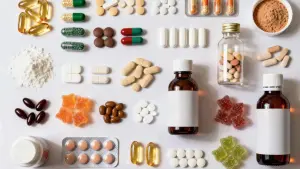
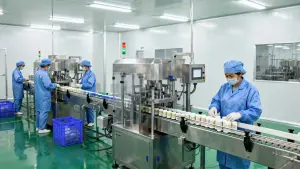




The global tablet supplement market surpassed $42 billion in 2025, driven by demand for multivitamins, mineral complexes, and herbal formulations in convenient, shelf-stable formats. For brands entering or expanding in this space, tablet manufacturing remains the most cost-effective and scalable option among all supplement dosage forms. Unlike liquids that require preservatives or softgels that demand specialized encapsulation lines, tablet production leverages mature compression technology with well-established quality control protocols.
Yet not all tablet manufacturers deliver the same capabilities. The difference between a high-quality tablet and one that crumbles, chips, or fails dissolution testing often comes down to formulation expertise, equipment calibration, and raw material sourcing discipline. This guide walks through the technical and commercial factors every brand owner should evaluate before signing a manufacturing agreement.
Why Tablet Supplements Remain the Industry Standard for Contract Manufacturing
Tablets dominate contract manufacturing for three structural reasons: production efficiency, formulation flexibility, and packaging economics. A single rotary tablet press can produce 200,000 to 1,000,000 tablets per hour depending on tool configuration and tablet size. This throughput makes tablets the lowest per-unit manufacturing cost among solid dosage forms — typically 30–50% less than hard capsules and 60–70% less than softgels on a per-serving basis.
Beyond cost, tablets accommodate a wider ingredient range than most brands assume. Immediate-release tablets suit vitamins and minerals. Modified-release formulations — including sustained-release matrix tablets and effervescent tablets — enable differentiated positioning. Coated tablets support brand differentiation through color, gloss, and swallowability improvements. For B2B purchasers, this flexibility means a single manufacturing partner can support multiple SKUs across a product line without requiring entirely different production lines.
Key Factors to Consider When Selecting a Tablet Manufacturer
What tablet compression technologies should your manufacturer offer?
Tablet compression is not a single process. Single-punch presses handle small batches and R&D prototyping but lack the speed for commercial production. Rotary presses with 35 to 75 stations are the industry workhorse for standard tablets. High-speed rotary presses exceeding 100 stations serve large-volume programs but require more stringent in-process weight and hardness monitoring.
For specialized tablets, your manufacturer should offer additional capabilities: bilayer presses for incompatible ingredient combinations, tablet-in-tablet presses for immediate-plus-sustained release, and hot-melt extrusion for poorly soluble actives. Confirming equipment availability before formulation development begins prevents costly reformulation cycles.
What is the typical MOQ for tablet supplement manufacturing?
Tablet MOQs are generally lower than softgel or gummy equivalents because tooling and line setup costs are more predictable. Standard round tablets using existing tooling typically start at 100,000 to 300,000 tablets per SKU. Custom-shaped tablets requiring bespoke punches increase MOQ to 500,000 tablets or more due to tooling fabrication costs ($800–$2,500 per punch set).
Pilot batches of 10,000 to 50,000 tablets are available from most manufacturers for market testing, though per-tablet costs at these volumes can be 3–5× higher than commercial-scale production. Always request a volume-based pricing ladder in your quotation to understand where cost efficiencies begin.
How do coating and excipient choices affect product performance?
Excipients — the inactive ingredients that hold a tablet together — directly impact manufacturability, stability, and consumer experience. Binders such as microcrystalline cellulose and croscarmellose sodium ensure tablet integrity. Disintegrants like sodium starch glycolate control how quickly the tablet breaks down after ingestion. Lubricants including magnesium stearate prevent sticking to press tooling but must be used sparingly as excessive amounts can slow dissolution.
Coatings serve both functional and aesthetic purposes. Film coatings improve swallowability and mask unpleasant tastes. Enteric coatings protect acid-sensitive ingredients like probiotics and certain enzymes from stomach degradation. Sugar coatings, though less common today, remain relevant for pediatric or traditional herbal formulations. Your manufacturer should maintain validated coating pans with precise temperature and airflow controls to ensure batch-to-batch uniformity.
Step-by-Step: From Formula Brief to Finished Tablet Batch
The tablet development process follows a structured pathway with clear decision gates at each stage. Understanding these stages helps brands set realistic timelines and budget expectations.
Step 1 — Formula Brief and Feasibility Review. Define active ingredients, target dosages per tablet, release profile (immediate, sustained, effervescent), and any dietary claims. The manufacturer evaluates ingredient compatibility, hygroscopicity, and compressibility to flag potential formulation challenges before development begins.
Step 2 — Preformulation and Prototyping. R&D prepares bench-scale blends (100–500 grams) to test flow properties, compressibility, and hardness. This phase typically takes 1–2 weeks per iteration and may involve 2–4 iterations to reach a viable prototype.
Step 3 — Pilot Compression and In-Process Testing. The validated formula moves to a pilot press (5,000–10,000 tablet batch) where weight variation, thickness, hardness, friability, and disintegration time are tested against United States Pharmacopeia (USP) standards.
Step 4 — Stability Testing. Accelerated stability studies (40°C/75% RH for 6 months) establish shelf-life claims. For tablets, key failure modes include moisture uptake, color fading, and potency degradation.
Step 5 — Commercial Production and QA Release. Full-scale batches undergo 100% weight-check screening, finished-product potency testing, and microbial limit verification before Certificate of Analysis issuance.
Total timeline from brief to first commercial shipment: 10–16 weeks for standard formulations, 16–24 weeks for modified-release or coated tablets.
Immediate-Release vs Sustained-Release vs Effervescent — Which Format Fits Your Brand?
| Factor | Immediate-Release | Sustained-Release | Effervescent |
|---|---|---|---|
| Production Complexity | Low | High (matrix/hydrophilic polymers) | Medium (controlled effervescence) |
| Typical MOQ | 100,000–300,000 tablets | 200,000–500,000 tablets | 50,000–150,000 tablets |
| Per-Tablet Cost | $0.02–0.08 | $0.05–0.15 | $0.08–0.25 |
| Best For | Vitamins, minerals, herbal extracts | Ingredients needing gradual absorption (iron, calcium) | Fast absorption, senior-friendly formats |
| Shelf Life | 24–36 months | 24–30 months | 18–24 months (moisture-sensitive) |
| Packaging Requirement | Standard bottle/blister | Standard bottle/blister | Moisture-resistant foil or tube |
Brand owners should align tablet format with target demographics and distribution channels. Immediate-release tablets suit mass-market multivitamins. Sustained-release formulations command premium pricing in sports nutrition and clinical wellness segments. Effervescent tablets appeal to aging populations and consumers seeking faster onset of action.
Regulatory and Quality Essentials for Tablet Supplements
Tablet manufacturing is governed by FDA cGMP regulations under 21 CFR Part 111, with specific emphasis on blend uniformity and tablet weight control. USP General Chapters <905> (Uniformity of Dosage Units) and <711> (Disintegration) establish the analytical benchmarks every batch must meet. Beyond FDA compliance, manufacturers supplying EU markets must adhere to Directive 2002/46/EC and HACCP principles.
Documentation brands should request before production begins includes: equipment qualification records (IQ/OQ/PQ), validation reports for cleaning protocols, stability study summaries, and third-party audit certifications (NSF, NPA GMP, ISO 22000). For export-oriented brands, HALAL and KOSHER certifications may be necessary depending on target markets.
Frequently Asked Questions
Q: How much does tablet supplement manufacturing cost per unit at scale?
A: At commercial volumes (300,000+ tablets), standard uncoated vitamin or mineral tablets typically cost $0.02–0.08 per tablet in manufacturing. Coated tablets add $0.01–0.03 per tablet. Sustained-release or effervescent formulations range from $0.05–0.25 per tablet depending on excipient complexity and batch size. These figures exclude packaging, labeling, and shipping.
Q: Can I use a custom shape or logo embossed on my tablets?
A: Yes, custom tablet shapes and embossed logos are common for brand differentiation. Custom tooling requires a one-time punch-and-die investment of $800–$2,500 per set, depending on complexity. MOQs for custom tooling typically start at 500,000 tablets. Round, oval, and capsule-shaped tablets use standard tooling and carry no additional tooling fees.
Q: What is the difference between a tablet and a caplet?
A: A caplet is a tablet manufactured in an elongated, capsule-like shape to improve swallowability. Caplets are produced on standard tablet presses using modified tooling. They offer the manufacturing cost advantages of tablets with a shape consumers often perceive as easier to swallow. The term "caplet" is primarily a marketing designation rather than a distinct manufacturing category.
Q: How long does tablet supplement development take from concept to production?
A: Standard immediate-release tablets require 10–16 weeks. Coated or sustained-release formulations extend to 16–24 weeks due to additional formulation optimization and stability testing. Simple reformulations of existing products — where excipient compatibility is already established — can compress to 6–10 weeks.
Q: What quality tests are performed on every batch of tablets?
A: Standard in-process and finished-product testing includes weight uniformity, thickness, hardness, friability, disintegration time, potency assay, and microbial limits (TAMC, TYMC, E. coli, Salmonella, S. aureus). Coated tablets additionally undergo dissolution testing per USP specifications.
Q: Are tablets more cost-effective than capsules for supplement manufacturing?
A: Yes, tablets generally carry 30–50% lower per-unit manufacturing costs than hard gelatin capsules. The cost gap narrows for complex tablets requiring specialized coatings or multi-layer compression. Capsules offer advantages for moisture-sensitive ingredients and taste-masking without coating, so the optimal format depends on formulation requirements rather than cost alone.
Q: What packaging options best protect tablet stability?
A: HDPE bottles with desiccant canisters are the standard for most tablets. Blister packaging provides superior moisture and oxygen barrier protection for hygroscopic formulations. Effervescent tablets require aluminum-laminate tubes or moisture-barrier blister foil. Your manufacturer should conduct packaging compatibility testing as part of stability validation.
How to Get Started with SREKE
Launching a tablet supplement line requires a manufacturing partner with deep expertise in formulation science, compression technology, and quality assurance. At SREKE, our tablet production capabilities span single-layer and bilayer compression, film coating, enteric coating, and effervescent tablet manufacturing — supported by in-process testing stations and dedicated stability monitoring. We work with brands at every scale, from pilot validation batches through multi-million-tablet commercial runs.
If you are looking for OEM/ODM/CDMO contract manufacturing services, please visit https://www.sreke.com/contact.php to submit your inquiry.
Disclaimer: These statements have not been evaluated by the Food and Drug Administration. This article is for informational purposes only and does not constitute medical or regulatory advice. All market data cited represents industry estimates as of 2025–2026.