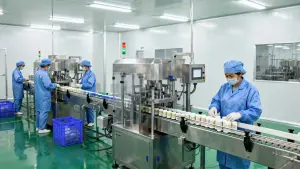






The liquid supplement segment is undergoing a significant transformation. Once dominated by basic syrups and tinctures, the category now spans functional shots, nano-emulsified delivery systems, ready-to-drink collagen blends, and precision-dosed single-serve ampoules. According to Nutrition Business Journal, the liquid supplement category expanded 11.4% year-over-year in 2025, outpacing both capsules and tablets in growth rate.
For brands entering this space, the choice of contract manufacturing partner directly determines product stability, bioavailability, and shelf appeal. Unlike dry dosage forms where compression and filling are relatively standardized, liquid manufacturing demands expertise across multiple variables — solvent systems, emulsification, preservation, pH balancing, and aseptic filling. Getting any one of these wrong can result in sedimentation, microbial contamination, or ingredient degradation before the product even reaches the shelf.
Why Liquid Supplements Are Gaining Traction with Brand Owners
Liquid formulations offer advantages that resonate directly with consumer demand patterns. Absorption speed is the most cited benefit — liquid supplements bypass the disintegration step required by tablets and capsules, making them particularly appealing for seniors, children, and individuals with digestive sensitivities. This broader demographic reach translates into expanded market opportunities for brand owners.
Beyond bioavailability, liquids enable higher per-serving dosages of certain ingredients that would require multiple capsules. A single 30ml shot can deliver 1,000mg of vitamin C, 500mg of collagen peptides, and a full B-complex — a combination that would be impractical in tablet form. This concentrated format supports premium pricing strategies, with functional shots commanding $3–5 per unit at retail versus $0.30–0.80 for standard capsules.
Key Factors When Selecting a Liquid Supplement Manufacturer
What production technologies does the facility support?
Not all liquid manufacturing lines are equal. The four primary production technologies — standard blending, high-shear homogenization, micro-emulsification, and nano-encapsulation — each serve different formulation needs. Standard blending suffices for simple solutions like electrolyte mixes, but fat-soluble ingredients (CoQ10, vitamin D3, curcumin) require emulsification or nano-delivery systems to remain stable and bioavailable. Verify that your manufacturing partner operates the specific equipment your formulation demands.
What is the typical MOQ for liquid supplement manufacturing?
Liquid supplement MOQs vary significantly by packaging format and complexity. Standard bottles (100ml–500ml) typically start at 3,000–5,000 units per SKU. Single-serve shots and ampoules have higher minimums — approximately 10,000–20,000 units — due to the specialized filling lines and packaging materials involved. For brands testing new markets, some manufacturers offer pilot runs of 1,000–2,000 units, though per-unit costs increase substantially at these volumes. Always request a tiered pricing matrix that shows the cost curve from pilot through full-scale production.
How do preservative and stability systems affect shelf life?
Preservation strategy is arguably the most consequential decision in liquid supplement development. Natural preservatives — potassium sorbate, sodium benzoate (within allowable limits), and rosemary extract — are increasingly preferred by clean-label brands but require precise pH control to function effectively. Alcohol-based tinctures offer inherent preservation but limit demographic appeal. Accelerated stability testing (40°C/75% RH for 6 months) is the industry standard for establishing 24-month shelf life claims, and your manufacturer should provide this data for every formulation they produce.
Step-by-Step: From Concept to Finished Liquid Product
The liquid supplement development cycle follows a structured path that rewards thorough preparation at each stage. Every step involves decision points that affect cost, timeline, and product quality.
Step 1 — Formulation Brief. Define the active ingredients, target dosages per serving, desired format (bottle, shot, ampoule, dropper), and any dietary claims (vegan, gluten-free, non-GMO). Provide reference products if available.
Step 2 — Bench-Top Development. The manufacturer's R&D team creates small-scale prototypes, experimenting with solvent systems, flavor masking, sweetener profiles, and preservative combinations. This phase typically takes 2–4 weeks per iteration.
Step 3 — Stability Testing. Once a prototype passes organoleptic evaluation, accelerated stability studies begin. Samples are stored under controlled conditions and tested at intervals for potency, pH, microbial limits, and physical appearance.
Step 4 — Scale-Up Production. The validated formula transitions from lab-scale (1–5 liters) to pilot-scale (50–200 liters) to confirm that mixing, heating, and filling parameters translate reliably.
Step 5 — Commercial Production and QA Release. Full production batches undergo finished-product testing for potency, heavy metals, and microbiology before QA release. Each batch receives a Certificate of Analysis.
Total timeline from brief to first commercial shipment: 12–20 weeks, depending on formulation complexity and stability requirements.
Bottle vs Shot vs Ampoule — Which Format Fits Your Brand?
| Factor | Bottle (100–500ml) | Single-Serve Shot (30–60ml) | Ampoule (10–20ml) |
|---|---|---|---|
| Typical MOQ | 3,000–5,000 units | 10,000–20,000 units | 15,000–30,000 units |
| Per-Unit Cost | $0.80–2.50 | $0.40–1.20 | $0.30–0.80 |
| Shelf Life | 24 months | 18–24 months | 24–36 months (glass) |
| Portability | Low | High | Very High |
| Premium Perception | Moderate | High | Very High |
| Best For | Daily multivitamins, tonics | Energy, immunity, focus | Beauty, anti-aging, travel |
Brand selection should align with distribution strategy. Bottles suit e-commerce and mass retail where price-per-serving economics matter. Shots dominate convenience channels and gym retail. Ampoules command the highest price premiums — typically 3–5× per milliliter versus bottles — making them ideal for prestige beauty and anti-aging positioning.
Regulatory Compliance Essentials for Liquid Supplements
Liquid products face stricter microbiological scrutiny than dry formats because water activity creates a more hospitable environment for microbial growth. FDA cGMP requirements (21 CFR Part 111) mandate that manufacturers establish and follow written procedures for water quality, equipment sanitation, and environmental monitoring. Beyond US regulations, brands targeting the EU must comply with Directive 2002/46/EC and Novel Food regulations for any ingredient not widely consumed before May 1997.
Key documentation to request from your manufacturer includes: Certificate of Analysis for each batch, microbial limit test results (TAMC, TYMC, specified pathogens), heavy metals panel (lead, arsenic, cadmium, mercury), and stability study reports. For export-focused brands, additional certifications — ISO 22000, HACCP, HALAL, or KOSHER — should be verified before committing to a manufacturing partnership.
Frequently Asked Questions
Q: How long does liquid supplement development take from concept to production?
A: Typical development timelines range from 12 to 20 weeks. Simple flavored solutions using well-characterized ingredients can complete in 10–12 weeks. Complex formulations requiring emulsification, nano-delivery, or novel flavor systems may extend to 16–20 weeks. Stability testing accounts for the largest portion of the timeline.
Q: Can I use my own proprietary formula for liquid supplement manufacturing?
A: Yes, this falls under CDMO (Contract Development and Manufacturing Organization) service. You provide the formula specifications, and the manufacturer executes production under confidentiality agreements. Most CDMO partners require a minimum order commitment to justify the line setup and cleaning protocols for proprietary formulas.
Q: What testing is performed on every batch of liquid supplements?
A: Standard finished-product testing includes potency assay (verifying label claim), pH measurement, specific gravity, microbial limits (TAMC, TYMC, E. coli, Salmonella, S. aureus), and heavy metals screening. Additional tests — such as stability-indicating assays or dissolution profiles — are specified in the product's quality agreement between the brand and manufacturer.
Q: What sweetener and flavor options are available for liquid supplements?
A: The palette includes natural sweeteners (stevia, monk fruit, erythritol), artificial sweeteners (sucralose, acesulfame potassium), and sugar-based options for conventional products. Natural flavor systems — fruit extracts, essential oils, botanical distillates — are widely used in clean-label formulations. Flavor masking is particularly important for bitter actives like B vitamins, minerals, and herbal extracts.
Q: Are liquid supplements more expensive to manufacture than capsules or tablets?
A: Per-serving manufacturing costs for liquids are generally 15–30% higher than equivalent dry formats, driven by water weight (shipping costs), preservative systems, and more complex packaging requirements. However, liquids typically command 2–3× higher retail prices, yielding stronger gross margins for brand owners despite higher COGS.
Q: What packaging options affect liquid supplement stability?
A: Glass offers the best barrier properties and is mandatory for certain solvent systems but adds weight and breakage risk. PET (polyethylene terephthalate) is the most common plastic option — lightweight, shatterproof, and compatible with most formulations. Aluminum ampoules provide superior light and oxygen protection for oxidation-sensitive ingredients. Pump dispensers and dropper inserts add convenience but require compatibility testing with the liquid matrix.
How to Get Started with SREKE
Launching a liquid supplement line requires a manufacturing partner with proven expertise across formulation, filling, and regulatory compliance. At SREKE, our liquid production capabilities span standard blending, high-shear homogenization, and emulsification technologies — supported by in-house stability chambers and a dedicated QA microbiology laboratory. We work with brands at every scale, from pilot validation batches of 1,000 units through full commercial production.
If you are looking for OEM/ODM/CDMO contract manufacturing services, please visit https://www.sreke.com/contact.php to submit your inquiry.
Disclaimer: These statements have not been evaluated by the Food and Drug Administration. This article is for informational purposes only and does not constitute medical or regulatory advice. All market data cited represents industry estimates as of 2025–2026.