





Why Supplement Quality Control Testing Matters for Supplement Brands
At SREKE, we have spent over two decades manufacturing dietary supplements under GMP-certified conditions in Guangzhou, China. Through that experience, we have seen firsthand how rigorous quality control testing separates brands that thrive from those that face recalls, regulatory action, or reputational damage. For supplement brand owners, understanding the testing methods your contract manufacturer uses is not optional — it is a foundational business decision.
The global dietary supplement market was valued at approximately USD 200 billion in 2024 and continues to grow, driven by consumer demand for transparency and product integrity. Regulatory bodies including the U.S. Food and Drug Administration (FDA), the European Food Safety Authority (EFSA), and China’s National Medical Products Administration (NMPA) have all tightened oversight of supplement manufacturing. In this environment, robust quality control is your first line of defense.
At SREKE, our quality management system spans the entire production lifecycle: incoming raw material verification, in-process testing, and finished product release. Every batch we manufacture is tested against the specifications defined in your formula and the applicable regulatory framework. Below, we break down the core testing methods used in our facility and what they mean for your brand.
Key Manufacturing Considerations at SREKE
Identity Testing of Raw Materials
Before any ingredient enters our production floor, it must pass identity verification. At SREKE, we use a combination of Fourier-Transform Infrared Spectroscopy (FTIR), High-Performance Liquid Chromatography (HPLC), and thin-layer chromatography to confirm that each raw material matches its certificate of analysis (CoA) and botanical or chemical specification. This step prevents adulteration and substitution, two of the most common sources of quality failures in the supplement industry.
Potency and Assay Testing
Potency testing ensures that the active ingredients in your product are present at the labeled amount throughout the shelf life. We employ HPLC and UPLC (Ultra-Performance Liquid Chromatography) for quantitative analysis of vitamins, botanical extracts, amino acids, and other actives. For multi-ingredient formulations, we validate each component individually and then confirm the complete formula meets its declared specification. Our in-house analytical laboratory is ISO 17025-aligned, and we maintain full traceability from sample collection to final report.
Microbiological Testing
Microbial contamination is a critical risk in supplement manufacturing, particularly for botanical-derived ingredients and gummy or softgel products. At SREKE, we test for total aerobic microbial count, yeast and mold, E. coli, Salmonella species, and Staphylococcus aureus in accordance with USP <61> and <62> general chapters. We also monitor environmental conditions in our manufacturing suites to prevent cross-contamination. Products that do not meet microbial specifications are not released for shipment.
Heavy Metal and Contaminant Screening
Heavy metals such as lead, arsenic, cadmium, and mercury can accumulate in botanical and mineral ingredients if sourced from contaminated soil or water. SREKE uses Inductively Coupled Plasma Mass Spectrometry (ICP-MS) and Inductively Coupled Plasma Optical Emission Spectroscopy (ICP-OES) to screen for these contaminants at parts-per-billion (ppb) levels. We also test for pesticide residues, aflatoxins, and residual solvents where applicable, ensuring compliance with California Proposition 65 limits, FDA guidance levels, and EFSA maximum levels for relevant markets.
Stability and Shelf-Life Testing
At SREKE, we conduct accelerated and real-time stability studies to establish and verify the shelf life of every product we manufacture. Stability testing is performed under ICH-guided conditions (temperature, humidity, and light exposure) to confirm that potency, microbiological quality, and physical attributes remain within specification. This data supports your product label claims and helps you avoid premature product degradation in the supply chain.
Foreign Material and Physical Attribute Inspection
For tablets, capsules, and gummies, we inspect for weight variation, hardness, disintegration time, color, and visual defects. Softgel products are tested for leak integrity, fill weight uniformity, and shell thickness. These physical tests are essential for ensuring consistent dosing and consumer satisfaction. Our automated inspection lines at SREKE’s facility in Guangzhou detect and reject defective units in real time.
How SREKE Helps You Get to Market Faster
One of the most common challenges we hear from brand owners is the time between finalizing a formula and having a shelf-ready product. At SREKE, we have streamlined our quality control workflow to reduce lead time without compromising compliance. Here is how we approach it:
- Pre-qualified ingredient library: We maintain a vetted supplier network with on-file CoAs and audit reports. When you select an ingredient from our library, identity and potency testing is already mapped, reducing incoming material hold time.
- Parallel testing protocols: While one batch is in production, we run incoming and in-process tests simultaneously. This parallel approach cuts overall manufacturing lead time by an average of 10 to 14 days compared to sequential testing workflows.
- Regulatory-ready documentation: Every batch we produce is accompanied by a full quality dossier including CoA, test reports, and batch records. This documentation supports your FDA Facility Registration, DSHEA compliance filings, and EU market entry requirements.
- Flexible MOQ and packaging options: SREKE offers competitive minimum order quantities across softgels, capsules, tablets, powders, gummies, and liquids. We also provide private-label packaging and custom formulation support, so you can launch with a product that meets your brand’s positioning from day one.
Our standard lead time for OEM/ODM supplement production ranges from 30 to 60 days depending on product type, formulation complexity, and packaging requirements. For urgent launches, we offer expedited scheduling on select product formats.
Industry Trends and Market Opportunities
The supplement industry is evolving rapidly, and quality control testing is at the center of that change. At SREKE, we track several trends that are shaping how brand owners approach manufacturing partnerships:
- Third-party certification demand: Consumers and retailers increasingly require third-party verification such as NSF Certified for Sport, USP Verified, or Informed-Choice certification. We support brands through the certification process by providing the necessary batch documentation and testing records.
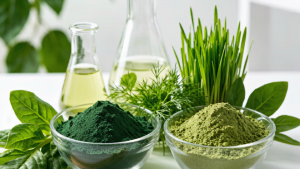
- Plant-based and botanical formulation growth: The demand for botanical and plant-based supplements continues to rise. These ingredients require specialized testing for botanical identity, adulterant screening, and standardization of active compounds. SREKE’s analytical team has extensive experience with complex botanical matrices.
- Gummies and functional foods expansion: The gummy supplement segment has seen double-digit growth year over year. Gummy manufacturing introduces unique quality challenges including moisture control, microbial risk, and texture consistency. Our GMP facility in Guangzhou is equipped for high-volume gummy production with dedicated environmental controls.
- Transparency and traceability: Blockchain and digital traceability tools are becoming standard in premium supplement brands. At SREKE, we provide full batch traceability from raw material receipt through finished product shipment, supporting your brand’s transparency commitments.
Understanding these trends allows us to advise our partners proactively. When you work with SREKE, you are not just outsourcing manufacturing — you are gaining a partner who monitors the regulatory and market landscape so you can make informed decisions.
Frequently Asked Questions
What quality standards does SREKE follow?
At SREKE, we operate under current Good Manufacturing Practices (cGMP) as required by the FDA for dietary supplements, as well as ISO 22000 and HACCP principles. Our Guangzhou facility is certified and audited regularly to maintain compliance with both U.S. and international regulatory requirements.
How long does quality control testing take for a new formulation?
For a new formulation, initial quality control testing — including incoming raw material verification, in-process checks, and finished product release — typically takes 10 to 15 business days. Stability testing for shelf-life declaration runs concurrently and continues after product launch. We provide you with a detailed testing timeline during the formulation consultation phase.
Do you support third-party lab testing?
Yes. In addition to our in-house analytical laboratory, SREKE can arrange independent third-party testing through accredited labs for brands that require it. We coordinate sampling, shipping, and result delivery to ensure your product meets all specified standards before release.
What is the minimum order quantity (MOQ) for custom supplement manufacturing?
Our MOQ varies by product format. Softgels and capsules typically start at 10,000 to 30,000 units, tablets at 20,000 to 50,000 units, powders at 500 kg to 1,000 kg, and gummies at 10,000 to 20,000 units. We also accommodate smaller trial runs for brands validating a new product concept. Contact our team for specific MOQ details.
Can SREKE help with FDA registration and compliance documentation?
Absolutely. We assist brand owners with FDA Facility Registration, Dietary Supplement Ingredient Compendium (DSIC) compliance, New Dietary Ingredient (NDI) notifications where applicable, and all documentation required for market entry in the United States, European Union, and other target regions.
How do you ensure consistency between production batches?
Batch-to-batch consistency is maintained through standardized operating procedures, validated manufacturing processes, and rigorous in-process testing at every stage. SREKE uses statistical process control (SPC) to monitor critical quality attributes. If any batch deviates from specification, it is quarantined and investigated before any release decision is made.