





Gummy supplements have transitioned from a niche alternative to one of the fastest-growing dosage forms in the dietary supplement industry. Unlike pills or capsules that some consumers find difficult to swallow, gummies offer a pleasant consumption experience without sacrificing efficacy. For B2B buyers evaluating contract manufacturing partners, knowing the technical nuances of gummy production is critical to making an informed sourcing decision.
Why Gummy Supplements Matter for Your Brand
Consumer preference drives the gummy boom. According to a 2025 industry report, over 60% of new supplement users prefer gummy formats over traditional tablets or capsules. This shift is particularly pronounced among Millennial and Gen Z demographics, who prioritize convenience, taste, and a treat-like experience. For brands, launching gummies is not just about following a trend — it is about meeting a structural change in how consumers want to take their daily nutrients.
From a manufacturing perspective, gummies also command premium pricing. The average per-unit margin on gummy supplements is 25-40% higher than equivalent tablet products, making them an attractive category for private label brands.
Key Factors to Consider When Manufacturing Gummy Supplements
What Ingredients Are Used in Gummy Supplement Formulations?
Gummy bases typically fall into three categories: gelatin-based (traditional animal-derived), pectin-based (plant-derived, suitable for vegetarian and Halal markets), and starch-based (less common but growing). Each base affects texture, heat stability, and production parameters. Gelatin gummies require a heating and cooling gelation cycle at specific temperatures (typically 80-85°C cooking, then controlled cooling to 10-15°C), while pectin gummies require a sugar-acid balance with pH around 3.2-3.8 for proper set.
What Is the MOQ for Private Label Gummy Supplements?
Standard MOQ for gummy OEM manufacturing ranges from 10,000 to 50,000 bottles per SKU, depending on the complexity of the formulation and mold tooling. Custom mold designs — if you want a unique shape or embossed logo on each gummy — require an initial tooling investment of $800-$3,000 per mold, which increases the minimum run. Some manufacturers offer lower MOQs for existing generic molds.
How Are Gummy Supplements Tested for Quality?
Quality control in gummy production is more complex than for tablets due to the water activity (aw) factor. Gummies must be dried to an aw of 0.5-0.65 to prevent microbial growth while maintaining the chewy texture. Testing covers: uniformity of weight, active ingredient distribution (gummies are mixed as a liquid before depositing), dissolution profile, and accelerated stability at 40°C/75% RH for 3 months.
Step-by-Step Gummy OEM Manufacturing Process
Gummy production follows a precise, controlled sequence:
- Raw material preparation — All ingredients are weighed and sieved. Active ingredients, colors, and flavors are pre-dispersed in a carrier oil or water phase depending on solubility.
- Cooking and blending — The base (gelatin or pectin) is hydrated, then combined with sweeteners and heated to the target temperature inside a vacuum cooker. Active ingredients are added at the cooling stage to avoid thermal degradation.
- Depositing into molds — The liquid gummy mass is deposited into starch or silicone molds at controlled speed and temperature.
- Drying and curing — Gummies pass through a drying tunnel where controlled temperature and humidity remove moisture. Starch-molded gummies are also tumbled to remove residual starch.
- Finishing and packaging — Oil or wax coating is applied to prevent sticking. Gummies are sorted, metal-detected, and bottled. Packaging is nitrogen-flushed for oxygen-sensitive actives.
Gelatin vs Pectin Gummies — Which One Is Right for Your Brand?
| Feature | Gelatin Gummies | Pectin Gummies |
|---|---|---|
| Source | Animal-derived (beef/pork) | Plant-derived (fruit) |
| Suitable for vegan/Halal | No (unless porcine-free) | Yes |
| Texture | Chewy, elastic | Firmer, shorter bite |
| Heat stability | Melts above 35°C | More heat-resistant |
| Production cost | Lower (faster cycle) | Higher (slower set) |
| Shelf life | 18-24 months | 12-18 months |
| Active ingredient options | Broader compatibility | Limited by pH sensitivity |
For brands targeting the Halal or vegan market segments, pectin gummies are the clear choice despite higher production costs. For mainstream multivitamin gummies targeting broad audiences, gelatin remains the cost-effective standard.
Frequently Asked Questions
What is the typical lead time for gummy supplement OEM?
Lead time averages 25-35 business days from formula approval. This includes raw material procurement, production, drying, packaging, and QC release.
Can I create sugar-free gummy supplements?
Yes. Sugar-free gummies use polyols like maltitol, isomalt, or erythritol as sweeteners. Note that sugar-free formulations require different production parameters and may have shorter shelf stability.
What certifications should a gummy manufacturer have?
Essential certifications include GMP (FDA-registered), HACCP, and ISO 22000. For Halal-certified gummy production, a separate Halal certification and segregated production lines are required.
Is custom gummy shape and branding possible?
Yes. Custom silicone molds can be manufactured at a one-time cost of $1,500-$3,000 per mold. Each mold produces gummies with your brand logo, custom shape, or embossed text.
How do gummy supplements compare to softgels in bioavailability?
Gummies typically have slightly lower bioavailability than softgels due to the additional processing steps. However, the difference is marginal for most vitamins and minerals.
What is the shelf life of gummy supplements?
Standard shelf life is 18-24 months for gelatin gummies and 12-18 months for pectin gummies. Key factors include moisture barrier packaging and storage below 25°C.
Can gummies contain probiotics or heat-sensitive ingredients?
Yes, but special technology is required. Probiotic gummies use a low-temperature process (below 40°C) and moisture-controlled coating to protect live cultures.
How to Get Started with SREKE
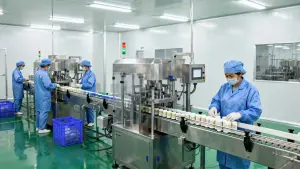
At SREKE, we operate dedicated gummy production lines with both gelatin and pectin capabilities, from 50,000 to 500,000 bottles per month. Our facility is GMP-certified and equipped with automated depositing systems, vacuum cookers, and accelerated stability chambers to ensure batch consistency. We offer custom mold development, private label packaging, and end-to-end regulatory support including label review and documentation for FDA registration. If you are looking for OEM/ODM/CDMO contract manufacturing services for gummy supplements, please visit https://www.sreke.com/contact.php to submit your inquiry.