



The functional mushroom supplement market has emerged as one of the fastest-growing categories in the dietary supplement industry, projected to reach $18.5 billion by 2030. Mushrooms like reishi, lion's mane, cordyceps, chaga, and turkey tail offer scientifically documented benefits for cognitive function, immune support, energy, and stress adaptation. For brands entering this space, understanding the unique manufacturing requirements of mushroom supplements — including sourcing, extraction, potency standardization, and dosage form selection — is essential for creating a high-quality, effective product.
Why Mushroom Supplements Matter for Your Brand
Functional mushrooms represent a convergence of traditional medicine and modern nutritional science, creating a compelling opportunity for supplement brands.
Cognitive Health Dominance — Lion's Mane is the fastest-growing mushroom supplement, with a 42% year-over-year increase in consumer searches. Its nerve growth factor (NGF) stimulating properties position it at the center of the brain health category.
Immune Support Expansion — Reishi, turkey tail, and chaga dominate the immune support segment. The post-pandemic consumer focus on immunity continues to drive 15% annual growth in mushroom immune supplements.
Adaptogenic Stress Relief — Reishi and cordyceps are classified as adaptogens, helping the body resist physical and mental stress. The adaptogen market, valued at $13.2 billion in 2025, increasingly overlaps with the mushroom category.
Sports Performance Niche — Cordyceps is the premier sports-performance mushroom, with clinical studies showing 15-20% improvement in VO2 max and exercise performance. This niche is growing at 22% CAGR among fitness brands.
Key Factors to Consider When Manufacturing Mushroom Supplements
Fruiting Body vs Mycelium — What's the Difference?
| Factor | Fruiting Body | Mycelium on Grain | Mycelium (Liquid Fermentation) |
|---|---|---|---|
| Part Used | The mushroom cap and stem | Root-like network grown on rice/bran | Mycelium grown in liquid broth |
| Beta-Glucan Content | 20-40% | 5-15% (diluted by grain) | 15-25% |
| Active Compound Profile | Full spectrum including triterpenes | Limited (grain dilutes profile) | Moderate spectrum |
| Cost per kg (extract) | $80-200 | $30-60 | $50-100 |
| Industry Standard | Premium quality | Budget quality | Mid-range |
| Consumer Recognition | High (what consumers expect) | Low (corrective marketing needed) | Moderate |
| Best For | Premium brands, clinical claims | Entry-level, cost-sensitive | Mid-market brands |
What Extraction Methods Are Used for Mushroom Supplements?
| Extraction Method | Compounds Extracted | Ratio | Bioavailability | Cost Impact |
|---|---|---|---|---|
| Hot Water Extraction | Beta-glucans, polysaccharides | 8:1 to 20:1 | High (water-soluble compounds) | Base cost |
| Dual Extraction (Water + Alcohol) | Beta-glucans + triterpenes + sterols | 10:1 to 30:1 | Highest (full spectrum) | 30-50% premium |
| Alcohol Extraction Only | Triterpenes, sterols | 5:1 to 15:1 | Moderate | 10-20% premium |
| Whole Powder (No Extraction) | All compounds (unconcentrated) | 1:1 | Low (poor cell wall digestion) | Lowest cost |
| Enzymatic Extraction | Targeted compounds | 8:1 to 20:1 | High | 20-40% premium |
Dual extraction (hot water followed by alcohol extraction) is the industry gold standard for functional mushroom supplements, as it captures both water-soluble beta-glucans and alcohol-soluble triterpenes for a full-spectrum product.
What Quality Tests Are Required for Mushroom Supplements?
Mushroom supplements require specialized testing beyond standard supplement QC:
- Beta-Glucan Analysis — Enzymatic method (AOAC 995.16) quantifies the primary active compound. Premium products contain >20% beta-glucans by weight
- Triterpene Content — HPLC or UV-Vis spectrophotometry for reishi and related species
- Heavy Metals — Mushrooms are natural bioaccumulators. Testing for arsenic, cadmium, lead, and mercury is critical. Acceptable limits: As < 1 ppm, Cd < 0.5 ppm, Pb < 1 ppm, Hg < 0.1 ppm
- DNA Barcoding — Species verification using ITS sequencing or PCR to confirm the correct mushroom species
- Microbial Testing — Total plate count, yeast and mold, E. coli, Salmonella, Staphylococcus aureus
- Pesticide Residue — Organochlorine, organophosphate, and pyrethroid pesticides
- Extraction Ratio Verification — Confirms the claimed concentration ratio (e.g., 10:1)
What Is the MOQ for Mushroom Supplement Manufacturing?
MOQ depends on the dosage form and extract type:
| Dosage Form | Extract Type | Typical MOQ | Lead Time |
|---|---|---|---|
| Capsules (veg or gelatin) | Standard extract | 10,000-50,000 capsules | 4-6 weeks |
| Capsules | Dual extract (premium) | 20,000-50,000 capsules | 6-8 weeks |
| Tablets | Whole powder or extract | 50,000-100,000 tablets | 6-8 weeks |
| Tinctures/Liquid Drops | Liquid extract | 500-2,000 bottles | 4-6 weeks |
| Powders (bulk) | Extract or whole powder | 50-500 kg | 3-5 weeks |
SREKE offers mushroom supplement manufacturing with MOQ starting from 10,000 capsules for standard extracts and 20,000 capsules for premium dual-extracted formulations.
The Mushroom Supplement Manufacturing Process
Step 1: Raw Material Sourcing — Fruiting bodies or mycelium are sourced from GMP-certified farms. Each batch is tested for species identity (DNA barcoding), heavy metals, and microbial contamination before acceptance.
Step 2: Extraction (for concentrated products) — Mushroom biomass undergoes hot water extraction (190-212°F for 2-6 hours) to solubilize beta-glucans. For dual-extracted products, the water extract residue is further extracted with food-grade ethanol (40-70%) to capture triterpenes.
Step 3: Concentration and Drying — The liquid extract is concentrated using vacuum evaporation at low temperature (below 60°C) to preserve heat-sensitive compounds and then spray-dried or freeze-dried into a powder.
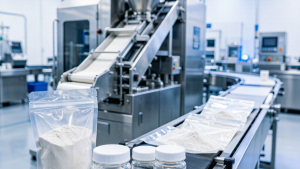
Step 4: Milling and Blending — The dried extract is milled to a fine powder (80-200 mesh) and blended with excipients for uniform potency. For whole powder products, the dried mushroom powder is directly milled.
Step 5: Encapsulation or Tableting — The blended powder is encapsulated in vegetarian or gelatin capsules or compressed into tablets. Capsule sizes range from size 00 (largest, ~750 mg fill) to size 2 (smallest, ~300 mg fill).
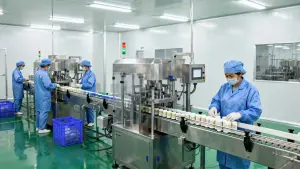
Step 6: Quality Control Testing — Finished capsules undergo beta-glucan analysis, heavy metal testing, microbial limits, content uniformity, and dissolution testing.
Mushroom Fruiting Body Extract vs Mycelium Powder — Which Is Right for Your Brand?
| Factor | Fruiting Body Dual Extract | Mycelium Powder |
|---|---|---|
| Beta-Glucan Content | 25-40% | 5-15% |
| Triterpene Content | Present (dual extraction) | Minimal (<1%) |
| Clinical Research Support | Strong (matches studies) | Limited (different composition) |
| Consumer Price (retail) | $25-50 per bottle | $10-20 per bottle |
| Wholesale Cost per Capsule | $0.10-0.25 | $0.03-0.08 |
| Label Transparency | "10:1 dual extract" | "Mushroom mycelium powder" |
| Marketing Position | Premium, clinical efficacy | Budget-friendly, natural |
Frequently Asked Questions
What is the recommended dosage for mushroom supplements?
Standard dosage ranges vary by species: Lion's Mane 500-3,000 mg daily, Reishi 500-2,000 mg daily, Cordyceps 500-3,000 mg daily, Chaga 500-2,000 mg daily, Turkey Tail 500-3,000 mg daily. For extracts, the dosage refers to the raw equivalent — a 10:1 extract at 500 mg equals 5,000 mg of raw mushroom.
Are mushroom supplements safe for daily use?
Yes, functional mushrooms have an excellent safety profile with minimal side effects. Most species have GRAS (Generally Recognized as Safe) status. Some individuals may experience mild digestive discomfort when starting. Reishi may have blood-thinning effects at very high doses — consult with a healthcare provider for customers on anticoagulant medication.
Can I combine multiple mushroom species in one product?
Yes, multi-mushroom blends are extremely popular. Common combinations include "5 Defenders" (reishi, chaga, turkey tail, shiitake, maitake for immune support) and "Focus + Energy" (lion's mane + cordyceps for cognitive and physical performance). Blends should be carefully formulated to ensure each species is present at clinically effective levels.
What certifications should a mushroom supplement manufacturer have?
Essential certifications include cGMP (21 CFR Part 111), organic certification (USDA or EU Organic), and third-party lab testing documentation for heavy metals and potency. Additional valuable certifications include Non-GMO Project Verified, Vegan certification, and Kosher certification.
How long does mushroom supplement development take?
From concept to finished product, typical timelines are: Sourcing and testing raw material (2-4 weeks), formulation development (2-4 weeks), stability testing (3 months accelerated), commercial production (4-6 weeks). Total: 12-20 weeks for initial launch with accelerated stability data.
Does SREKE manufacture mushroom supplements across all dosage forms?
Yes. SREKE manufactures mushroom supplements in capsules, tablets, powders, and liquid tincture formats. We work with certified organic mushroom extracts and can support both single-species and custom blend formulations.
How to Get Started with SREKE
SREKE offers end-to-end mushroom supplement contract manufacturing with certified organic extracts, dual-extraction capabilities, and flexible dosage form options including capsules, tablets, powders, and tinctures.
Contact our team to discuss your mushroom supplement project. We can help you select the right mushroom species, extraction method, and dosage form for your target market and brand positioning.