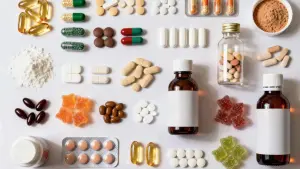




Tablets accounted for 38% of all dietary supplements sold globally in 2025, making them the single most popular dosage form in the industry. For brands entering the supplement market, tablets offer distinct advantages: precise dosing, long shelf life (24-36 months), cost-effective production at scale, and broad consumer acceptance. Understanding the tablet OEM manufacturing process is essential for making informed decisions about formulation, tooling, and production partners.
Why Tablets Are the Leading Supplement Dosage Form
Tablets have dominated the supplement industry for decades, and for good reason. Their combination of manufacturing efficiency, stability, and consumer familiarity creates a compelling value proposition for brand owners.
Manufacturing Efficiency — Tablet presses can produce 200,000 to 1,000,000 tablets per hour, making them the most cost-effective dosage form at scale. Per-unit costs drop significantly as volume increases, with savings of 40-60% when moving from 10,000 to 100,000 units.
Superior Stability — Tablets have the lowest moisture content of any dosage form (typically less than 3%), which minimizes ingredient degradation. Most tablet supplements achieve 24-36 months shelf life without refrigeration, reducing supply chain complexity and waste.
Precise Dosing — Modern tablet presses maintain weight variation within ±3-5% of target, ensuring every tablet delivers the labeled amount of active ingredients. This precision is critical for products with narrow therapeutic windows.
Consumer Trust — Tablets are the most recognized supplement format. 73% of supplement consumers consider tablets the most trustworthy dosage form, according to a 2025 consumer survey.
Key Factors to Consider When OEM Manufacturing Tablets
What Types of Tablet Formulations Are Available?
| Tablet Type | Description | Best For | Manufacturing Complexity |
|---|---|---|---|
| Immediate Release | Disintegrates rapidly in stomach | Most supplements — vitamins, minerals, herbs | Low |
| Extended Release | Releases ingredients over 8-12 hours | Caffeine, melatonin, joint support | High |
| Enteric Coated | Bypasses stomach, dissolves in intestine | Probiotics, omega-3, digestive enzymes | High |
| Chewable Tablets | Crushed or chewed before swallowing | Children's vitamins, antacids, calcium | Medium |
| Effervescent Tablets | Dissolves in water before consumption | Vitamin C, magnesium, electrolytes | High |
| Sublingual Tablets | Dissolves under tongue for direct absorption | B12, melatonin, certain herbs | Medium |
| Film-Coated Tablets | Thin polymer coating for appearance and swallowability | Most standard tablets, preferred for branding | Low-Medium |
What Is the Tablet Manufacturing Process?
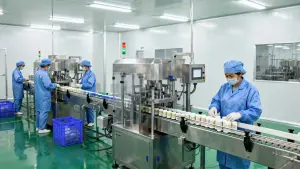
The tablet manufacturing process follows a well-established sequence that ensures uniformity, potency, and quality:
Step 1: Raw Material Testing — All incoming active ingredients and excipients undergo identity testing, potency verification, and microbial analysis before release to production.
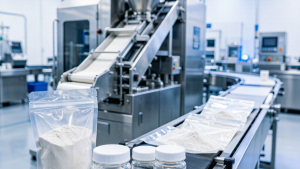
Step 2: Weighing and Dispensing — Ingredients are precisely weighed according to the master formula record. Batch sizes typically range from 50 kg for pilot batches to 500-2000 kg for commercial production.
Step 3: Blending/Mixing — Powders are blended in V-blenders, ribbon blenders, or high-shear mixers to achieve uniform distribution of all ingredients. Typical blending times range from 10-30 minutes depending on batch size and formulation.
Step 4: Granulation (if required) — For formulations that do not flow well, dry granulation (slugging or roller compaction) or wet granulation (adding a binder solution, then drying) is used to improve powder flow and compressibility.
Step 5: Compression — The blend is fed into a tablet press where it is compressed between upper and lower punches within dies. Tooling (punches and dies) is custom-made for each tablet shape and size, costing $800-2,500 per set.
Step 6: Coating (optional) — Tablets may be film-coated, sugar-coated, or enteric-coated in a coating pan. Coating adds 0.5-2 hours to the process and provides color, branding, taste masking, or modified release.
Step 7: Inspection and Quality Control — Tablets are tested for weight uniformity, hardness, friability, disintegration, and assay. Automated inspection systems can check up to 600,000 tablets per hour for visual defects.
Step 8: Packaging — Tablets are counted and filled into bottles (30-1000 count), blister packs (foil or PVC), or unit-dose pouches on automated packaging lines.
What Is the MOQ for Tablet Supplement OEM?
Tablet MOQ depends on the formulation complexity and tooling investment:
| Production Stage | Minimum Quantity | Typical Lead Time |
|---|---|---|
| R&D/Pilot Batch | 5,000-10,000 tablets | 2-4 weeks |
| Standard Production | 50,000-100,000 tablets | 4-6 weeks |
| Film-Coated Tablets | 100,000-200,000 tablets | 5-8 weeks |
| Extended Release | 200,000-500,000 tablets | 8-12 weeks |
| Effervescent Tablets | 50,000-100,000 tablets | 6-10 weeks |
SREKE offers tablet OEM manufacturing with MOQ starting from 50,000 tablets for standard immediate-release formulations, with custom tooling included for the first production run.
What Excipients Are Used in Tablet Manufacturing?
Excipients (inactive ingredients) play critical roles in tablet performance:
- Fillers/Diluents — Microcrystalline cellulose, lactose, dicalcium phosphate, mannitol (provide bulk to achieve desired tablet size)
- Binders — Povidone, starch, HPMC (hold ingredients together during compression)
- Disintegrants — Croscarmellose sodium, sodium starch glycolate, crospovidone (help tablet break apart in the digestive tract)
- Lubricants — Magnesium stearate, stearic acid, silicon dioxide (prevent sticking to punches and dies)
- Glidants — Colloidal silicon dioxide, talc (improve powder flow)
- Coating Materials — HPMC, ethyl cellulose, Eudragit, shellac (for film coating or modified release)
What Quality Tests Do Tablets Undergo?
Every tablet batch must pass these standard quality control tests before release:
- Weight Variation — ±3-5% of target weight (USP <2091>)
- Hardness — 4-20 kp (kiloponds) depending on formulation (USP <1217>)
- Friability — Less than 1% weight loss after 100 rotations (USP <1216>)
- Disintegration — Complete disintegration within 15-30 minutes (USP <701>)
- Dissolution — Percentage of active ingredient released over time (USP <711>)
- Content Uniformity — Each tablet within 85-115% of label claim (USP <905>)
- Microbial Limits — Total aerobic count < 1000 CFU/g (USP <61>, <62>)
Tablets vs Other Dosage Forms — Which One Is Right for Your Brand?
| Factor | Tablets | Capsules | Softgels | Gummies |
|---|---|---|---|---|
| Per-Unit Cost (10K units) | $0.02-0.08 | $0.05-0.15 | $0.08-0.25 | $0.10-0.30 |
| Active Ingredient Capacity | Up to 1000 mg | Up to 800 mg | Up to 500 mg | 25-100 mg per gummy |
| Shelf Life | 24-36 months | 24-36 months | 18-24 months | 12-18 months |
| Swallow Difficulty | Moderate | Easy | Easy | None (chewable) |
| Custom Shape/Color | Yes (many options) | Limited | Limited | Yes (molds) |
| Taste Masking | Good (coating) | Good (capsule) | Good | Excellent |
| Production Speed | 200K-1M per hour | 100K-300K per hour | 50K-200K per hour | 10K-50K per hour |
| Equipment Investment | Medium | Low-Medium | High | High |
| Best For | High-dose, cost-sensitive | Powders, blends | Oils, low-melt | Kids, taste-sensitive |
Frequently Asked Questions
How long does tablet tooling take to manufacture?
Custom tablet tooling (punches and dies) typically takes 3-5 weeks to manufacture. Standard round or oval shapes are faster; custom shapes with embossing or engraving require additional time. Most manufacturers include tooling creation as part of the first production order.
Can I get my tablet supplement in a custom shape?
Yes. Tablet presses accept custom tooling that can produce virtually any shape — round, oval, triangle, diamond, capsule-shaped, or custom brand shapes. Embossing (raised text/logo) and debossing (indented text/logo) are also available. Custom tooling costs $800-2,500 per set.
What is the difference between film coating and sugar coating?
Film coating uses a thin polymer layer (typically HPMC) that adds 3-5% to tablet weight. It provides color, branding, and moisture protection without significantly increasing tablet size. Sugar coating is a thicker, multi-layer process that adds 30-50% to tablet weight, creating a smooth, glossy finish. Film coating is now preferred for most supplement applications due to faster processing and lower cost.
Are tablet supplements suitable for vegans?
Yes, provided the formulation uses vegan-friendly excipients. Common animal-derived excipients to avoid include lactose (from milk), magnesium stearate (may be from animal sources), and shellac. All of these have vegan alternatives including mannitol, vegetable magnesium stearate, and HPMC coatings.
How do I ensure my tablet supplement meets regulatory requirements?
Work with a cGMP-certified manufacturer who maintains batch records, stability data, and specification sheets for all products. For US market entry, ensure compliance with 21 CFR Part 111 (cGMP for dietary supplements) and 21 CFR Part 101 (labeling requirements). Your manufacturer should provide Certificates of Analysis for every batch.
What is the typical lead time for tablet OEM production?
From formula finalization to finished product, standard tablet production takes 6-10 weeks. This includes raw material procurement (2-3 weeks), tooling manufacturing (3-5 weeks), production (1-2 weeks), and QC testing (1-2 weeks). Rush orders may be available with a 20-30% premium.
Can tablets be split or scored for flexible dosing?
Yes. Score lines can be designed into the tablet tooling, allowing tablets to be easily split into halves or quarters. However, not all tablet formulations split evenly — the hardness and shape affect split accuracy. For precise dosing, using smaller tablet sizes or multiple tablets is recommended over splitting.
How to Get Started with SREKE
SREKE provides end-to-end tablet OEM manufacturing services with cGMP-certified production facilities, custom tooling capabilities, and flexible MOQ starting from 50,000 tablets. Our formulation scientists can help you develop immediate-release, extended-release, or coated tablet formulations tailored to your brand requirements.
Contact our team to discuss your tablet supplement project. We will guide you through formulation development, tooling selection, packaging options, and regulatory compliance for your target markets.